The FAQs are AI-generated, and Fortune India is not responsible for its content or any associated copyright issues.
We are not looking at healthcare for making profits, says Jaslok Hospital Chairman Vinod P. Chanrai
/ 7 min read
For our family, it is deeply important that Jaslok continues to uphold its identity as a charitable trust, staying true to the values on which it was established, says the chairman.
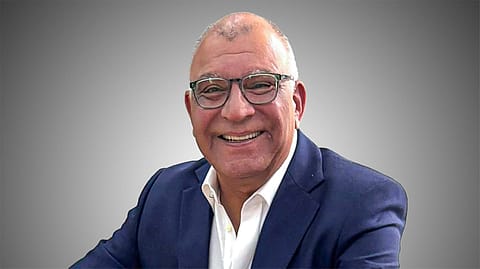
Vinod P. Chanrai
Jaslok Hospital, one of the top iconic Mumbai hospitals and one of the oldest charitable corporate hospitals in India, is undergoing a ₹400 crore full renovation. Run by a charitable trust, the 350-bedded hospital was started 53 years ago by businessman and philanthropist Seth Lokoomal Chanrai.
Vinod P. Chanrai, a longstanding Trustee and nephew of Lokoomal Chanrai, who took over as Chairman of Jaslok Hospital in April 2025, talks to P.B. Jayakumar on the family that runs the hospital, expansion plans, and challenges in healthcare. Edited excerpts:
You became Chairman last year and have been associated with Jaslok Hospital for a long time. Jaslok Hospital is one of the oldest corporate hospitals and among the most sought-after healthcare institutions in Mumbai. Could you please take us through the journey of Jaslok Hospital, and also share how the relationship between the founders has been instrumental in shaping the institution?
The hospital was inaugurated in 1973 by then Prime Minister, Indira Gandhi. The story goes back to a time when my grand uncle, Seth Lokoomal Chanrai, was unwell and admitted to a hospital here in Bombay. He was being treated by renowned surgeon, Dr. Shantilal Mehta, and at that time, the advice given to him was that he should go abroad because very little could be done for his treatment in India then.
He was naturally very surprised that India did not have the facilities or advanced treatment options available at the time. It was then that the two of them — Seth Lokoomal Chanrai decided to create a hospital with modern facilities and he entrusted this responsibility on Dr. Shantilal Mehta. At that very moment, he set aside a fairly large amount of money for the project, and together they conceptualised what eventually became Jaslok Hospital.
Over the years, technology has remained a very important focus for us. We have consistently worked towards ensuring that we have the latest and best medical equipment, enabling us to provide advanced therapies and treatments in India itself, rather than patients having to travel overseas to places like the US, the UK, or elsewhere for treatment. That is something we have continued to maintain over the years.
About 15 years ago, when my father felt it was the right time, he asked me to come and observe the workings of the hospital. I initially started as an observer on the board. After my father passed away, I took over his position as a trustee on the board and served in that capacity for nearly 15 years.
Then, about a year ago, after our previous Chairperson, Mrs Kanta Masand, unfortunately experienced health issues and was unable to continue in the role, the board requested me to take over as Chairman.
Jaslok was started as a philanthropic effort by your family. What are the kinds of businesses the family is into, especially you?
My education and background are quite varied. I went to school in England and completed my A-levels there. After that, I went to the US and pursued my undergraduate studies in California at the University of San Diego. Following that, I joined the family business in Sierra Leone, in West Africa, where I worked for about six years. From there, I moved to Nigeria. In Nigeria, we were involved in quite a few different businesses, but one of our main businesses was textiles. We were a large cotton producer, printing and selling what were known in those days as African prints — very brightly coloured fabrics meant entirely for local consumption.
At that time, Nigeria was going through a foreign exchange crisis, and the government approached all the large farmers and importers, asking them to start farming and producing their own raw materials locally. We took that very seriously, and I was given the responsibility of setting up our agricultural operations. We started with a plantation in northern Nigeria, beginning with around 5,000 acres. Today, we have close to 50,000 farmers in Nigeria alone growing cotton for us under an out-grower scheme.
{{#most-powerful-women-snapshot-individual.slug}} {{/most-powerful-women-snapshot-individual.slug}} {{^most-powerful-women-snapshot-individual.slug}} {{/most-powerful-women-snapshot-individual.slug}} {{#showRanking}} {{current-rank}} {{/showRanking}} {{#photo.0.url}}
{{name}}
This business eventually expanded globally from Nigeria. The cotton business multiplied over the years and eventually became what is now known as Olam, a very large agricultural company headquartered in Singapore and listed on the Singapore Stock Exchange. Today, they probably have 20 or 30 different product ranges, but it all started with cotton growing in Nigeria. This was back in the year 1987.
At that time, was your uncle, who was the founder, also involved in the same line of business?
He had passed away by that time, and he did not have any children. As a result, his businesses were divided among different family members. Some parts of the business were entrusted to my branch of the family, and we were essentially given the responsibility of managing the hospital and the trust as well.
As you know, the hospital was established as a charitable trust, so it comes under the jurisdiction of the Charity Commissioner of Bombay.
There are four members in the trust, and it is a fully and properly constituted board of trustees, and all of them are family members. I have been the longest-serving member on the current board. Before me, Mrs Kanta Masand was the Chairperson, and she served on the board for nearly 35 years. So, there has been a great deal of continuity and family involvement right from day one.
Jaslok is one of the oldest hospitals in the city. But if you look at South Mumbai today, there are many major hospitals in the region — such as Bombay Hospital, Breach Candy Hospital, Saifee Hospital, Wockhardt, HN Reliance, and also Lilavati Hospital in Bandra. With so many reputed hospitals concentrated in this region, how have you been able to change and evolve with time? How has healthcare transformed over the last 53 years, and how have you managed to move with the changing landscape while still maintaining Jaslok’s legacy as one of the leading hospitals?
Mumbai has a unique dynamic in terms of how the healthcare ecosystem functions, especially when it comes to consultants. If you are familiar with the system here, there are multiple honorary consultants who work at Jaslok. However, because of the way South Mumbai operates, many of them also practice at other leading hospitals like Saifee, Breach Candy, or HN Reliance as well. However, the reality is that these are among the best doctors available today. The quality of medicine in India, especially in Mumbai, is probably among the best in the world — not only in terms of the quality of consultants, but also the quality of medical equipment.
All these hospitals have the latest technologies and infrastructure. Most of them are also supported by large corporate entities. In our case, my family has continued to support Jaslok Hospital, and we have consciously remained focused on a single location. Many of the other hospital brands have multiple locations not only in Mumbai but across India as well. We made a conscious decision that we would concentrate only on Mumbai, remain a single-location institution, and focus on being the best at what we do in this one place. I think we have done a fairly good job in maintaining that mandate over the years.
If you look at the corporate hospital ecosystem in India currently, except for Apollo, almost all the other large healthcare chains — whether it is Max or any other major corporate healthcare group — are largely controlled by private equity, and the focus has increasingly become profit-driven. Around 2018–2019, there were reports that even Jaslok was in discussions with entities like IHH and Radiant for operational joint ventures or a possible acquisition. So how did you resist those kinds of temptations while continuing to move forward independently in the current healthcare landscape?
I think where this really came down to was the funding requirement. Maintaining a modern hospital with the best infrastructure and the latest equipment costs a lot of money, and unless you have a large benefactor supporting you, sustaining yourself becomes very difficult. As a family, we decided that we would continue supporting the organisation because we did not want to lose control of the hospital. Yes, we were in discussions with IHH, and those conversations continued for some time. However, we realized that the direction of those talks was not fully aligned with the founding principles of Jaslok Hospital. For our family, it is deeply important that Jaslok continues to uphold its identity as a charitable trust, staying true to the values on which it was established. It has therefore been very important for us, as a family, to continue supporting the institution, and that is what we have done. Even moving forward, a large part of my current focus is actually on fundraising. We are actively pursuing CSR funding, which has been extremely helpful for us.
We have been very fortunate to receive support from several large organisations. Citibank has stepped up, Mahindra has stepped up, IDBI stepped up, along with several other organisations. Their CSR funding has enabled us to undertake several specific healthcare initiatives and treatment programmes. For example, in Citibank’s case, they provided funding that helped us create the Jaslok Annex building at the back, which served as the isolation centre during COVID. As you know, COVID was a major global event, not just for India but for the entire world, and for us it was truly a wake-up call in terms of understanding what can potentially go wrong. Citibank supported us substantially, and today we have a fully functional isolation facility in place. So, in the event of any future pandemic or similar situation, we are much better prepared.
Apart from renovating the entire infrastructure and upgrading the existing machines, what are the new additions you are planning over the next four to five years to address the changing healthcare landscape globally? Jaslok has already done considerable work in areas related to AI and other advanced technologies. Could you also share more about the modern tools and technology-driven solutions being introduced at Jaslok?
AI is definitely a big part of the future, but I would say we are still nowhere near fully ready for AI yet. That said, AI is already integrated into a lot of the equipment we use today. For example, in radiology, many scans are now read not only by radiologists but also supported by AI systems. So a lot of the equipment already has smart technology built into it. For us, the focus has really been on seven key speciality areas.
Cardiology, for instance, has always been a major focus for Jaslok and continues to remain so. We have some of the leading cardiologists not only in India but globally, still associated with us. We are also heavily focused on oncology and surgical oncology. We have one of the best linear accelerators in Mumbai, and our oncology teams are doing excellent work. New therapies are constantly being developed and are becoming far more targeted today. In earlier times, when patients were diagnosed with cancer, the treatment approach was much broader, primarily through chemotherapy, which certainly helped but also caused considerable damage to surrounding tissues and organs.
Today, however, therapies have become much more precise and targeted. Tumours can now be treated almost down to the microscopic level, with minimal or virtually no damage to neighbouring tissues. As a result, recoveries are faster, and outcomes are significantly better. Transplants have also become a major area of growth for us over the last few years. We have seen significant progress in kidney transplants, liver transplants, and even heart transplants. Bone marrow treatment is another key area for us. These are the kinds of specialised and complex medical areas we want to focus on — areas that truly require precision medicine and advanced clinical expertise. Neurosurgery is another major strength for Jaslok. There are also several other areas where we specialise and which we treat as super-specialities. IVF is another area where Jaslok has been a pioneer in India.
Follow Fortune India
Frequently Asked Questions
NEXT STORY