Cabinet clears ₹3,030 crore chemical parks scheme, ₹1,264 crore rail project
/ 2 min read
Three new chemical parks and Ballari-Guntakal rail expansion aim to boost manufacturing, logistics and regional connectivity
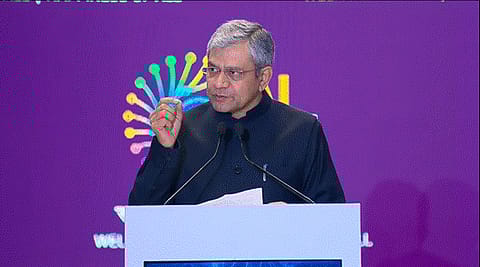
Union Minister for Electronics and Information Technology Ashwini Vaishnaw
The Union Cabinet on Friday approved a ₹3,030 crore scheme to develop three dedicated chemical parks across the country and also cleared a ₹1,264 crore railway capacity expansion project between Ballari and Guntakal, seeking to strengthen industrial infrastructure, logistics and connectivity.
The chemical parks scheme, named Bharat Audyogik Vikas Yojana Rasayan (BHAVYA Rasayan), was announced in the Union Budget 2026-27 and will be implemented over five years, from FY27 to FY31. Of the total allocation, ₹3,000 crore will be used for creating common infrastructure and utilities within the parks, while ₹30 crore has been earmarked for administrative expenses.
Under the scheme, the Centre will provide grants of up to ₹1,000 crore for each park, subject to a minimum contribution of ₹500 crore from the respective state government. The three parks will be selected through a challenge-based process and each will require at least 2,000 acres of contiguous, encumbrance-free land.
The parks will offer plug-and-play infrastructure, including common effluent treatment plants, hazardous waste management facilities, treatment, storage and disposal systems, water supply networks, solvent recovery units, steam generation facilities, interconnected pipelines, and logistics and warehousing infrastructure.
The government said the initiative would help develop the entire chemical value chain, reduce logistics costs, improve global competitiveness and attract domestic and foreign investments. It is also expected to promote sustainable manufacturing through shared environmental infrastructure while supporting downstream sectors such as agriculture, textiles, pharmaceuticals, construction, automobiles and electronics.
Separately, the Cabinet Committee on Economic Affairs approved the construction of third and fourth railway lines on the Ballari-Guntakal section spanning Karnataka and Andhra Pradesh at an estimated cost of ₹1,264 crore. Scheduled for completion by 2028-29, the project will add around 46 km to the existing railway network.
Planned under the PM Gati Shakti National Master Plan, the project covers three districts and is expected to improve connectivity for nearly seven lakh people across about 99 villages. The additional rail capacity will also enhance access to tourist destinations, including Ballari Fort and the Sri Kumara Swamy Temple.
The upgraded corridor is a key freight route for commodities such as iron ore, limestone, coal, fertilisers, foodgrains and steel. The government estimates the project will support additional freight movement of 16.22 million tonnes annually, reduce logistics costs, save about 1.32 crore litres of fuel and cut carbon emissions by 6.67 crore kg, while improving operational efficiency across the railway network.
NEXT STORY