Explained: Govt plans 5 new strategic oil reserves; why India still trails Asia's energy giants
/ 3 min read
The recent conflict in West Asia has once again brought attention to concerns over India’s preparedness to deal with disruptions in global oil supplies.
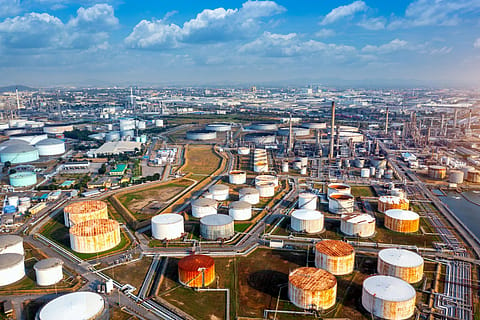
The International Energy Agency (IEA) recommends that countries maintain emergency oil reserves equivalent to at least 90 days of net oil imports to ensure energy security during supply disruptions. | Credits: Magnific.com
The central government has planned to build five new strategic petroleum reserves (SPRs) to strengthen India’s energy security after the West Asia conflict exposed the country’s vulnerability to disruptions in global oil supplies. Once these projects are completed, India’s strategic oil reserve capacity will increase from the current 9.5 days to around 40 days of crude oil imports. However, this will still fall well short of international standards.
The International Energy Agency (IEA) recommends that countries maintain emergency oil reserves equivalent to at least 90 days of net oil imports to ensure energy security during supply disruptions. India still has a long way to go, as it also lags behind several other Asian economies in building strategic oil reserves.
According to a report by Business Standard, five new SPR projects are planned across Chandikhol in Odisha, Bina in Madhya Pradesh, Bikaner in Rajasthan, and Mangaluru and Padur in Karnataka.
Under the proposed roadmap, the Centre aims to award the construction contract for the Chandikhol strategic petroleum reserve by the end of FY27. It also plans to initiate detailed feasibility studies for the proposed storage facilities at Bina and Bikaner once the necessary clearances are in place, the report said.
The Chandikhol reserve is expected to provide around 4 million tonnes (mt) of storage capacity. The proposed facilities at Bina and Bikaner are being designed to hold about 5 mt and 5.625 mt of crude oil, respectively. Once completed, the Bikaner project will become India's first strategic petroleum reserve built using salt cavern storage technology.
India’s current oil reserve capacity
India currently operates three strategic oil storage facilities located at Mangaluru (1.5 mt capacity) and Padur (2.5 mt) in Karnataka, and Visakhapatnam (1.33 mt) in Andhra Pradesh. These rock cavern-based facilities are owned and operated by Indian Strategic Petroleum Reserves Limited (ISPRL), a special-purpose company established by the government to maintain emergency crude oil stocks during wars, geopolitical disruptions, and major supply shocks.
Meanwhile, the government has asked state-run Oil and Natural Gas Corporation (ONGC) to develop a new 1.75 mt underground strategic petroleum reserve at Mangaluru. The project will mark the first strategic petroleum reserve in India to be developed by a state-owned oil company.
The expansion of the Padur facility by an additional 2.5 mt is already underway under a public-private partnership (PPP) model, with Megha Engineering & Infrastructures securing the engineering, procurement, and construction (EPC) contract for the project last year.
India is lagging behind international recommendations
The recent conflict in West Asia has once again brought attention to concerns over India’s preparedness to deal with disruptions in global oil supplies. According to the International Energy Agency (IEA), countries should maintain emergency oil reserves equivalent to at least 90 days of net oil imports.
India’s current strategic petroleum reserve capacity is sufficient to cover only about 9.5 days of crude oil imports. Even after including crude oil stocks maintained by refiners and oil marketing companies, the country's total emergency stock cover is estimated at only 74-75 days, still below the IEA's recommended level.
India's strategic oil reserves lag major Asian economies
India continues to trail several major Asian economies in terms of strategic oil storage capacity. For comparison, China has built a combined strategic and commercial oil stockpile of around 1.3 billion barrels. Japan maintains about 263 million barrels of government strategic reserves, and when combined with mandatory commercial inventories, its total emergency stock cover exceeds 250 days. South Korea also maintains around 100 million barrels of strategic reserves, with total emergency oil stocks sufficient for nearly 200 days.
{{#most-powerful-women-snapshot-individual.slug}} {{/most-powerful-women-snapshot-individual.slug}} {{^most-powerful-women-snapshot-individual.slug}} {{/most-powerful-women-snapshot-individual.slug}} {{#showRanking}} {{current-rank}} {{/showRanking}} {{#photo.0.url}}
{{name}}
However, none of India's neighbouring countries, including Pakistan, Bangladesh, Sri Lanka, Nepal, Bhutan, and Myanmar, has a formal strategic petroleum reserve programme. Instead, these countries rely primarily on relatively small commercial fuel inventories to meet emergency requirements.
Follow Fortune India
NEXT STORY