'BRICS is uniquely positioned to build cleaner, smarter and more efficient transport systems': Nitin Gadkari
/ 2 min read
Union Road Transport Minister urges deeper collaboration among BRICS nations on green mobility, digital transport and infrastructure financing, saying the bloc can shape the future of global mobility while driving sustainable economic growth.
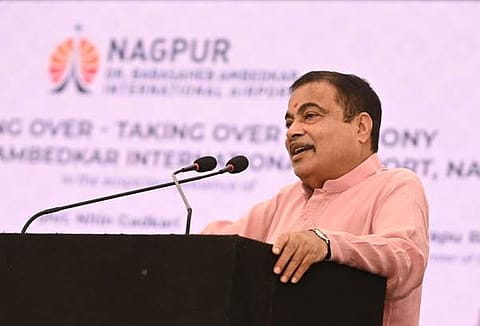
Union Minister for Road Transport and Highways Nitin Gadkari | Credits: PIB
Union Road Transport and Highways Minister Nitin Gadkari on Saturday called for deeper collaboration among BRICS nations to develop transport systems that are sustainable, resilient and future-ready, asserting that the grouping has the scale and collective strength to shape the future of global mobility through innovation, technology and shared responsibility.
Addressing the 3rd BRICS Transport Ministers' Meeting in Nagpur under India's BRICS Chairship, Gadkari said the bloc, which accounts for nearly half of the world's population, is well placed to lead the transition towards cleaner, safer, smarter and more efficient transport systems while supporting sustainable economic growth and stronger regional connectivity.
BRICS can lead next phase of global mobility
Welcoming transport ministers, senior officials and delegates from member countries, Gadkari described the meeting as an important milestone in strengthening transport cooperation among emerging economies.
India's BRICS Chairship, guided by the theme 'Building for Resilience, Innovation, Cooperation and Sustainability', reflects a people-centric and humanity-first approach inspired by the philosophy of 'Vasudhaiva Kutumbakam' or 'the world is one family', he said.
"BRICS, representing nearly half of the world's population, is uniquely positioned to lead the development of transport systems that are cleaner, safer, smarter and more efficient while advancing sustainable economic growth and regional connectivity," Gadkari said while calling for stronger BRICS collaboration.
He noted that common challenges such as infrastructure financing, congestion, emissions, road safety and last-mile connectivity require collective solutions. The minister emphasised India's willingness to deepen cooperation through knowledge sharing, capacity building, technological collaboration and joint research in green hydrogen, electric mobility, alternative fuels, digital transport systems and sustainable multimodal infrastructure.
Expressing confidence in the outcome of the meeting, Gadkari said the deliberations would further strengthen BRICS transport cooperation and contribute to practical, innovative and people-centric mobility solutions.
He also urged member nations to work together to build transport systems that promote inclusive growth, improve regional connectivity, protect the environment and contribute to a more sustainable and prosperous future.
India showcases infrastructure transformation
Highlighting transport as the backbone of economic development, Gadkari outlined India's rapid infrastructure transformation across roads, railways, ports and aviation.
"India has developed the world's second-largest road network while significantly expanding access-controlled expressways and multimodal connectivity. The Hybrid Annuity Model as a successful framework for mobilising private investment in infrastructure," he pointed out.
The minister said Indian Railways has undergone unprecedented modernisation through near-complete electrification of the broad-gauge network, expansion of Vande Bharat services, progress on the Mumbai-Ahmedabad High-Speed Rail Corridor and engineering milestones such as the new Pamban Bridge.
{{#most-powerful-women-snapshot-individual.slug}} {{/most-powerful-women-snapshot-individual.slug}} {{^most-powerful-women-snapshot-individual.slug}} {{/most-powerful-women-snapshot-individual.slug}} {{#showRanking}} {{current-rank}} {{/showRanking}} {{#photo.0.url}}
{{name}}
Focus on clean mobility and logistics resilience
Gadkari also highlighted the Maritime Amrit Kaal Vision 2047, digital initiatives such as e-Navik and e-Samudra, and the Green Shipping initiative as key measures to improve maritime infrastructure and logistics efficiency.
The two-day BRICS Transport Ministers' Meeting has brought together delegates from Brazil, Russia, Indonesia, India, China, South Africa, Egypt, Ethiopia, Iran and the United Arab Emirates to deliberate on sustainable transport, infrastructure development, clean mobility, logistics resilience and multimodal connectivity, with the aim of strengthening cooperation among emerging economies.
NEXT STORY