Government restores commercial LPG supplies to pre-crisis levels, eases bulk LPG curbs as West Asia disruptions ease
/ 2 min read
Improved domestic production and better import availability prompt the Centre to lift restrictions on non-domestic packed LPG supplies, while partially restoring bulk LPG allocations to industrial users.
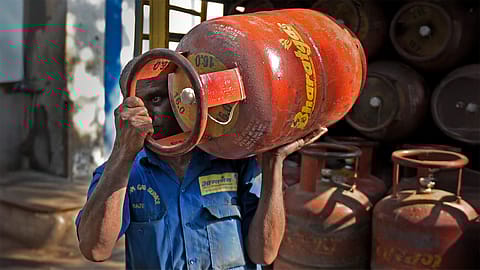
Bulk LPG supplies, which had been suspended when the crisis intensified, will now be restored up to 50% of pre-crisis consumption levels | Credits: Getty Images
The Centre has restored supplies of non-domestic packed LPG to pre-crisis levels and eased restrictions on bulk LPG supplies, providing significant relief to commercial and industrial consumers after months of curbs triggered by disruptions arising from the West Asia crisis.
In a move aimed at balancing energy security with industrial demand, the Ministry of Petroleum and Natural Gas announced that all sectoral restrictions on non-domestic packed LPG have been withdrawn. Bulk LPG supplies, which had been suspended when the crisis intensified, will now be restored up to 50% of pre-crisis consumption levels.
Relief for industrial and commercial consumers
The decision comes amid an improvement in domestic LPG production and the expected availability of imported LPG cargoes. During the height of the West Asia crisis, the government had invoked provisions under the Essential Commodities Act and directed that C3-C4 hydrocarbon streams be used exclusively for LPG production, diverting supplies away from petrochemical and other downstream industries.
With supply conditions improving, the government has now decided to reduce the diversion of these feedstocks to the LPG pool, allowing greater availability for petrochemical and other critical industrial sectors.
“The restoration follows the recent improvement in the LPG supply situation,” MoPNG stated , adding, “Enhanced allocations for non-LPG uses would be implemented without affecting household LPG availability. Indigenous LPG production will continue to be maintained at not less than 40 thousand metric tonnes (TMT) per day.
C3-C4 allocations to be monitored
The Centre has directed the Centre for High Technology (CHT) to issue organisation-wise allocations of the enhanced C3-C4 streams and submit regular reports to the ministry. The move is expected to support petrochemical manufacturers and other industries that depend on these feedstocks for production.
The government noted that ensuring uninterrupted LPG availability for domestic consumers remained its top priority throughout the crisis. Temporary restrictions on commercial LPG supplies, coupled with coordinated efforts by oil marketing companies (OMCs), helped maintain stable household supplies despite disruptions in global supply chains.
PNG transition to continue
The ministry has also instructed OMCs to maintain comprehensive data on commercial and industrial LPG consumers and create a unified sectoral database to strengthen supply planning and monitoring.
At the same time, the government reiterated its commitment to expanding the use of Piped Natural Gas (PNG). Commercial and bulk consumers that have already shifted to PNG will continue using the fuel, while other eligible consumers connected to PNG networks will be progressively transitioned in coordination with city gas distribution entities.
To facilitate implementation, Petroleum Secretary Pankaj Jain has written to the chief secretaries of all states and Union Territories, seeking support for the revised supply arrangements.
The ministry said the latest measures reflect a calibrated approach to safeguarding national energy security while ensuring adequate fuel availability for industry and accelerating the transition towards cleaner and more efficient energy sources.
NEXT STORY