Govt hikes windfall tax on diesel, ATF exports as crude prices soar amid West Asia tensions
/ 2 min read
The export duty on diesel has been raised to ₹15.5 per litre from ₹8.5 per litre, while the levy on ATF exports has been increased to ₹14.5 per litre from ₹7.5 per litre.
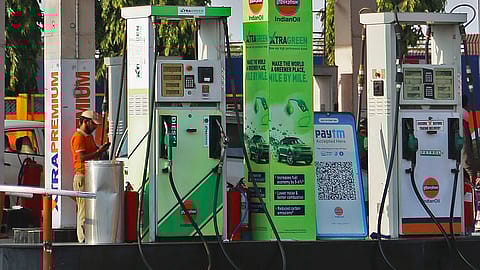
The revised rates, announced by the Finance Ministry in a notification issued late on Tuesday, will take effect from July 16. | Credits: Sanjay Rawat
Shares of oil and gas as well as aviation companies are likely to remain in focus on Wednesday after the Centre increased the windfall tax on exports of diesel and aviation turbine fuel (ATF) in response to the recent surge in global crude oil prices amid the escalating conflict between the United States and Iran.
The revised rates, announced by the Finance Ministry in a notification issued late on Tuesday, will take effect from July 16.
Under the revised structure, the export duty on diesel has been raised to ₹15.5 per litre from ₹8.5 per litre, while the levy on ATF exports has been increased to ₹14.5 per litre from ₹7.5 per litre. On the other hand, the export duty on petrol has been reduced to ₹2.5 per litre from the earlier ₹4 per litre.
The government has, however, left unchanged the excise duty on petrol and diesel supplied for domestic consumption, indicating that the latest revision is aimed at exports rather than the domestic fuel market.
The government's decision comes against the backdrop of a sharp rally in global crude oil prices, driven by renewed geopolitical tensions in West Asia. Brent crude climbed to around $85 a barrel on Wednesday, its highest level in nearly a month, while US West Texas Intermediate (WTI) crude briefly touched the $80-a-barrel mark as markets priced in the growing risk of supply disruptions.
The latest surge followed a rapid escalation in the conflict between the United States and Iran. U.S. President Donald Trump warned that military operations against Iran would continue unless Tehran returned to the negotiating table, while American forces carried out fresh strikes on multiple Iranian targets.
The export levies on fuels were first introduced on March 27, 2026, to discourage overseas shipments of petroleum products and ensure adequate domestic supplies during the West Asia crisis. These duties are reviewed every fortnight based on the average international prices of crude oil, petrol, diesel and ATF recorded since the previous assessment. The last revision took effect on July 1, 2026.
The renewed hostilities have effectively reversed the optimism that followed the memorandum of understanding signed by the US and Iran on June 17 to de-escalate the conflict. In addition to concerns over potential disruptions to Middle East oil flows, tighter sanctions on Russian energy exports have continued to support crude prices by raising fears of tighter global supplies.
NEXT STORY