The FAQs are AI-generated, and Fortune India is not responsible for its content or any associated copyright issues.
India eyes 33 GW wafer-ingot capacity by FY30; ₹80,000 crore solar manufacturing push gathers pace: CareEdge Ratings
/ 2 min read
The ratings agency projects module manufacturing capacity to reach 250 GW by FY30, while domestic cell capacity could more than triple as manufacturers move deeper into the solar value chain.
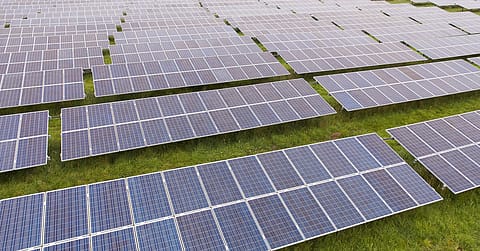
India's installed solar power capacity has increased from 34.6 GW in FY20 to 150.3 GW in FY26, taking solar's share of total installed power capacity from 9% to 28% | Credits: Getty Images
After building one of the world's largest solar module manufacturing bases, India is now turning its attention to the most import-dependent parts of the solar supply chain. Domestic wafer-ingot manufacturing capacity could rise to 24-33 GW by FY30, according to a report by CareEdge Ratings, as manufacturers ramp up investments in upstream solar production.
The shift comes amid a sharp expansion in the country's solar market. India's installed solar power capacity has increased from 34.6 GW in FY20 to 150.3 GW in FY26, taking solar's share of total installed power capacity from 9% to 28%. CareEdge expects installed solar capacity to approach 290 GW by FY30, supported by annual additions of around 35 GW.
Cell capacity lags module manufacturing
India has already made significant strides in module manufacturing. Domestic module capacity has jumped from 13.6 GW in FY20 to 172 GW in FY26, exceeding the country's cumulative installed solar capacity.
The same cannot be said for cell manufacturing. Capacity currently stands at just 27 GW, leaving a sizeable gap between module production and the availability of domestically manufactured cells. As a result, India continues to depend on imports—primarily from China—for cells as well as upstream components such as wafers, ingots and polysilicon.
According to the report, domestic cell manufacturing currently meets only about 25-30% of demand, exposing the sector to supply-chain disruptions, price swings and geopolitical risks.
Manufacturers move upstream
FY25 marked an important milestone with the commissioning of India's first ingot and wafer manufacturing facility, with an initial capacity of 2 GW. CareEdge expects wafer-ingot capacity to expand rapidly over the next four years as manufacturers seek greater control over the supply chain.
Several companies have announced plans to enter or expand in the segment. Waaree Energies, Tata Power Renewable Energy and Premier Energies have each outlined plans for around 10 GW of wafer-ingot capacity. ReNew has announced 6.5 GW, while Avaada Group, Jakson Group, GREW Energy and Solex Energy are also planning investments.
Government initiatives such as the Production-Linked Incentive (PLI) scheme, Basic Customs Duty (BCD), Approved List of Models and Manufacturers (ALMM) and Domestic Content Requirement (DCR) norms have encouraged manufacturers to invest across the solar value chain.
₹80,000 crore capex opportunity
As manufacturing capacities scale up, India is also expected to strengthen its position in global solar exports. The report estimates solar module exports could exceed 30 GW by FY30, while imports are likely to decline significantly.
"India's integrated solar manufacturing build-out is anticipated to require cumulative capex of more than ₹80,000 crore by FY30 across modules, cells and ingot-wafer capacity. However, the actual requirement may vary depending on global market conditions, equipment costs, technology shifts and supply chain dynamics," said Nitu Singh, Associate Director, Care Analytics and Advisory Pvt. Ltd.
Despite rapid progress in module manufacturing, India's solar supply chain remains heavily reliant on imported cells and upstream components. The next phase of investment will determine whether the country can replicate its success in module production across the rest of the solar value chain and reduce its dependence on overseas suppliers.
Follow Fortune India
Frequently Asked Questions
NEXT STORY