India's Q1 GDP growth may touch 7%, RBI likely to hold rates amid inflation concerns: SBI Research
/ 3 min read
The report projects CPI inflation to remain above 5% over the next two quarters, with average inflation for FY27 likely to be around 5%.
SBI Research said the progress of the southwest monsoon has improved significantly, with surplus rainfall in July reducing the nationwide rainfall deficit to 13%. | Credits: File Phooto
India's economy is likely to have expanded by around 7% in the April-June quarter of FY27, outperforming earlier expectations despite global uncertainties stemming from the West Asia conflict, according to a report by SBI Research.
The report said the global economy remains on an uneven recovery path, with the US economy slowing unexpectedly during the April-June 2026 quarter while India's growth momentum appears to be strengthening.
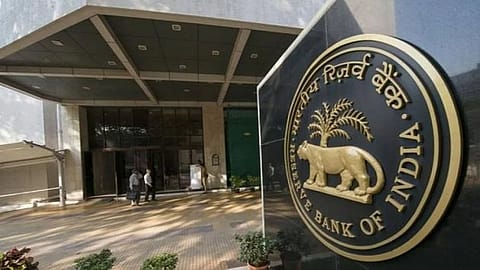
SBI Research expects the Reserve Bank of India's (RBI) Monetary Policy Committee (MPC) to keep policy rates unchanged in the near term as inflationary pressures persist. It projects consumer price index (CPI) inflation to remain above 5% over the next two quarters, with average inflation for FY27 likely to be around 5%.
"The current backdrop has made a dovish policy stance costlier," the report said, citing oil price volatility, pressure on the rupee, uncertainty over external capital flows and elevated inflation projections.
RBI's forex strategy supports rupee
The report highlighted RBI's active management of the foreign exchange market, noting that the central bank has altered the composition of its outstanding forward positions to ease pressure at the short end of the maturity curve.
According to the report, outstanding short-term forward positions declined by about $13 billion by the end of June, including a $10 billion reduction in contracts with maturities of up to one month. Meanwhile, long-term positions increased from $56 billion to $64 billion.
It added that the rupee has historically reacted sharply to RBI's communication on exchange rate management, suggesting that market participants closely track policy signals. SBI Research argued that the rupee should be allowed to appreciate, particularly after the postponement of India's inclusion in the Bloomberg Global Aggregate Bond Index.
The report noted that the rupee has depreciated 11.26% since April 1, 2025. After weakening during the escalation of the US-Iran conflict, the currency has recovered since July 27 and appreciated about 1.2% from July 24 levels.
Better monsoon boosts growth outlook
SBI Research said the progress of the southwest monsoon has improved significantly, with surplus rainfall in July reducing the nationwide rainfall deficit to 13%.
Reservoir levels are now broadly in line with normal levels, although lower than last year, while kharif sowing is only 4.7% below the corresponding period in 2025, indicating prospects of a better harvest.
The report also noted that the Indian Ocean Dipole (IOD) entered positive territory for the first time during the week ended July 26, a development that could further support rainfall if sustained.
{{#most-powerful-women-snapshot-individual.slug}} {{/most-powerful-women-snapshot-individual.slug}} {{^most-powerful-women-snapshot-individual.slug}} {{/most-powerful-women-snapshot-individual.slug}} {{#showRanking}} {{current-rank}} {{/showRanking}} {{#photo.0.url}}
{{name}}
Inflation outlook turns less benign
The report said imported inflation remained subdued until April as elevated global crude oil prices had not fully translated into domestic petrol and diesel prices.
However, it now expects CPI inflation to exceed 5% over the next two quarters, although the FY27 average is projected at 5%, remaining within the RBI's tolerance band. Inflation for the first quarter of FY27 stood at 3.9%.
Credit growth led by industry, gold loans
Sector-wise incremental credit growth during April-June 2026 was driven largely by industry and personal loans, which together accounted for nearly 63% of total incremental lending, the report said.
Within industry, petroleum, coal products and nuclear fuels, infrastructure—particularly power—chemicals, and engineering accounted for nearly half of incremental industrial credit.
Among personal loans, loans against gold jewellery emerged as the largest contributor, accounting for 42% of incremental personal loan growth, or about ₹74,200 crore out of ₹1.74 lakh crore.
AI investment surge not necessarily a bubble
On artificial intelligence, SBI Research said concerns about a potential AI bubble are not unprecedented, as every major technological revolution attracts significant capital, optimism and speculation.
While companies may currently be overinvesting in AI infrastructure and investor enthusiasm could moderate if interest rates rise, the report said such developments are typical during technological transitions.
"The potential applications of AI are vast and transformative," the report said, adding that whether the current investment cycle ultimately proves to be a bubble will depend on future returns and the industry's ability to deliver on its promises.
On the global economy, SBI Research cautioned that geopolitical tensions in West Asia and Eastern Europe continue to pose risks by disrupting commodity and energy supply chains, prompting governments to increase fiscal spending and borrowing, which could keep global interest rates elevated.
NEXT STORY