The FAQs are AI-generated, and Fortune India is not responsible for its content or any associated copyright issues.
‘Inflation within manageable range’: FM Nirmala Sitharaman assures Rajya Sabha amid emerging oil price risks
/ 2 min read
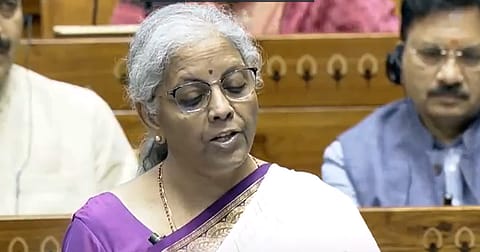
FM Sitharaman | Credits: PIB
‘Inflation within manageable range’: FM Nirmala Sitharaman assures Rajya Sabha amid emerging oil price risks
Finance Minister Nirmala Sitharaman assured the Rajya Sabha that inflation is under control despite global risks, particularly rising oil prices. She emphasized the government's vigilance in monitoring price trends to keep inflation within a manageable range. While inflation remains within the Reserve Bank's comfort zone, external pressures, such as Middle East tensions, pose potential challenges.
This summary is AI-generated, and Fortune India is not responsible for its content or any associated copyright issues.
FM flags inflation as under control with CPI near 3%, but rising crude prices amid West Asia tensions pose upside risks for FY26
FM Sitharaman | Credits: PIB
Union Finance Minister Nirmala Sitharaman on Tuesday reiterated that inflation remains under control, even as she acknowledged concerns around the rising cost of living and evolving global risks.
Replying to the discussion on the Appropriation Bill 2026 in the Rajya Sabha, she said, “Concerns have also been raised about inflation and the cost of living… the government is closely monitoring price trends and has taken necessary steps to ensure that inflation remains within a manageable range.”
Inflation trend remains benign
India’s retail inflation trajectory has remained largely contained in recent months. Consumer Price Index (CPI)-based inflation stood at 3.2% in February 2026, up from 2.7% in January, but still comfortably within the Reserve Bank of India’s tolerance band of 2–6%.
This follows a sharp moderation in late 2025, when inflation dipped to near 1–2%, driven by easing food prices and favourable base effects. On a quarterly basis, inflation has gradually firmed up from sub-2% levels in the December quarter to around 3% in early FY26, signalling mild but manageable price pressures.
The current trend marks a significant shift from the post-pandemic phase, when supply disruptions and elevated global commodity prices had pushed inflation above the central bank’s comfort zone, prompting aggressive monetary tightening.
FY26 outlook faces external pressures
While projections for FY26 peg inflation in the 3–4% range, risks are beginning to emerge. Economists expect a modest uptick in inflation in the coming months, largely driven by global commodity trends.
A key concern is the escalation of tensions in West Asia, particularly the Iran-Israel conflict, which has pushed up crude oil and natural gas prices. Higher energy costs typically feed into transportation and manufacturing, eventually impacting retail inflation, as per industry analysts.
Recommended Stories
India had previously faced similar pressures during earlier oil shocks, where spikes in crude prices translated into higher fuel and input costs, underscoring the economy’s vulnerability to external energy dynamics.
Policy balancing act amid global volatility
For an import-dependent economy like India, sustained elevation in crude prices raises the risk of imported inflation and currency pressures. Analysts caution that a prolonged spike in oil prices could complicate the inflation trajectory and widen the current account deficit.
The government’s reassurance comes at a time when global uncertainty remains elevated, with geopolitical tensions disrupting supply chains and keeping commodity markets volatile. This adds complexity to inflation management, even as domestic price trends remain within the central bank’s comfort zone.
Sitharaman has earlier emphasised that maintaining a balance between growth and price stability remains central to policymaking, indicating that authorities are likely to remain vigilant as external risks evolve.
RANK
COMPANY NAME
REVENUE
(INR CR)
(INR CR)
{{#current-rank}} {{current-rank}} {{/current-rank}} {{^current-rank}} {{rank}} {{/current-rank}} {{name}} {{#revenue}} {{revenue}} {{/revenue}} {{^revenue}} {{noi}} {{/revenue}}