RBI flags global risks ahead of April MPC as West Asia crisis clouds outlook
/ 2 min read
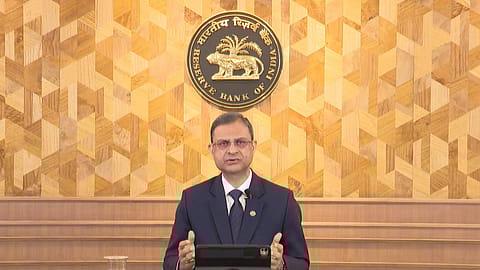
Sanjay Malhotra, Governor, Reserve Bank of India | Credits: Fortune India
RBI flags global risks ahead of April MPC as West Asia crisis clouds outlook
The Reserve Bank of India (RBI) is on high alert for global and domestic risks, particularly due to geopolitical tensions in West Asia, as it approaches the April monetary policy committee meeting. With oil prices surging and the rupee under pressure, the RBI is expected to maintain the repo rate at 5.25%, balancing inflation concerns and growth risks.
This summary is AI-generated, and Fortune India is not responsible for its content or any associated copyright issues.
The rupee has come under pressure, with offshore markets indicating potential depreciation beyond 93 per dollar, driven by elevated oil prices and capital outflows.
Sanjay Malhotra, Governor, Reserve Bank of India | Credits: Fortune India
The Reserve Bank of India (RBI) has indicated heightened vigilance over emerging global and domestic risks, even as markets brace for a likely status quo at the upcoming monetary policy committee (MPC) meeting scheduled for April 6–8.
At its 622nd central board meeting held in Patna under governor Sanjay Malhotra, the central bank reviewed evolving macroeconomic conditions, with a particular focus on geopolitical developments in West Asia and their spillover effects on financial markets and inflation dynamics.
"The board approved the bank's budget for the accounting year 2026-27 and also the bank's medium term strategy framework (Utkarsh 3.0) for the period 2026-29," it said.
West Asia shock: Oil, rupee and inflation risks
The RBI’s assessment comes amid a sharp escalation in the Middle East conflict, which has already triggered a surge in crude oil prices and volatility in currency markets. India, which imports over 80% of its energy needs, remains particularly vulnerable.
Recent market movements validate these risks. The rupee has come under pressure, with offshore markets indicating potential depreciation beyond 93 per dollar, driven by elevated oil prices and capital outflows.
Economists warn that sustained crude prices above $100 per barrel could widen India’s current account deficit and push inflation higher, complicating monetary policy decisions.
MPC outlook: Extended pause likely
Against this backdrop, the April MPC is widely expected to hold the repo rate at 5.25%, continuing the pause seen in February.
While retail inflation remains within the RBI’s tolerance band—at 3.21% in February—risks are clearly tilted upward due to imported inflation and supply disruptions.
The central bank thus faces a classic policy dilemma:
Growth risks from global uncertainty and energy shocks
Inflation pressures from rising import costs
Market consensus suggests the RBI will retain a “neutral” stance, keeping policy flexibility intact amid uncertain external conditions.
Follow Fortune India
NEXT STORY