Rising global bond yields, US uncertainty and AI gap may hit India’s capital inflows: CEA
/ 3 min read
Rising bond yields in the US and other developed economies are beginning to weigh on cross-border capital flows, says V. Anantha Nageswaran, Chief Economic Adviser (CEA).
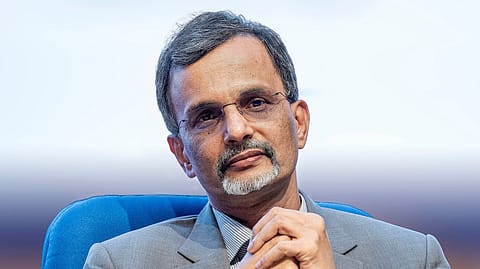
Chief Economic Advisor V. Anantha Nageswaran (File image) | Credits: Narendra Bisht
Rising bond yields in major economies, unsettled relations with the US, uncertainty in global energy markets and the perception that India is lagging developed nations in artificial intelligence (AI) could impact capital flows into India in the near term, says V. Anantha Nageswaran, Chief Economic Adviser (CEA).
Speaking at the 13th annual meeting of the Public Affairs Forum of India (PAFI) in New Delhi on September 25, on the theme ‘Navigating Geo-economics in a Disrupted World’, Nageswaran said rising bond yields in the US and other developed economies were beginning to affect cross-border capital flows.
Referring to the recent spike in bond yields, he said the response to India’s recently concluded mobilisation of FCNR (Foreign Currency Non-Resident) deposits would have been different had it been undertaken now. “Suppose we were doing the FCNR deposit mobilisation now, we would not have got what we got in the previous three months after this kind of interest rate increases. In a way, it was a fortuitous case of timing, as mobilisation happened well before this massive spike in interest rates is beginning to unfold,” he said.
According to Nageswaran, the yield on 10-year US government bonds had risen by 25 basis points in just three days. “In UK, the 10-year bond rate is 5.4%, in Japan it is 3.1%, in Germany you can get 3.6%. Apart from its implications for cost of capital, domestically in those countries and externally for us, it will have an impact on capital flowing across borders,” he said.
He pointed out that higher returns available in developed markets could discourage investors from allocating capital to emerging economies, given the additional risks involved. “If you can get 6% as a UK resident or a UK company in a 30-year bond, why would you take the risk of sending the capital to a distant part of the world with attendant exchange rate risks, compliance risks? That is going to be a huge challenge for emerging economies and countries like India which are dependent on global capital flows,” he said.
Geopolitical, energy and AI headwinds
Nageswaran said unsettled relations with the US were another factor influencing capital flows, especially from portfolio investors. Uncertainty in global energy markets was also highlighted. “And the ‘so-called’ AI play absence in India. In the near term, these three headwinds are there. We have to acknowledge them,” he said.
Nageswaran also outlined the extraordinary challenges that India faces on its journey to become a developed nation over the next 20 years. Geopolitical uncertainties are one of the major challenges, he said, alongside the weaponisation of supply chokepoints and the limitation of global markets to supply the required goods and raw materials “whenever, wherever, in whatever quantities, you need”. He also highlighted the challenge posed by China’s manufacturing scale, which makes it difficult for other countries to expand their manufacturing capacities.
Climate variability, its implications for agricultural production and productivity, and the resources required to invest in adaptation were another major concern, he said.
Demographic dividend faces new challenges
The CEA also flagged the potential impact of technology, particularly social media and smartphone use, on India’s youth and the country’s ability to realise its demographic dividend. “When East Asian countries were rising from third world to first world status, the kind of social media or smartphone impact on cognitive skills, ability to concentrate, mental, emotional and physical anxiety, depression and suicidal tendencies, were not challenges,” he said.
During that phase of development, countries could easily expect demographic dividend to contribute 1.5 to 2 percentage points to annual growth, he said. “But now in the context of India, given these challenges to mental, emotional and physical health, apart from education and skilling requirements in a changing world, you cannot take demographic dividend for granted,” Nageswaran said.
Reiterating a position outlined in the last Economic Survey, the CEA stressed the need for India to invest in strategic buffers to withstand external shocks and supply disruptions. Strengthening domestic manufacturing capacity, especially in critical sectors, was one of the measures to address this challenge, he added.
Follow Fortune India
NEXT STORY