Strait of Hormuz traffic falls 15% as ship operators turn more cautious amid rising Gulf tensions: S&P
Daily vessel transits drop to 41 as military tensions and navigation disruptions intensify, although crude exports through the strategic shipping lane remain largely resilient.
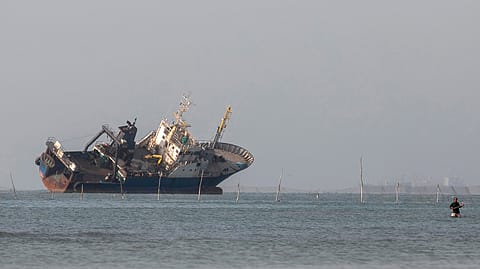
Global shipping activity through the strategically vital Strait of Hormuz slowed sharply on July 8, with vessel transits declining 15% from the previous day as heightened military tensions and worsening navigation disruptions prompted greater caution among ship operators, according to an S&P Global Commodities at Sea report.
A total of 41 vessels crossed the Strait on July 8, down from 48 a day earlier, after the US carried out a second consecutive day of airstrikes against Iranian military targets. While crude exports from the Gulf have so far remained resilient, S&P Global cautioned that sustained security concerns and increasing navigation challenges could weigh on vessel movements and oil flows if the situation deteriorates further.
GNSS disruptions, delayed voyages add to shipping concerns
According to the report, interference with the Global Navigation Satellite System (GNSS) has intensified over the past 24 hours, disrupting vessel positioning data and making voyage tracking increasingly difficult. Several ships that appeared ready to transit the waterway either reversed course or delayed their passage, underscoring the growing caution among shipping companies amid heightened regional tensions.
Inbound traffic remained subdued, with only 15 vessels entering the Gulf compared with 26 outbound transits. The inbound fleet comprised two very large crude carriers (VLCCs), five oil and chemical tankers, three bulk carriers, four cargo vessels and one container ship. Six inbound vessels were identified as Iran-linked, while several compliant vessels—including the VLCC DELOS and three bulk carriers—transited without broadcasting visible AIS signals.
Iran-linked vessels dominate outbound traffic
Iran-linked vessels accounted for 17 of the 26 outbound crossings, or nearly 65% of departures on July 8. Among the notable movements was an unidentified "ghost" vessel broadcasting the identity of the product tanker SIRIUS, which had reportedly been scrapped in 2023. The remaining outbound traffic included three bulk carriers, three product tankers, one container ship and two VLCCs—MERCURY HOPE and the Indian-flagged LILA VADINAR. Both completed outbound voyages without major disruption, although LILA VADINAR also transited the Strait without transmitting visible AIS signals.
Crude exports remain resilient despite lower tanker movements
Despite the decline in overall vessel traffic, preliminary data showed crude flows through the Strait averaged 12.76 million barrels per day (bpd) between July 6 and July 8. Month-to-date, around 10.81 million bpd of crude has been evacuated through the waterway, including 2.86 million bpd moved via ship-to-ship transfers and nearly 3 million bpd carried by 11 VLCCs that had previously remained stranded in the Gulf. Fresh export activity has also remained resilient, with new crude loadings contributing an estimated 5 million bpd of exports so far in July, up from 4.86 million bpd during the whole of June. However, S&P Global warned that if transit risks continue to escalate, crude flows through one of the world's busiest energy chokepoints could come under significant downward pressure in the coming days.