Union Budget 2026–27 signals shift to investment-led growth: PHDCCI
/ 3 min read
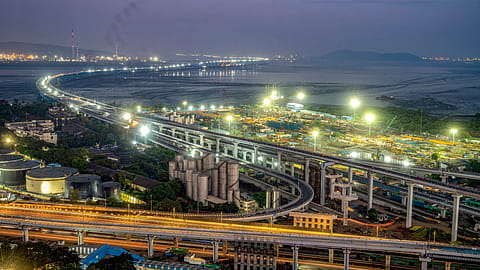
Infrastructure continues to dominate spending priorities, with central capital expenditure rising to ₹12.2 lakh crore in 2026–27
Union Budget 2026–27 signals shift to investment-led growth: PHDCCI
The Union Budget 2026–27 emphasizes investment-led growth with a significant boost in public capital expenditure, focusing on infrastructure and manufacturing. The PHD Chamber of Commerce and Industry highlights measures like the SME Growth Fund and Viksit Bharat Rozgar Yojana, aiming to enhance economic growth and employment while maintaining fiscal discipline.
This summary is AI-generated, and Fortune India is not responsible for its content or any associated copyright issues.
The report highlights that effective capital expenditure has been raised by 10.7% to ₹17.14 lakh crore, taking public investment to 4.4% of GDP, up from 4% in the previous year
Infrastructure continues to dominate spending priorities, with central capital expenditure rising to ₹12.2 lakh crore in 2026–27
The Union Budget 2026–27 marks a decisive move towards long-term, investment-driven growth, highlighted by a significant increase in public capital expenditure, steady fiscal consolidation, and targeted support for infrastructure and manufacturing, according to a report by the PHD Chamber of Commerce and Industry (PHDCCI).
Anil Gupta, Senior Vice President, PHDCCI, said, “The Budget has been presented at a pivotal moment for the Indian economy and reinforces the government’s commitment to fiscal prudence, growth acceleration, and the vision of Viksit Bharat.” He said the strong focus on capital expenditure, infrastructure, and manufacturing, including measures such as the ₹10,000-crore SME Growth Fund, revival of legacy industrial clusters, and the Viksit Bharat Rozgar Yojana, alongside the positive impact of the recent trade agreements on industry and employment will boost the economy in near future.
Capital spending as key growth driver
The report highlights that effective capital expenditure has been raised by 10.7% to ₹17.14 lakh crore, taking public investment to 4.4% of GDP, up from 4% in the previous year. This, it says, positions capital spending as the main engine of growth, even as revenue expenditure remains contained.
“Budget 2026–27 is capacity-expanding and medium-term growth supportive rather than focused on short-term populism,” the report said, adding that consumption is expected to rise through job creation and income growth rather than direct tax cuts.
Focus on infrastructure
Infrastructure continues to dominate spending priorities, with central capital expenditure rising to ₹12.2 lakh crore in 2026–27. Railways, roads, ports, and energy account for the bulk of the increase, reflecting the government’s emphasis on logistics efficiency and connectivity.
Allocation for the railways jumped 10.15% to ₹2.81 lakh crore, with plans underway to develop seven high-speed rail corridors linking major economic hubs. Spending on roads and highways rose 7.85% to ₹3.1 lakh crore while ports, shipping, and waterways recorded the sharpest growth, surging nearly 49%.
To attract private investment, the Budget proposes setting up an Infrastructure Risk Guarantee Fund to provide partial credit guarantees to lenders during the construction phase.
Push on manufacturing, MSMEs, and energy
The report highlights a robust push for manufacturing, with targeted policy support for seven strategic sectors, including semiconductors, biopharma, electronics, chemicals, and textiles. Key announcements include the India Semiconductor Mission 2.0, a ₹10,000-crore Biopharma SHAKTI programme, and the creation of rare earth corridors aimed at reducing import dependence.
MSMEs are expected to benefit from improved access to credit, risk-sharing mechanisms, and measures to strengthen market linkages, aimed at creating globally competitive “champion SMEs”.
Allocations for the Ministry of New and Renewable Energy surged nearly 24%, underscoring India’s commitment to a clean energy transition. Simultaneously, spending on conventional energy rose sharply, reflecting the need to balance energy security with transition goals. Power sector allocations jumped over 37%, with a focus on transmission and distribution reforms.
Fiscal consolidation on track
Despite higher capital spending, fiscal consolidation remains on track, with the fiscal deficit projected at 4.3% of GDP, down from 4.4% in the revised estimates. The primary deficit continues to narrow, though interest payments rose 10%, highlighting ongoing debt servicing pressures.
{{#most-powerful-women-snapshot-individual.slug}} {{/most-powerful-women-snapshot-individual.slug}} {{^most-powerful-women-snapshot-individual.slug}} {{/most-powerful-women-snapshot-individual.slug}} {{#showRanking}} {{current-rank}} {{/showRanking}} {{#photo.0.url}}
{{name}}
Overall, the PHDCCI report noted that the Union Budget reinforces India’s reform momentum by prioritising infrastructure development, deepening manufacturing, and driving investment-led growth, all while maintaining fiscal discipline.
Follow Fortune India
NEXT STORY