
Budget 2026: A pivotal moment in India’s march towards Viksit Bharat
ADVERTISEMENT
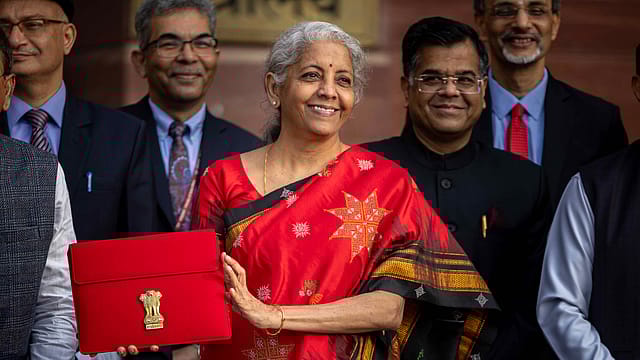
The Union Budget 2026-27 marks a pivotal moment in India’s economic trajectory, strategically positioned to address immediate challenges while maintaining an unwavering focus on the long-term vision of achieving Viksit Bharat by 2047. In an era marked by volatile geopolitical tensions and shifting global trade dynamics, this Budget demonstrates a sophisticated understanding that India’s growth must be built on solid macroeconomic fundamentals and comprehensive structural reforms.
The government’s approach recognises that sustainable economic transformation requires more than managing short-term liquidity or credit cycles; it demands a fundamental shift toward becoming a surplus-generating economy capable of weathering external shocks while maintaining robust growth momentum.
At the heart of this Budget lies a remarkable commitment to infrastructure development and capacity building. The increase in capital expenditure from a mere 12% of total expenditure in 2020-21 to over 22% in recent years signals a paradigm shift in fiscal priorities. This strategic allocation is not merely about constructing roads and bridges; it represents a calculated effort to crowd in private investment, enhance productivity across sectors, and create meaningful employment opportunities.
The emphasis on public infrastructure development, coupled with targeted support for Micro, Small, and Medium Enterprises (MSMEs), creates a structural backbone capable of sustaining long-term growth. MSMEs, which form the bedrock of India’s industrial landscape and are major contributors to employment generation, have received particular attention through larger fund allocations aimed at modernisation and sustainability, especially in labour-intensive sectors.
Perhaps the most forward-looking aspect of the Budget is its comprehensive approach to human capital development. With India’s demographic dividend window approaching, the imperative to transform population into productive assets has never been more urgent. The Budget tackles this challenge on multiple fronts, recognising that human capital development requires simultaneous investment in education, healthcare, and skill development. The shift from degree-based education to outcome-based employability directly addresses the persistent
gap between academic supply and industry demand—a disconnect that has long hindered India’s competitiveness. The proposal to establish five university townships near major industrial and logistics corridors exemplifies strategic planning that aligns educational infrastructure with economic activity centres. Similarly, the initiative to set up girls’ hostels in each district to encourage participation in STEM education addresses both gender disparity and the critical need for technical talent in emerging sectors.
The healthcare sector has received attention befitting its status as a fundamental pillar of economic productivity. Beyond increased allocation for primary healthcare, the Budget’s provisions for establishing Ayurveda AIIMS institutions and prominent mental healthcare centres demonstrate a holistic understanding of health. The biopharma initiatives are particularly significant, positioning India to reduce dependency on pharmaceutical imports while building indigenous capacity in a strategically important sector. These measures, combined with enhanced skill development and entrepreneurship programmes, create an ecosystem where human potential can be systematically converted into economic value.
The Budget’s commitment to Atmanirbhar Bharat extends beyond rhetoric to address critical dependencies that constrain India’s economic sovereignty. Two areas of particular concern—rare earth minerals and energy imports—have received focussed attention. The proposed rare-earth corridor connecting major states represents a comprehensive value chain approach, encompassing mining, processing, and manufacturing of critical minerals essential for electric vehicles and electronic goods production. In the energy sector, the extension of tax exemptions on capital goods for lithium-ion cell production, combined with emphasis on Battery Energy Storage Systems (BESS), demonstrates an understanding that renewable energy’s potential can only be fully realised through robust storage infrastructure. These provisions acknowledge that true self-reliance requires building complete domestic value chains rather than simply substituting one form of import dependency for another.
The textile industry, historically vulnerable to international trade pressures, has received dedicated provisions for modernisation. This sector’s importance extends beyond economics to social impact, given its role in employment generation, particularly in rural and semi-urban areas. The Budget’s support for textile modernisation, coming in the context of potential U.S. tariff threats, demonstrates proactive planning to enhance competitiveness through technology and efficiency rather than simply seeking protectionist measures.
In conclusion, Budget 2026-27 represents a mature and comprehensive vision for India’s economic transformation. It successfully balances immediate challenges, including geopolitical volatility and trade uncertainties, with long-term structural
imperatives. The Budget’s true significance lies not in any single provision but in its integrated approach: infrastructure development that enables private investment, human capital enhancement that creates employable skills, healthcare improvements that ensure productive lives, and strategic interventions that reduce critical dependencies. By emphasising that India’s growth will be driven by thousands of MSMEs rather than just a few large corporations, the Budget democratises economic opportunity while building resilience through diversification.
As India navigates the complex path toward becoming a developed nation by 2047, this Budget provides both the roadmap and the resources necessary for the journey, demonstrating that achieving Viksit Bharat requires sustained commitment to structural transformation, strategic investments in human and physical capital, and the courage to address fundamental dependencies that constrain economic sovereignty.
(The author is chairman, FORE School of Management, and director general, BRICS Chamber of Commerce and Industry. Views are personal.)