
The shift in India’s AI moment: From products to power
ADVERTISEMENT
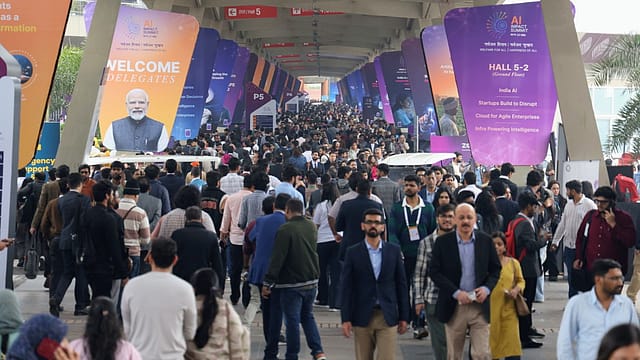
At this year’s India AI Impact Summit, the most important conversations were about compute, infrastructure, security, and control. For two years, the AI conversation in India has been about products. Which sectors get disrupted first? Which founders build the next wave? Which use cases scale? Those questions still matter. But what’s taking shape now is structural.
AI sovereignty in India is moving from rhetoric to operational reality. The India AI Impact Summit drew global AI leaders, major technology companies, and delegations from over 100 countries. OpenAI, Anthropic, Nvidia confirmed India is no longer just an end market. It’s a strategic node in the global AI system.
That matters because the next phase of AI competition will be decided by who controls the leverage points underneath the surface.
Durable value accumulates around infrastructure and distribution. Search became a great business because Google built infrastructure at scale and controlled distribution, beyond building a great algorithm. Cloud created more enduring value for Amazon, Microsoft, and Google than thousands of software applications combined. Platforms capture more than features. Infrastructure lasts longer than product novelty.
India has seen this before. In digital payments, the deepest shift came from the rails. UPI changed the underlying system. The economics of distribution changed with it. The companies best positioned were those embedded in everyday financial behavior.
AI will follow the same logic.
The biggest winners won’t be companies that add intelligence to software. They’ll be companies that control proprietary data, own critical workflows, build sector-specific distribution, embed themselves into real operating systems.
A standalone radiology tool is one thing. A hospital network that integrates diagnostic AI into records, procurement, compliance, clinical workflow: that’s a different kind of advantage. A route optimisation tool is one thing. A logistics platform that owns shipment flow, operational data, customer relationships: that’s another.
The moat is context, integration, workflow ownership, trust.
India generates exactly the kind of large-scale, messy, real-world complexity that makes AI systems valuable. Healthcare, logistics, finance, manufacturing, multilingual consumer markets: rich operational data that can’t be replicated elsewhere.
India is also building sovereign compute capacity through the IndiaAI Mission. A secure GPU cluster for strategic applications. A national data and model ecosystem.
But there’s a harder truth here.
India should not confuse participation with control. A country can be central to AI adoption and still capture very little long-term value. It can attract partnerships, generate demand, while the real power stays concentrated elsewhere in the stack.
Real sovereignty comes from owning infrastructure. Shaping standards. Controlling strategic datasets. Building systems others depend on.
That’s the real question facing India now: can we own meaningful parts of the stack in a world where intelligence becomes embedded into every critical system?
That’s a much bigger ambition. And finally, our ambition is catching up.
(The author is Founder & General Partner, Boundless Ventures. Views are personal.)