Govt monitoring ATF price amid rising fuel cost; aviation ministry relaxes FDTL norms
/ 3 min read
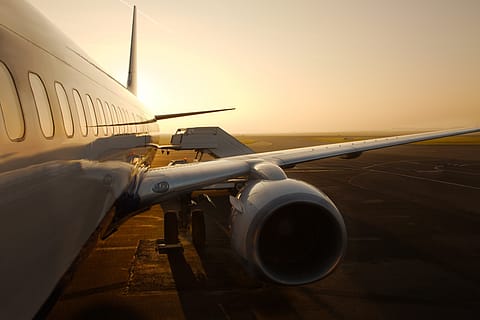
The ministry is also working on additional support measures for the industry, though details were not disclosed. | Credits: Shutterstock
Govt monitoring ATF price amid rising fuel cost; aviation ministry relaxes FDTL norms
India’s aviation ministry is closely tracking surging ATF prices amid the Israel-US war against Iran, while temporarily relaxing pilot Flight Duty Time Limitations for long-haul routes. With ATF forming about 40% of airline costs, the government has capped the pass-through of hikes, kept fares stable, enabled extra Gulf operations, and allowed cargo-only services to ease disruption.
This summary is AI-generated, and Fortune India is not responsible for its content or any associated copyright issues.
The conflict pushed up global aviation turbine fuel prices, adding to airlines’ cost pressures
The ministry is also working on additional support measures for the industry, though details were not disclosed. | Credits: Shutterstock
The Ministry of Aviation on Tuesday said it is closely monitoring aviation turbine fuel (ATF) prices as global fuel costs surge amid the Israel-US war against Iran. Additionally, the Directorate General of Civil Aviation (DGCA) has allowed temporary relaxation in Flight Duty Time Limitations (FDTL) for pilots operating long-haul flights to manage the operational strain.
The West Asia conflict pushed up global ATF prices, adding to airlines’ cost pressures. However, the government has stepped in to moderate the impact on domestic carriers.
“Government intervention on the price of ATF, which constitutes around 40% of an airline's operating cost, has ensured that domestic airfares remain stable. Government response has been focused on ensuring passenger safety and convenience,” Asangba Chuba Ao, Joint Secretary at the Ministry of Civil Aviation, said at a press briefing in New Delhi.
The ministry is also working on additional support measures for the industry, though details were not disclosed.
To maintain supply chains, authorities have permitted foreign carriers such as Emirates, Kuwait Airways, and Jazeera Airways to operate passenger aircraft for cargo-only services.
Airlines have cancelled more than 10,000 flights
In one of the major impacts of the ongoing war, the official informed that Indian airlines have cancelled more than 10,000 flights since the war broke out, as airspace closures and restrictions across the region severely impacted international operations.
The shutdown of major transit corridors has forced carriers to either suspend services or take longer alternate routes, particularly affecting long-haul flights to Europe and North America.
"On an average, Indian carriers used to fly about 300 to 350 flights daily to the Middle East (both ways put together). Today that number has come down to 80-90. That takes the total (flights cancelled by Indian carriers) since the beginning of the situation, that is from February 28, to over 10,000," Chuba Ao said.
According to the official, the situation has resulted in "unprecedented disruption in global aviation networks and international connectivity".
"Flights, especially to Europe and North America by Indian carriers, have to take longer routes, which has increased travel time and associated cost," he said.
{{#most-powerful-women-snapshot-individual.slug}} {{/most-powerful-women-snapshot-individual.slug}} {{^most-powerful-women-snapshot-individual.slug}} {{/most-powerful-women-snapshot-individual.slug}} {{#showRanking}} {{current-rank}} {{/showRanking}} {{#photo.0.url}}
{{name}}
DGCA relaxes pilot duty norms, govt steps in
The move is aimed at helping airlines deal with longer flying hours and crew shortages caused by rerouting.
Under the revised norms, permissible flight duty periods have been extended, with flight time increased to around 11.5 hours in certain cases. The relaxation, valid until April 30, may be reviewed depending on how the situation evolves.
“It will be revisited. We still have some time. It is an evolving situation and taking into consideration what happens in coming days, this dispensation will be relooked at. If required, we will take the necessary call at that point of time,” he added.
Meanwhile, the government has restored nearly 70% of commercial LPG supply to stabilise key sectors and avoid shortages.
"The government of India has already restored upto 70% of the commercial LPG supply. Between today (April 7), and March 14, around 44.5 lakh 19 kg cylinders have been sold. The quantity of this is approximately 86,400 metric tonnes," Sujata Sharma, Joint Secretary (Marketing & Oil Refinery), Ministry of Petroleum & Natural Gas, said during a media briefing earlier today.
NEXT STORY