The FAQs are AI-generated, and Fortune India is not responsible for its content or any associated copyright issues.
West Asia conflict: Govt secures fuel, fertiliser supply; 7–8 GW gas power support, LPG sourcing expanded
/ 2 min read
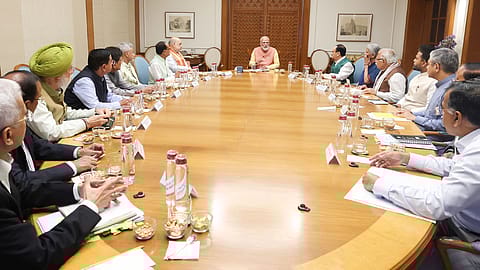
PM chairs a meeting of the | Credits: PIB
West Asia conflict: Govt secures fuel, fertiliser supply; 7–8 GW gas power support, LPG sourcing expanded
Prime Minister Narendra Modi chaired a high-level Cabinet Committee on Security meeting to review India’s preparedness amid the West Asia conflict, focusing on energy, fertiliser and price stability. The government is diversifying LPG and LNG imports, boosting 7–8 GW of gas-based power, and stepping up coal supplies to ensure summer power reliability and protect consumers from global volatility.
This summary is AI-generated, and Fortune India is not responsible for its content or any associated copyright issues.
Second CCS review focuses on energy security, fertiliser availability and price stability as Centre ramps up multi-sector response
PM chairs a meeting of the | Credits: PIB
Prime Minister Narendra Modi chaired a high-level meeting of the Cabinet Committee on Security (CCS) to review contingency measures amid the ongoing West Asia conflict, with a sharp focus on safeguarding energy supplies, fertiliser availability and price stability, according to a release by the Prime Minister’s Office (PMO),
This marks the second such CCS review, signalling heightened government vigilance as geopolitical tensions threaten global supply chains. The Cabinet Secretary outlined steps taken to secure petroleum supplies, including diversification of sourcing for LPG and LNG, with fresh import channels being activated across multiple geographies.
Energy security: LPG diversification, 7–8 GW gas-based power boost
Despite global volatility, domestic LPG prices have remained unchanged, supported by strict enforcement against diversion and hoarding. The government is also expanding piped natural gas (PNG) connections to reduce dependence on cylinders and improve last-mile delivery.
On the power front, measures to ensure peak summer stability include exempting 7–8 GW of gas-based capacity from the gas pooling mechanism and increasing coal rake movement to thermal plants. The Centre noted that coal stocks remain adequate to meet electricity demand in the coming months.
Fertiliser supply, price stability under watch
Fertiliser security—critical ahead of the Kharif and Rabi seasons—was another key focus area. The government is maintaining urea output at optimal levels while coordinating with overseas suppliers for DAP and NPKS imports. States have been directed to intensify enforcement against black marketing and diversion through daily monitoring and targeted raids.
Retail food prices have remained broadly stable over the past month, with control rooms set up for real-time coordination with states and Union Territories under the Essential Commodities Act. Prices of key agri commodities, including fruits and vegetables, are being closely tracked.
Supply chains, MSMEs and logistics risks flagged
Recommended Stories
The meeting also reviewed sector-specific risks across aviation, shipping, logistics and MSMEs, with discussions centred on mitigating disruptions stemming from potential supply chain bottlenecks, particularly around the Strait of Hormuz.
Modi emphasised the need to ensure uninterrupted availability of essential goods and directed ministries to prioritise citizen welfare. He also called for proactive communication to curb misinformation and maintain public confidence during the evolving geopolitical situation.