
Wheels of fortune
ADVERTISEMENT
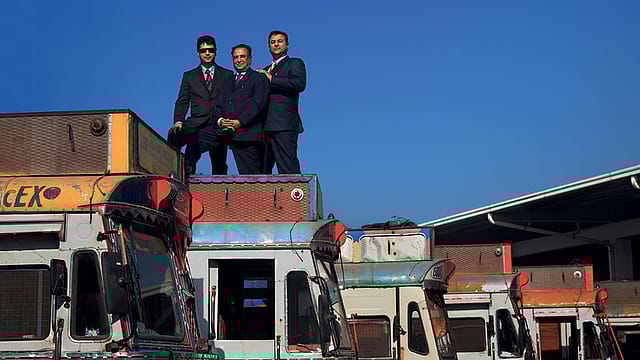
TRUCKER RAJESH Bhatia’s office is tiny, a 10-by-six-foot first floor room in a dirty bylane off Guru Nanak Auto Market in west Delhi’s Punjabi Bagh. Outside, men are loading large crates on to trucks. This is one of India’s busiest transport hubs from where thousands of trucks depart each day. The air smells of paint, diesel, and sweat. Bhatia’s been working out of here for 18 years. He once wanted to be a Bollywood star, but at 25, his father and elder brother yanked him into the business. The Bhatias are attached vehicle owners or AVOs, folks who own fleets (60 trucks in their case) but run them in the name of a different company. For them, Jaipur Golden, north India’s largest transport company, which employs them as AVOs, is everything.
“Our family’s destiny is inextricably linked to Jaipur Golden. As it grows and prospers, so do we,” says Rajesh. His father, 78-year-old Thakur Dass Bhatia who was Jaipur Golden’s first AVO, puts more sentiment in his comment. “I started out cleaning trucks; today I own a fleet. From a pauper, I became a millionaire, all because of Jaipur Golden.”
He isn’t alone—there are 99 other families who have all turned multimillionaires. Not all remain AVOs. Some have become hoteliers, like Mangal Sen Malhotra and Vipin Khanna, who run hotels in Kanpur (Uttar Pradesh) and Manesar (Haryana) respectively. But they say they owe their prosperity to Jaipur Golden.
This is the extraordinary story of how a trucking company figured out a way to share wealth with its employees in an era before the idea of employee stock options was born. Think of it as ESOPs with a spin before tech outfits made them wildly popular—and the lessons it holds for today’s businesses.
AUGUST, 1947. Sardari Lal Bahri had to abandon his flourishing bus transport business in west Punjab (now Pakistan) and flee to India. He crossed over with his three brothers, their families, and driver Makhan Singh.
They settled down near Delhi, in a dusty village called Gurgaon. Sardari Lal’s son, Virender, now one of Jaipur Golden’s three managing directors, says: “We ran the biggest fleet in Pakistan, with 63 buses. But we could not bring a single bus from there. We had to start from scratch.”
Sardari Lal decided to stick to what he knew best—transport—but he switched from buses to trucks. He figured that transporting goods would transform independent India. Unlike buses, trucks ply 24 hours, seven days a week, and their capacities aren’t constrained by the number of seats.
Predictably, he needed money but banks were wary of refugees. So he asked his family and friends to invest in his new business. And he offered to make them all co-owners.
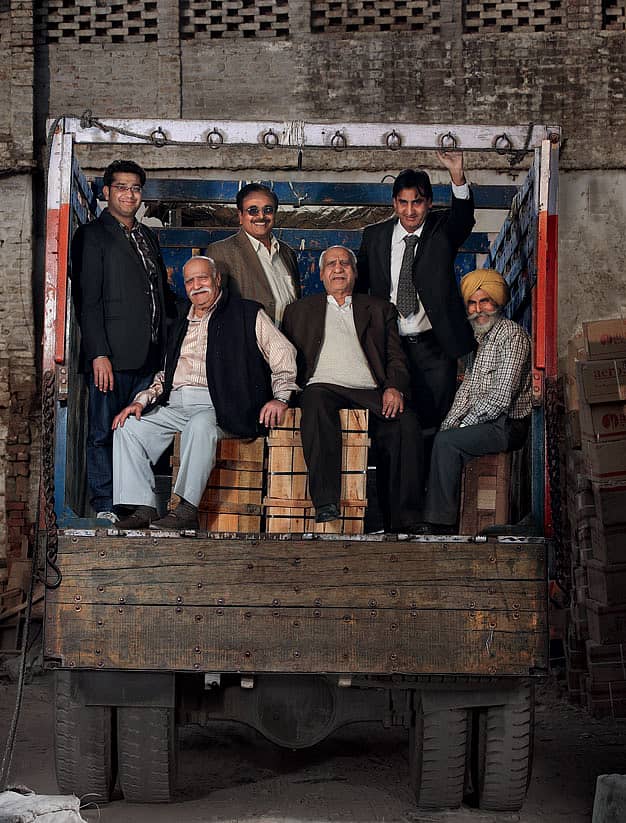
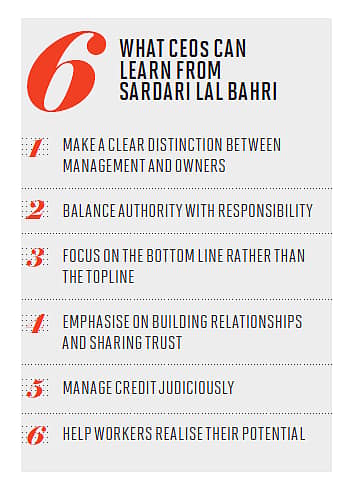
Sardari Lal laid down three principles. First, those who put in money could choose not to work for the company; even then, their dividends would be protected. “He was making a clear distinction between owners and managers, something that is being discussed in business families today,” says Vikram, Sardari Lal’s grandson and a Harvard Business School alum who runs an infrastructure company. Second, ownership would not change without consent of all shareholders. Third, wives and daughters would never be deprived of their share. “For a man born in 1905, this was all very radical and indicated remarkable foresight,” says Vikram.
Sardari Lal collected Rs 12,000 from four people (his brothers and the driver) and bought a secondhand Nissan truck from Delhi’s cantonment for Rs 10,000. That’s how the Jaipur Golden story began, back in 1948.
Initially, the Nissan—coal-run because diesel and petrol were scarce—carried both goods and people from Gurgaon to the markets of Old Delhi. Soon it was making four to five trips a day. By 1950, Jaipur Golden had eight trucks and had expanded operations to Amritsar, Pathankot (both in Punjab), Jaipur and Alwar (both in Rajasthan).
Sardari Lal’s epiphany came soon afterwards, when he realised that if his drivers were to own their trucks, they’d be more efficient, better behaved, and less prone to corruption than hired hands. So, he started making them partners in Jaipur Golden. Between 1948 and 1960, 10 drivers became partners. “Drivers may have independence on the roads, but they also need to act responsibly. That comes only with ownership,” says Vikram.
Sardari Lal then fine-tuned the system. He started the scheme of AVOs, where efficient and competent drivers were given an opportunity to buy trucks along with enough business to keep them going. “It was really a 100% risk-free microfinance activity because the equated monthly instalments were deducted from the payments to truckers,” says Vikram. In 1962, Jaipur Golden even started a finance company, Golden Finance, a 100% subsidiary with an initial equity of Rs 12 lakh. “Having a subsidiary finance company is unique to Jaipur Golden,” says Umesh Revankar, CEO, Sriram Transport Finance, a leading transport finance company.
Sardari Lal’s idea of sharing wealth was now ready to proliferate.
HARNAM DASS BHATIA remembers going up to Murari Lal Bahri, one of the directors, as a driver in 1962, and telling him that he wanted to buy a secondhand truck worth Rs 19,000 when he had only Rs 5,000 in his pocket. “Not only did he give me Rs 5,000, which he never asked me to return, he also ensured that Golden Finance gave me a loan of Rs 10,000,” says the 74-year-old, who went on to become an AVO. “There can be no greater satisfaction for a person who started off as a cleaner than to graduate to being a truck owner.” Today he owns 34 trucks, all financed by Golden Finance.
Then, in 1965, some 1,000 contract workers (mostly mechanics, cleaners, helpers, and a few drivers) went on strike asking for permanent employee status. That’s when Sardari Lal decided to sell half the 400 trucks he and his partners owned to the striking workers and convert them to AVOs. “We sold the trucks at a huge discount and even helped finance some of the workers,” reminisces Virender Lal.
It wasn’t about financing trucks alone. Helping out during personal crises, taking care of accident claims, and often even costs of hospitalisation have ensured a loyal band of truck owners. Says Rakesh Bahri, a third generation truck owner whose job is to settle insurance claims: “We settle them within 30 days of the complaint, but only charge 25% to 50% from our vendors (truck drivers), depending on the size of the claim. The rest is settled by the company itself. It is our duty to protect our vendors.”
Today, of the 1,000 trucks that run under the Jaipur Golden brand, only 200 are company-owned. The rest belong to independent owners, 200 in all, including those with just one truck.
In essence, the AVOs are independent businessmen who get infrastructure backup from Jaipur Golden. They get paid market rates in cash as soon as they return from their trips and they have access to the company’s 650 warehouses across the country. On the routes that Jaipur Golden plies—throughout the country except the northeast—there is a company office at least every 100 kilometres. The AVOs retain their independence when it comes to recruiting drivers, choosing routes, and more.
An AVO with five or more trucks can easily be a millionaire. After deducting all expenses—fuel, driver, cleaner, and the like—a truck generates Rs 30,000 to Rs 40,000 a month.
Few are willing to divulge the exact amount of their wealth. Rajiv Khanna, whose grandfather, Ganda Ram, joined the company in 1948, is an exception—he says he makes Rs 10 lakh a month from the 25 trucks he owns.
JAIPUR GOLDEN’S BIGGEST reward has been loyalty. Trucking is a notoriously fickle affair but all of Jaipur Golden’s truckers have stayed on with the firm.
Being part of a network also helps. Khanna once attempted to diversify into “open market operations’’—
delivering goods for any transport firm that needed his services. This ended in disaster. The 10 trucks he had assigned ran into losses within eight months because of problems such as delayed payments and claims for damages.
Harnam Dass is categorical that his children stay with Jaipur Golden. “We started a new company with few other truckers in 1990, but we went bust after six months,” he says.
“What we’ve done goes beyond making wealth for others,” says Vikram. “We’ve created a flotilla of trustees.” This sums up Jaipur Golden’s management philosophy—customers trust the company, which in turn trusts the AVOs, who in turn trust their drivers to deliver the goods. Indeed, a few AVOs have formed their own AVOs and expanded the network.
Sardari Lal died in 2002; but for a man who lost his father at 15 and began working as a mechanic to support his family, he has left quite a legacy.