India needs niche tourism, tier-II expansion and skilled workforce to unlock India’s $3 trillion tourism ambition
/ 2 min read
According to a report by ASSOCHAM, tourism’s contribution to India’s GDP rose to 5.2% in FY2024, from 1.5% in FY2021, while the sector supported 84.6 million direct and indirect jobs.
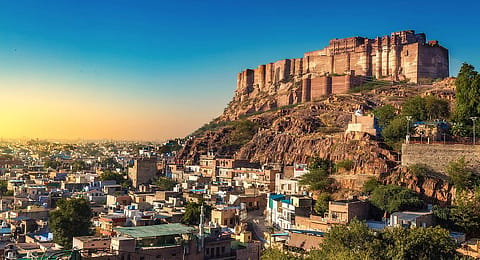
Under the Viksit Bharat 2047 goals, India's ambition is to become a $3 trillion tourism economy. | Credits: Shutterstock
India’s tourism sector needs to shift its focus from simply increasing tourist footfalls to building better destinations, developing niche travel segments and improving the quality of visitor experiences, according to a new report by CBRE. It has called for greater private-sector participation, stronger destination management, expanded connectivity and targeted incentives for segments such as adventure, cruise and rural tourism.
Under the Viksit Bharat 2047 goals, India's ambition is to become a $3 trillion tourism economy.
The report, Reimagining Indian Tourism: Unlocking the Next Wave of Growth, released at the ASSOCHAM National Tourism Conclave in New Delhi, recommends a coordinated push by the government and tourism businesses to convert rising demand into investment, employment and regional economic development.
According to the report, tourism’s contribution to India’s GDP rose to 5.2% in FY2024, from 1.5% in FY2021, while the sector supported 84.6 million direct and indirect jobs. Domestic visitor spending reached $162.9 billion in FY2024, around five times international visitor spending of $32.5 billion. Domestic tourist visits rose 45.6% year-on-year to 4.29 billion in 2025, while foreign tourist arrivals stood at 9.15 million.
Against this backdrop, CBRE has urged the government to move towards niche-specific tourism policies, including frameworks for adventure, cruise and rural circuits. It has also recommended continuing investments in expressways, UDAN and ropeways to turn individual attractions into integrated, multi-destination corridors.
For international tourism, the report calls for continued visa fee rationalisation, faster processing and greater overseas destination marketing, particularly to increase spending during the average 18.1-day stay of foreign tourists.
Next growth wave
Tourism Minister Gajendra Singh Shekhawat said the next phase would require the industry to look beyond visitor numbers and focus on “building new destinations, creating new experiences and improving destination management”, while stressing the need for investment in infrastructure, hospitality and human resources.
Tourism businesses, meanwhile, will need to take a larger role in developing the supply side. CBRE recommends expanding branded hotels and verified homestays into tier-II and tier-III markets, where demand is increasingly moving beyond traditional metropolitan gateways. It also calls for greater adoption of sustainability certifications such as GSTC and Green Key, alongside structured and decentralised workforce training.
The skills issue could become a significant constraint. Tourism supported 84.6 million jobs in FY2024, but the report points to an estimated shortfall of around 11 million travel and tourism workers by 2035. It recommends segment-specific training for wellness, MICE, cruise and heritage tourism, along with better career pathways and training closer to emerging tourism markets.
The infrastructure push is already widening the tourism map. India had around 166 operational airports as of 2026, while its road network spans more than 6.4 million km. The Vande Bharat network had expanded to 82 operational routes by August 2026, while the Parvatmala programme targets more than 250 ropeway projects spanning 1,200 km.
CBRE chairman and CEO Anshuman Magazine said connectivity had already done “a lot of the heavy lifting”, but the bigger challenge now lay at destinations themselves. “The harder part sits at the destination itself — rooms, trained people, and the kind of assets each type of traveller actually needs,” he said.
{{#most-powerful-women-snapshot-individual.slug}} {{/most-powerful-women-snapshot-individual.slug}} {{^most-powerful-women-snapshot-individual.slug}} {{/most-powerful-women-snapshot-individual.slug}} {{#showRanking}} {{current-rank}} {{/showRanking}} {{#photo.0.url}}
{{name}}
ASSOCHAM president Nirmal K. Minda said the sector must focus on five pillars: Make in India, Ease of Doing Business, MSME growth, the Digital Economy and Sustainability, as India seeks to build a $3 trillion tourism economy.
Follow Fortune India
NEXT STORY