Kalpakkam reactor: India's big bet on nuclear future, energy security with fast breeder technology
/ 4 min read
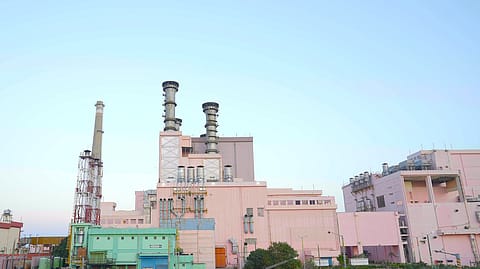
PFBR attains first criticality | Credits: @DAEIndia / X
Kalpakkam reactor: India's big bet on nuclear future, energy security with fast breeder technology
India’s Prototype Fast Breeder Reactor at Kalpakkam has achieved criticality, marking a pivotal step in the second stage of its three-phase nuclear programme. The 500 MW PFBR, decades in the making, aims to breed new fuel from plutonium and eventually unlock India’s vast thorium reserves, placing the country back in a high-stakes global race over fast breeder technology and nuclear energy security.
This summary is AI-generated, and Fortune India is not responsible for its content or any associated copyright issues.
The country has now entered stage 2 of its nuclear programme, pursuing a path largely abandoned globally, with only Russia achieving scale.
PFBR attains first criticality | Credits: @DAEIndia / X
Prime Minister Narendra Modi on Monday announced that the Prototype Fast Breeder Reactor (PFBR) at Kalpakkam attained criticality. In simple words, this marks a major step in advancing India’s second stage of its civil nuclear programme.
The prime minister called it a “defining step in India’s civil nuclear journey,” framing the milestone as a move toward energy security and technological self-reliance.
In reality, India has crossed an important threshold, not completed the journey.
A programme four decades in the making
India’s fast breeder ambitions go back to the vision of Homi Jehangir Bhabha in the 1950s, who anticipated that the country’s limited uranium reserves would eventually force a shift toward thorium.
The three-stage nuclear programme that followed was built around that constraint:
Stage 1: Uranium-based reactors
Stage 2: Fast breeder reactors using plutonium
Stage 3: Thorium-based reactors
The PFBR is the centrepiece of stage 2.
The groundwork began in the 1980s with the establishment of the Fast Breeder Test Reactor (FBTR) at Kalpakkam under the Indira Gandhi Centre for Atomic Research.
The PFBR itself was approved in 2003, with construction beginning in 2004 under BHAVINI, a public sector unit under the Department of Atomic Energy. The 500 MW reactor is India’s first commercial-scale fast breeder reactor.
For the context, a 500 MW reactor can generate enough electricity in a year to meet the needs of roughly 4–5 lakh households, depending on operating levels and consumption patterns.
Originally slated for commissioning within a decade, the project saw repeated delays due to design complexity, regulatory scrutiny and post-Fukushima safety enhancements.
What “criticality” does—and doesn’t mean
The attainment of criticality means the reactor has achieved a self-sustaining nuclear chain reaction. It does not mean full power generation, commercial viability or even a proven fuel breeding efficiency.
{{#most-powerful-women-snapshot-individual.slug}} {{/most-powerful-women-snapshot-individual.slug}} {{^most-powerful-women-snapshot-individual.slug}} {{/most-powerful-women-snapshot-individual.slug}} {{#showRanking}} {{current-rank}} {{/showRanking}} {{#photo.0.url}}
{{name}}
Historically, fast reactors globally have taken several years after first criticality to stabilise operations, validate breeding ratios and move toward reliable power generation.
The PFBR uses plutonium-based mixed oxide fuel, derived from India’s existing uranium reactors.
Inside the core:
Plutonium undergoes fission → releases energy and neutrons
Those neutrons then convert:
Uranium-238 → Plutonium-239
Thorium-232 → Uranium-233 (in the blanket, as part of India’s longer-term thorium cycle)
U-233 in turn undergoes fission, releases heat and neutrons. The heat is used to produce steam, which will move the turbine that in turn will produce electricity. In effect, the reactor generates electricity while creating new nuclear fuel.
This “breeding” capability is what makes it central to India’s long-term strategy.
The resource equation: uranium vs thorium
India’s nuclear policy is shaped by scarcity and abundance.
While India has limited domestic reserves of Uranium, its Thorium reserves are among the largest globally, found in coastal sands across Kerala, Tamil Nadu and Odisha.
The PFBR is designed to bridge that gap—using plutonium to eventually unlock thorium-based fuel cycles.
A technology the world walked away from
Fast breeder reactors were once seen as the future of nuclear energy, but most countries abandoned them.
The United States shut down its programme decades ago, France’s Superphénix was decommissioned and Japan’s Monju reactor was scrapped—all because of reasons ranging from politics to economics and complexity of the breeders. Today, only Russia has successfully operated fast breeder reactors at scale through its BN-series.
China is emerging as the other serious contender. It has operational fast reactors (CFR-600 programme), and it is aggressively investing in thorium-based molten salt reactors.
The PFBR places India back in a small, high-stakes global race.
As former Atomic Energy Commission chairman Anil Kakodkar has argued, India’s nuclear expansion is constrained by limited domestic uranium resources, making the transition to thorium-based fuel cycles critical for long-term energy security.
The government has set an ambitious target of reaching 100 gigawatts of nuclear power capacity by 2047. Achieving this would require roughly 18,000–20,000 tonnes of mined uranium annually—about one-third of current global production.
However, for all its promise, breeder technology has struggled globally for three reasons:
Economics: Fast reactors are significantly more expensive than conventional nuclear plants.
Complexity: The PFBR uses liquid sodium coolant, which reacts violently with air and water, requiring advanced safety systems.
Fuel cycle challenges: Reprocessing plutonium and handling uranium-233 involve technical and regulatory hurdles.
Studies in journals such as Progress in Nuclear Energy have highlighted that while India’s programme is technically sound, scaling it commercially remains uncertain.
Policy analysts have also pointed out that the success of PFBR hinges on achieving a breeding ratio above 1 and demonstrating sustained, stable operations.
Even after criticality, the next phase will involve:
Gradual power ramp-up
Multi-year performance validation
Fuel breeding efficiency testing
Safety and regulatory clearances
Only after these stages can the reactor be considered commercially viable.
India has plans to build more breeder reactors—but those decisions will depend on how PFBR performs over time.
The Kalpakkam reactor is not just a power plant coming online. It is a technological milestone for a country that has persisted with a model the world largely abandoned—and is now closer than ever to proving whether it works at scale.
But for now, the milestone is best understood for what it is: not the culmination of a programme, but the beginning of its most critical phase.
NEXT STORY