No permission needed to sail through Hormuz, says govt as Indian ships resume crossings
/ 2 min read
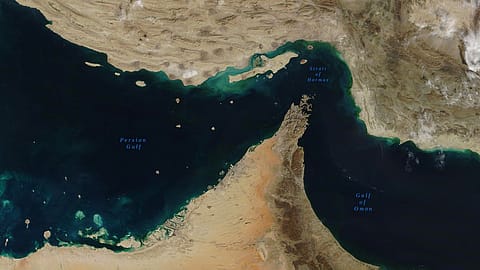
Nearly one-fifth of global daily oil consumption flows through the Strait of Hormuz, which is approximately 33 kilometres wide at its narrowest point. | Credits: Shutterstock
No permission needed to sail through Hormuz, says govt as Indian ships resume crossings
The Indian government clarified that no permission is needed to navigate the Strait of Hormuz, as Indian ships resume passage through the conflict-affected area. Despite recent crossings by four vessels, many remain stranded. The strait, crucial for India's energy imports, is governed by international conventions allowing free passage, with transit decisions based on safety assessments.
This summary is AI-generated, and Fortune India is not responsible for its content or any associated copyright issues.
Two Indian-flagged LPG carriers — Pine Gas and Jag Vasant — crossed the strait on Monday, carrying a combined 92,612 tonnes of LPG, equivalent to roughly a day’s domestic consumption.
Nearly one-fifth of global daily oil consumption flows through the Strait of Hormuz, which is approximately 33 kilometres wide at its narrowest point. | Credits: Shutterstock
The government on Tuesday said that no permission is required to sail through the Strait of Hormuz, even as Indian vessels gradually resume movement through the conflict-hit maritime corridor, with at least four ships having successfully crossed in recent days.
Addressing concerns over reports that Indian vessels were awaiting clearance from Iran, Rajesh Kumar Singh, special secretary at the Ministry of Ports, Shipping and Waterways, said the strait is governed by international navigation conventions and allows for freedom of passage.
“No permission is required to sail through the strait,” Singh said, adding that decisions on transit are taken by shipping companies and charterers based on safety assessments.
Ship movement resumes amid conflict
The clarification comes as movement through the waterway, which had nearly come to a halt following US–Israel strikes on Iran and Tehran’s retaliation, is slowly picking up.
Two Indian-flagged LPG carriers — Pine Gas and Jag Vasant — crossed the strait on Monday, carrying a combined 92,612 tonnes of LPG, equivalent to roughly a day’s domestic consumption.
They join earlier crossings by MT Shivalik and MT Nanda Devi, taking the total number of Indian vessels that have safely transited the strait since the conflict began to at least four.
Several vessels still stranded
Despite the recent movement, a large number of Indian vessels remain in the region.
Of the 28 Indian-flagged ships present in the Strait of Hormuz when the conflict escalated, 22 were stranded in the Persian Gulf, with most located on the western side of the strait.
These include LPG carriers, crude oil tankers, LNG vessels, container ships and bulk carriers, collectively carrying critical energy supplies and commercial cargo.
Around 540 Indian seafarers remain onboard these vessels, according to officials.
Selective transit, heightened caution
Some vessels have reportedly taken detours via the Larak–Qeshm channel, potentially to facilitate identification and verification, although officials maintain that no formal permission regime exists.
RANK
COMPANY NAME
REVENUE
(INR CR)
(INR CR)
{{#current-rank}} {{current-rank}} {{/current-rank}} {{^current-rank}} {{rank}} {{/current-rank}} {{name}} {{#revenue}} {{revenue}} {{/revenue}} {{^revenue}} {{noi}} {{/revenue}}
Shipping companies are factoring in safety risks, insurance costs and evolving military conditions before taking transit decisions.
The Strait of Hormuz remains a critical artery for India’s energy imports.
Around 85–95% of India’s LPG imports and nearly 30% of natural gas supplies transit through the strait, along with a major share of crude oil from West Asia.
NEXT STORY