Has HDFC Bank lost its governance premium?
/ 10 min read
Since taking charge as the MD & CEO, 61-year-old Sashidhar Jagdishan has spent a good part of his tenure firefighting controversies, exits and governance issues, rather than building HDFC Bank 2.0.
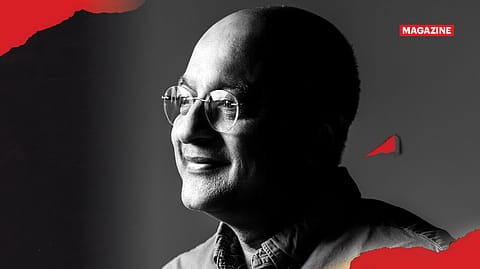
Sashidhar Jagdishan, HDFC Bank MD & CEO | Credits: Narendra Bisht and Anirban Ghosh
This story belongs to the Fortune India Magazine july-2026-mpw-100-most-powerful-women issue.
LEADERSHIP TRANSITIONS at iconic institutions are often preceded by troubled times. Sashidhar Jagdishan took on the reins of a banking behemoth at its peak, arguably the worst possible moment to inherit a legacy that was beginning to crack beneath a veneer of unassailable strength.
Since moving into the corner office for the first time in October 2020, Jagdishan got a second term as MD and CEO in September 2023, months after parent HDFC got subsumed into the bank. At that time, there was more hope and a bit of conviction that one of the largest mergers in India’s financial history would succeed. The bank needed the man instrumental in executing the deal to be there to initiate its success.
Three years on, the narrative is far from pretty.
The historical premium the bank has enjoyed has shrunk with its price-to-book multiple now at 2.1% vs an all-time high of 4.48% in FY18. The month-on-month total shareholder return (TSR) has more than halved to 8.99% as on June 30, 2026 from a high of 20.26% in April 2020 and 16.81% in November that year, just a month after Jagdishan took over (See: Losing currency).
In fact, during Jagdishan’s term thus far, the stock has risen just 29% even as peer ICICI Bank has tripled (238%) and the Nifty Bank index has more than doubled (135%).
The dismal performance has been compounded by the fact that the net interest margin (NIM) for the bank has narrowed to 3.38% in FY26 from 4.3% pre-merger, as low-yielding mortgage loans had to be funded by high-cost deposits. In fact, the loan-to-deposit ratio continues to be high at 95%. In other words, the bank is lending out 95 paise for every rupee of deposits received.
While the margin compression and fight for deposits are an industry phenomenon, Jagdishan is battling an institutional crisis, where governance and credibility are at stake. (See: Blind spots).
More Stories from this Issue
A governance deficit
Since Jagdishan’s elevation, the bank has seen a talent exodus, with six senior exits and two key retirements in the past two years weakening the second line of leadership. The most important exits were Bhavesh Zaveri (executive director), Rahul Shukla (group head, corporate and business banking), Vinay Razdan (chief human resources officer), Arvind Kapil (group head, mortgage banking), and Parag Rao, who had built the payments and digital business.
Even as managing talent was proving to be a challenge, the sudden resignation of part-time chairman Atanu Chakraborty marked a new low. A former IAS officer and ex-secretary of the Department of Economic Affairs, Chakraborty dropped a bombshell in his letter to the board and exchanges stating that “happenings and practices” over the past two years were not in congruence with his “personal values and ethics”.
Since Chakraborty’s premature exit, the stock has fallen 6% from ₹831 on March 18, 2026, and about 19.4% year-to-date (as on June 30, 2026).
In response to the allegations, the board initiated an external investigation into the governance concerns raised by Chakraborty, to get clarity on the matter before its Governance, Nomination and Remuneration Committee (GNRC), headed by Harsh Bhanwala, meets and discusses an additional term for Jagdishan, whose second term ends on October 26, 2026.
{{#most-powerful-women-snapshot-individual.slug}} {{/most-powerful-women-snapshot-individual.slug}} {{^most-powerful-women-snapshot-individual.slug}} {{/most-powerful-women-snapshot-individual.slug}} {{#showRanking}} {{current-rank}} {{/showRanking}} {{#photo.0.url}}
{{name}}
On June 26, the bank said the “legal review” had been completed by Wilson Sonsini Goodrich & Rosati and Wadia Ghandy. The legal firms gave a clean chit, stating that “Mr. Chakraborty’s statement and its implications were not substantiated,” and adding that “contemporaneous evidence reviewed was inconsistent” with Chakraborty’s statements.
But the actual report and comments from the investigation have not been disclosed.
The bank-appointed legal firms had looked into the alleged governance lapses and ethical concerns raised by Chakraborty in his letter, by examining the minutes of review meetings and agenda papers, conducting interviews, and looking into additional documents and information, in the two years preceding his resignation.
Though Chakraborty chose not to speak with the legal firms during their investigation, he told Fortune India about the reason for doing so, and questioned the need and basis for an independent legal review. “I specifically asked the legal firms for the scope and legal basis for such a review. They did not provide me the details, which is why I did not speak to them,” Chakraborty said a day after the probe statement was released.
Possibly, the reason could be that a legal evaluation of a governance review by an external law firm, considering that all regulated and well-governed commercial banks already have a strong governance panel, is seen as irrelevant. “A bank’s board should not be talking about boardroom issues to an external legal firm,” says a former director of a private sector bank.
Chakraborty had earlier told a news channel that the mis-selling of Credit Suisse’s Additional Tier-1 bonds to NRI clients (between 2018 and 2022)as fixed-maturity products by the bank’s Dubai offshore branch had led to a “large amount of regulatory focus” and risk on the bank. He said Jagdishan, however, downplayed the event as a “technical lapse in documentation and regulatory interpretation.” The Dubai Financial Services Authority (DFSA), however, in September 2025 barred the bank’s branch at Dubai International Financial Centre from onboarding new clients.
The bank has said that the DFSA had identified certain gaps in client-onboarding requirements at its Dubai branch. “Processes were not proper and the top management was not informed,” a source aware of the matter told Fortune India, on condition of anonymity.
The Dubai episode does raise some key concerns: Why was no corrective board-level mechanism engaged during that period? Will the clients who lost money from the bonds get any compensation?
Also, what’s damning about the revelation made by Chakraborty is the fact that the bank’s internal compliance team was aware of the issues since 2020.
The Dubai authorities’ crack-down follows NRI investors incurring losses on the bonds during the UBS bailout in 2023. And what followed was predictable: the bank, in March 2026, terminated three senior executives and penalised 12 other employees for allegedly “mis-selling” the bonds.
But it is pertinent to note that the sacking of the employees came just days after Chakraborty had exited, citing concerns over processes and ethics at the bank. In a way, the Dubai epsiode just reiterated the observations raised by the former part-time chairman.
The governance saga continued in May this year, when reports surfaced in the media about internal bank documents, alleging that the bank had ‘camouflaged’ differential interest payments as marketing expenditure to attract deposits from a state-run road development agency.
The bank’s audit committee had ordered an internal vigilance probe on March 12, after an audit of the marketing department questioned the payments. A ₹45-crore payment was made to the Maharashtra State Road Development Corporation in FY24 and FY25. Reports also alleged that the bank’s top management was in the know and involved in discussions, though no written approvals or documentations were made by them during the decision making.
HDFC Bank has denied any wrongdoing and said it maintains robust internal oversight, audit, and control processes. Both Jagdishan and Mistry chose not to comment when Fortune India contacted them for their comments.
What has also compounded Jagdishan’s troubles is a legal case filed against him and the bank.
A bitter pill
The CEO is embroiled in an alleged bribery case filed by the Lilavati Kirtilal Mehta Medical Trust, following the filing of a First Information Report (FIR) by the Mumbai police.
The trust had filed a criminal defamation complaint before the First Class Judicial Magistrate in Girgaon (Mumbai). The trust in its complaint had alleged that the bank and Jagdishan had made “malicious and derogatory” statements against the trust and the permanent trustee, Prashant Mehta. Though Jagdishan moved the court to quash the FCJM notice and the defamation case, the court only quashed the notice on “technical” grounds.
The defamation case is still pending. Meanwhile, the Supreme Court in May had issued a notice to the bank’s CEO on an appeal by the Trust, challenging the HC verdict that set aside the bribery FIR registered against Jagdishan. HDFC Bank, on its part, is seeking recovery efforts against Splendour Gems, a company owned and managed by the Mehta family (which operates the trust), for dues totalling ₹65.22 crore.
While the bank claims that internal feuds and the ongoing recovery against a trustee as the reasons behind the case, it’s clear the CEO is not in control of the narrative.
Firefighting, not the Puri way
For much of 2026, and even for the past two years, Jagdishan and the top management have spent their time firefighting issues rather than building HDFC Bank 2.0, beyond Aditya Puri’s legacy.
It is both natural and unfair to start comparing the leadership of Jagdishan with that of his predecessor. Jagdishan always had massive shoes to fill and walk in.
Puri was not in a tearing hurry to clear the merger with HDFC, because he knew that despite the longer-term benefits of cross-selling of products, there would be diseconomies of scale.
And it is not that Puri, in his 26-year tenure, left with a squeaky-clean slate. Puri navigated the global financial crisis and demonetisation. Tough questions were also raised when there were irregularities, after its vehicle financing unit was charged with forced selling of GPS products along with regular loans to auto loan borrowers. Puri did not duck these.
His persona sometimes overshadowed the bank’s performance. His focus towards ensuring profitability and being target driven (finding the laddoo, as he often asked his team), being one of the early adopters of technology and working with fintechs, but not carrying a mobile phone to office, were all typical Puri.
Jagdishan was a study in contrast.
A confidant of Jagdishan says, “He is straightforward and will admit a mistake, if he has committed it. At a corporate highpoint, anyone who admits his mistake publicly [as Jagdishan has done] says a lot.”
Shriram Subramanian, founder and MD of InGovern, an independent corporate governance research and proxy advisory firm, says post the completion of the legal review, the bank needs to move on.
But the findings will be watched and could determine the tenure of Jagdishan’s term. “All these developments are not a reflection of the ethos of the bank, but on TSR, Jagdishan scores a negative,” Subramanian tells Fortune India.
Ajay Srivastava, CEO of Dimensions Corporate Finance Services, the New Delhi-based investment banking firm, also agrees with Subramanian. “I do not think there is a systemic problem in the bank. It has a large base of decent, professional people. The problem is that the required severity of actions, for the things that have taken place, if not taken, can lead to a culture of impudence in the bank,” says Srivastava.
The turn of events has brought the focus back on whether the regulator will grant the CEO a third term.
A truncated next term?
Even as the legal review has given the bank and the CEO a clean chit, a source aware of the development tells Fortune India that the bank’s governance had never been compromised. “Stakeholders should not be worried. Chakraborty had created a reporting and operating structure slightly different from that which Jagdishan followed. This might have created confusion,” said the source.
HDFC Bank’s interim part-time chairman Keki Mistry had also told analysts over a call: “I think to my mind there could be a relationship issue between him (Chakraborty) and the management. That may have been manifested over a period of time.”
HDFC Bank is classified by the RBI as a domestic systemically important bank, and, pertinently, it had issued a clean chit to the bank post Chakraborty’s exit, citing that there are “no material concerns on record as regards its conduct or governance.” For now, the board is backing Jagdishan. At the March 19 analyst meet, Mistry had told Citigroup research analyst Kunal Shah: “The GNRC will meet in the near future and take a call. But Sashi [Jagdishan] is very much part of the bank. He has been running the bank successfully for the past many years and we all hope that he will continue to work with the same devotion that he has over these years.”
Experts suggest otherwise. Srivastava of Dimensions believes Jagdishan might not get a full three-year term. “He could get a one-year extension. This would give the regulator time to identify a new candidate and improve the situation,” he says.
With the legal review complete, the bank’s focus will now shift back to business. According to a high level source, “Not that it was not there earlier, but the focus on business will be much more intense now.”
With the stock down 6% since Chakraborty’s exit, it seems investor confidence is still weak.
“The bigger concern facing the bank relates to who will be the new CEO,” says Subramanian.
Mistry will step down on September 18, 2026 as the interim chairman, after two extensions since March 2026, to make way for Rajiv Kumar, former finance secretary and ex-chief election commissioner, who has been appointed as the new part-time chairman. Kumar’s three-year tenure and appointment as an independent director are, however, subject to approval from the regulator and bank shareholders. Meanwhile, the bank has appointed Puneet Sharma as CFO-designate. Sharma, who spent more than six years as CFO at Axis Bank, will take charge on December 1, following the retirement of Srinivasan Vaidyanathan.
For now, all eyes will be on the developments following the bank’s annual general meeting on August 5 .
Whether HDFC Bank, with a market cap of ₹12.29 lakh crore as of June 30, 2026, and a net worth of ₹5.81 lakh crore in FY26, will see a change at the top, or whether the regulator grants Jagdishan a third extension will only be clear in the coming weeks.
Researcher Sreenath Radhakrishnan, in an early-stage research paper at SSRN, a pre-print open-access online platform, says, “The evidence supports the ‘Complexity Trap’ argument: the 2023 merger with HDFC Ltd nearly doubled the bank’s balance sheet, creating immediate regulatory pressure to mobilise deposits at scale. This pressure gradient—not individual wrongdoing alone—increased the probability of compliance breakdowns across the organisation.”
Given that India’s marquee bellwether private sector bank today trades at a discount to its own historical premium — putting it in the league of public sector banks — the verdict is loud and clear.
Chakraborty tells Fortune India that he does not hold any ill-will against the board or the leadership: “I have moved on. My resignation was more for the highest echelons to introspect upon practices taking place within the bank.”
But it seems the legal exoneration is precisely the very moment in the bank’s history that Chakraborty had hoped to prevent.
Follow Fortune India
Sign in to read full story
To access our exclusive magazine content, sign in to your Fortune India account.
Sign In NowNEXT STORY