India's Top 100 Billionaires 2026: Murali Divi's chemistry of wealth
/ 7 min read
No. 18 on Fortune India's 2026 study of India's top 100 billionaires with a net worth of ₹1,13,581 crore, Murali K. Divi has delivered one of the best wealth-creating engines through Divi’s Laboratories.
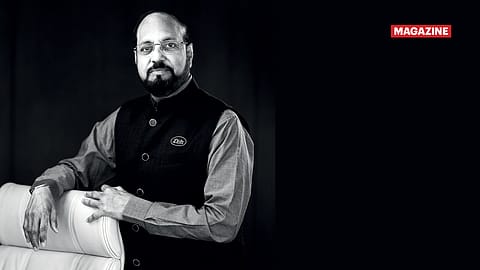
Murali K. Divi, founder & MD, Divi's Laboratories. | Credits: Pureti Vikas Chandra
This story belongs to the Fortune India Magazine september-2026-indias-top-100-billionaires issue.
SEVENTY-FIVE-YEAR-OLD Murali K. Divi, founder and managing director of Hyderabad-based Divi’s Laboratories Ltd, does not consider himself a businessman. When he set out to build a pharmaceutical business in the 1990s, creating wealth was never his primary objective. But 32 years later, good chemistry has delivered an unprecedented by-product — wealth.
And the unassuming billionaire is quick to credit the catalysts for his success. “We are creating wealth on the strength of our technology, our chemistry, and above all, our people.”
This humility is Murali’s hallmark. And then there is his financial discipline, which explains why he has borrowed money only once in his life — in 1994, when the U.S.-trained chemist was stepping into the role of a pharma entrepreneur. “I had invested all my money, and a few shareholders who believed in me had also put in their savings. But we still needed to raise about ₹35-40 crore to get started,” he recalls. “Convincing financial institutions and banks was extremely difficult because they did not believe in our business model.”
It was a time when most domestic companies developed low-cost versions of patented medicines through processes different from those used by innovators, challenging the intellectual property (patent) rights of global pharma majors. But Murali’s game plan was different. He wanted to partner with research-based pharma MNCs by developing and supplying the key ingredients for their innovative medicines, a business model that even MNCs took time to digest. “While most Indian companies were looking for ways to bypass or challenge patents, we focussed on building trust through strict IP compliance. We committed on day one that we would not violate process patent or a U.S. patent, and we would be 100% IP-compliant,” he says. As most companies were violating the norms, convincing Big Pharma was the first challenge Murali faced. “I told them I would develop products exclusively for them, but they needed time to evaluate us.”
Lenders were hesitant as they feared that this business model could take long to succeed. Or perhaps, never succeed at all. Eventually, Murali managed to secure the funds he needed. But after repaying the debt within four to five years, he never borrowed again. “Not even for working capital. Every subsequent investment happened through internal accruals, reflecting our strict financial discipline,” he says.
Shareholder gains
That said, Murali says he never viewed the company through the prism of its size (over $1 billion in sales revenue), market cap (over ₹1 lakh crore) or its 20,000-plus employee strength. Yet, for a billionaire businessman who has never invested in the stock market or bought or sold shares, his company has created substantial wealth for its shareholders. Divi’s share price gained 34.5% in the past year (as on August 26), even as the BSE Sensex declined 2.63%. Over the past decade, the shares have posted a CAGR of 21.08%, almost double the Sensex’s 10.80%. Based on the promoter family holdings, Murali, who was ranked 21st in 2025 with an estimated wealth of ₹93,811 crore, or more than $10.9 billion, according to Fortune India’s study of India’s Top 100 Billionaires, moved up to 18th in 2026 with a wealth of ₹1,13,581 crore, or $11.93 billion.
At 51.88%, the promoter holding has remained unchanged since Divi’s listing in 2003. The bulk of the promoter group’s stake is equally divided between Murali’s two children — son Kiran S. Divi, CEO of Divi’s Laboratories, and daughter Nilima Prasad Divi, whole-time director (commercial) — with each holding 20.34%. Murali retains a 2.85% stake.
More Stories from this Issue
In FY26, Divi’s Laboratories reported consolidated income of ₹11,067 crore, up from ₹9,712 crore in the previous fiscal, while net profit stood at ₹2,568 crore. Exports contributed nearly 89% of the total sales revenue, with Europe and the U.S. accounting for 74% of export revenue. About 55% of revenue came from custom synthesis, the core of the partnership model pioneered by Divi’s.
Murali’s longstanding relationship with Big Pharma was not built overnight. It was earned over time, with the products his company developed becoming the strongest proof of its capabilities. The journey began with the very first products from Divi’s in the 1990s. Murali quickly developed “some of the most challenging chemistry products of those days, including the optically active molecules such as dextromethorphan and naproxen”. “We have remained the global leaders in those products for more than 20 years now,” Murali says.
The company’s value lies in its deep chemistry expertise, proven ability to handle complex molecules, and capability to manufacture them at global scale. “Only a handful of global companies can combine advanced chemistry with high volume production to meet the global requirement. Over the past 25 years, Big Pharma has focussed more on innovation compared to internal manufacturing. Almost all of them have started relying on trusted contract manufacturing partners that can supply APIs, including starting materials, and the critical N -1 intermediates for their drug pipelines. That is where we play a pivotal role,” he explains.
The relationship has evolved well beyond manufacturing. “We work closely with Big Pharma to develop and manufacture several products that may reach the market next year, or even several years from now. Because of the expertise we have built in complex chemistry, our partners engage with us at the earliest stages of clinical development.”
{{#most-powerful-women-snapshot-individual.slug}} {{/most-powerful-women-snapshot-individual.slug}} {{^most-powerful-women-snapshot-individual.slug}} {{/most-powerful-women-snapshot-individual.slug}} {{#showRanking}} {{current-rank}} {{/showRanking}} {{#photo.0.url}}
{{name}}
Today’s global blockbuster drug — the GLP-1 class of medicines prescribed for weight loss and diabetes — is a classic example. Divi’s spotted the opportunity well before many other counterparts. The early bet is now beginning to pay off. “The chemistry is changing slowly from life-saving medicines to lifestyle medicines. Increasingly, people are seeking treatments that help them maintain a higher quality of life as they age. We continuously monitor such emerging trends and identified this shift in preference three years ago. We started tracking advancements in GLP-1s some two years ago and quickly scaled up while building one of the largest peptide manufacturing facilities well ahead of the industry,” says Murali. The company has built deeply backwards integrated capabilities, spanning the entire value chain — from amino acids to advanced peptide fragments — that it supplies to Big Pharma.
The strategic importance of this investment was reiterated by Divi’s CEO, Kiran, during an investor call on August 1 following the Q1 results. “Alongside capacity expansion in both solid phase and liquid phase peptide synthesis, we continue to strengthen the process development, [and] analytical and manufacturing capabilities required for increasingly complex peptide chemistry,” Kiran said. “Our objective is to establish a scalable and reliable manufacturing platform capable of supporting a broad range of customer requirements while maintaining the highest standard of quality, compliance, and operational excellence,” he said. Later, Motilal Oswal Financial Services noted that “capacity additions and peptide pipeline progress strengthen” Divi’s “long-term growth outlook”.
NextGen in charge
Currently, the second generation Divis power the company’s operations. Kiran, who joined Divi’s in 2001, has been steering the company as its CEO since 2020. His sister Nilima joined the company in 2012. “They started from the ground up. Nilima takes care of finance, procurement, supply chain, and capital projects, while Kiran, as CEO, does much of what I did. Together, they complement each other, doing a much better job than me,” the proud father says.
What they have done differently from their father is to look at a ‘family office’ to manage wealth. “One day, Nilima and Kiran came to me and said: ‘We, as a family, need to think about managing wealth in a structured way, so that future generations can also benefit’. That’s how the idea of a family office came about. They are managing it together. I am the least involved,” the father says. The family office is exploring investment opportunities in the wellness segment.
Meanwhile, the third generation — Divi’s grandchildren — is on the anvil. “My granddaughter just completed her undergraduate in chemistry and business in London and is about to join the business. That blend of skills will serve her well. My grandson, Kiran’s son, has also chosen to study chemistry in London. Nilima’s son, though relatively young, has shown keen interest in sciences,” he says. “Sky is the limit for the third generation when they enter the business. This is how I see our ‘built to last’ vision,” he adds.
For Murali Divi, chemistry itself offers enormous opportunities. “You need to continue building newer technological capabilities so that you are ready for the next wave of innovation. We did not think about peptides 30 years ago. Today, we have built deep backwards integration across the value chain, giving us complete control over quality, technology, and raw material supplies,” he says. “Peptides are only the beginning of this transition. Peptides, nucleotides — these are all new chemistries where we want to be.”
Even as Murali immerses himself in newer areas of chemistry, the curious child in him is also equally invested in decoding AI. “I am focussing on the chemistry of tomorrow, or what doesn’t exist today. We are exploring how AI can transform chemistry. While it is early days, what is certain is that it can reduce a lot of wastage, and help me achieve my goals quicker.” The other priority is building new factories, with more greenery.
He also closely follows the work of young researchers. In fact, he himself returned to academia much later in life. It was only some 15 years ago when he enrolled in Warangal University, completed his postgraduate examinations, and went on to earn his PhD. “The toughest part was not academics — it was writing. After so many years, I had lost touch with sitting in an examination hall and writing fast,” he recalls.
With both the second- and third-generation Divis focussing on chemistry, the company’s growth path is well defined. Having already distributed his wealth equally among his children, Murali says he has little left to hand over, except his ideas and passion for chemistry. “My routine is clear. I do gardening from 5:30-7 in the morning, [I’m] in the office at 8, in the gym between 12 and 1 pm, and gardening again from 5-6 pm, followed by yoga from 6-7 pm. I am restarting my 4-5 pm tennis routine, too. I cannot retire. You retire from a job. I don’t see this as work.”
The septuagenarian still reaches his office by 7:45 every morning. “This is my hobby, my passion. You don’t retire from your passion,” he says. What better testament to his lifelong commitment than his enduring chemistry with chemistry?
Follow Fortune India
Sign in to read full story
To access our exclusive magazine content, sign in to your Fortune India account.
Sign In NowNEXT STORY