Budget 2026: Shares of Avanti Foods, Apex Frozen Foods advance, textile stocks also gain as Budget signals policy support
/ 2 min read
Apex Frozen Foods was among the top gainers, rising 5.83% to ₹308.55.
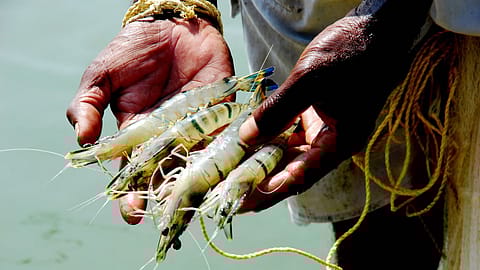
Credits: Getty Images
Shares of fisheries and aquaculture companies moved higher after the finance minister announced steps to strengthen the fisheries value chain in the Union Budget. Stocks such as Avanti Feeds, Apex Frozen Foods, Coastal Corporation, Waterbase, Zeal Aqua and BKV Industries rose between 1% and 5% after the government said it will take up integrated development of 500 reservoirs and Amrut Sarovars.
Apex Frozen Foods was among the top gainers, rising 5.83% to ₹308.55. Avanti Feeds gained 4.75% to ₹834.50, while Coastal Corporation climbed 4.83% to ₹46.49, touching a new intraday high. While presenting Budget 2026, Finance Minister Nirmala Sitharaman said the government will undertake initiatives for the integrated development of 500 reservoirs and Amrut Sarovars to strengthen fisheries in coastal areas and improve market linkages. The plan will involve start-ups, women-led groups and fish farmer producer organisations.
Textile stocks too rise
Textile stocks also traded higher after the government announced a multi-pronged push to expand and modernise India’s textile sector. The Budget proposed setting up mega textile parks through a challenge mode framework, with a special focus on technical textiles, aimed at creating large, integrated manufacturing hubs and improving competitiveness across the value chain.
Shares of KPR Mill rose 3.5%, while Vardhman Textiles gained 2.2%. Other textile and apparel stocks, including Welspun Living, Page Industries and Arvind, also recorded gains in the range of 1% to 3% as investors reacted positively to the policy push.
The measures, aimed at employment generation, modernisation, sustainability, and global competitiveness, formed one of the key sectoral announcements of the Budget.
“For the labour-intensive textile sector, I propose an integrated programme with five sub parts,” Sitharaman said in her Budget speech. The programme begins with a national fibre scheme focused on self-reliance across natural fibres such as silk, wool and jute, alongside man-made and new-age fibres.
The second component is a textile expansion and employment scheme to modernise traditional clusters. This will include capital support for machinery, technology upgradation, and the creation of common testing and certification centres, a move expected to help smaller units improve quality and scale.
The sector remains one of India’s largest employers, particularly in rural and semi-urban areas, and the focus on textiles set the tone for a Budget pitched as growth-oriented but employment-aware.
At the heart of the proposal is a National Fibre Scheme to boost self-reliance across natural fibres such as silk, wool, and jute, alongside manmade and new-age fibres. Sitharaman said this would be complemented by a Textile Expansion and Employment Scheme to modernise traditional clusters through capital support for machinery, technology upgradation, and common testing and certification centres.
She also announced a National Handloom and Handicraft Programme that will integrate existing schemes and provide targeted support to weavers and artisans. “This will ensure focused assistance to those who form the backbone of our textile ecosystem,” she said.
Follow Fortune India
NEXT STORY