Paytm shares climb 4% as proposed PSS Act amendment fuels MDR buzz; MobiKwik slips 4%
/ 2 min read
Shares of One 97 Communications, the parent of Paytm, rallied as much as 4.35% to hit an intraday high of ₹1,435.95 on the BSE.
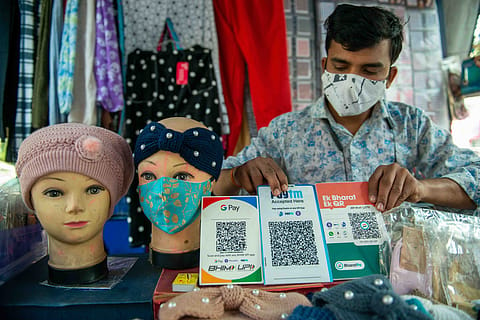
The UPI ecosystem is dominated by PhonePe and Google Pay, which together account for more than 80% of transaction volumes | Credits: Shutterstock
Shares of fintech firms witnessed a mixed reaction on Tuesday after the finance ministry proposed amendments to the Payment and Settlement Systems (PSS) Act, 2007, triggering speculation that the government could gain greater flexibility to levy merchant discount rate (MDR) on digital payment modes, including UPI, in the future.
Shares of One 97 Communications, the parent of Paytm, rallied as much as 4.35% to hit an intraday high of ₹1,435.95 on the BSE. At around 2:05 pm, the stock was trading 3.1% higher at ₹1,418.10, with a market capitalisation of ₹90,858.67 crore.
The fintech stock hit its 52-week high of ₹1,437 in the previous session, rebounding 52% from its 52-week low of ₹947.10 touched on March 30, 2026.
The stock also witnessed heavy trading volumes after a block deal was executed during the opening session. Market reports indicated that early investors, including Saif Partners, Saif II Mauritius and Elevation Capital V, were planning to pare a combined 2.3% stake in the fintech company through block transactions.
According to the reports, the deal size was estimated at around ₹2,002 crore, with the floor price set at ₹1,339.65 per share, a discount of about 5% to Paytm's Monday closing price.
As per the company's shareholding pattern for the quarter ended June 30, 2026, Saif Partners India IV owned a 3.63% stake in Paytm, while Saif III Mauritius Company held 8.55%. Elevation Capital's holding was below the 1% disclosure threshold and therefore was not separately disclosed.
Meanwhile, shares of One MobiKwik Systems fell as much as 4.1% to an intraday low of ₹205.75. At the time of writing, the stock was trading 3.4% lower at ₹207.25, with a market capitalisation of ₹1,632 crore. The counter had hit a 52-week high of ₹333.95 on September 8, 2025, and a 52-week low of ₹151.95 on March 30, 2026.
Investor sentiment was driven by reports surrounding the proposed amendment to Section 10A of the PSS Act, which currently prohibits banks and payment service providers from levying MDR on notified payment modes such as UPI and RuPay debit cards.
However, the proposed amendment does not immediately reintroduce MDR on UPI transactions. Instead, it seeks to remove the blanket statutory exemption and empower the Central government to decide, through future notifications, which digital payment modes should continue to enjoy zero MDR and which could attract merchant charges.
The proposal has fuelled hopes that payment companies could eventually gain a new revenue stream if the government decides to permit MDR on certain categories of digital transactions. At present, payment service providers largely rely on lending, merchant subscriptions, financial services and device rentals to monetise their platforms, as UPI transactions do not generate MDR income.
The UPI ecosystem is dominated by PhonePe and Google Pay, which together account for more than 80% of transaction volumes, while Paytm holds a market share of around 8%.
{{#most-powerful-women-snapshot-individual.slug}} {{/most-powerful-women-snapshot-individual.slug}} {{^most-powerful-women-snapshot-individual.slug}} {{/most-powerful-women-snapshot-individual.slug}} {{#showRanking}} {{current-rank}} {{/showRanking}} {{#photo.0.url}}
{{name}}
(DISCLAIMER: The views and opinions expressed by investment experts on fortuneindia.com are either their own or of their organisations, but not necessarily that of fortuneindia.com and its editorial team. Readers are advised to consult certified experts before taking investment decisions.)
NEXT STORY