RetailTech 2026: From software as a service to outcomes as a service
/ 4 min read
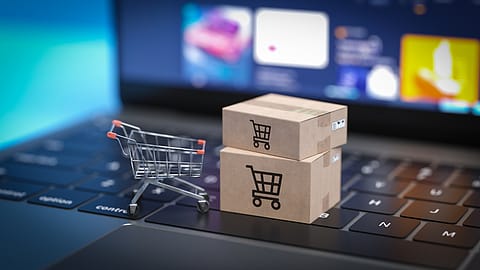
The retailers that win will make the business machine-readable.
RetailTech 2026: From software as a service to outcomes as a service
In 2026, retail technology shifts focus from software to outcomes, emphasising AI-driven autonomous systems that enhance efficiency and customer satisfaction. Retailers must adapt to agent-to-agent shopping, autonomous operations, and a promise-driven commerce model. The future lies in delivering consistent, reliable outcomes, transforming traditional retail practices into a seamless, AI-powered experience.
This summary is AI-generated, and Fortune India is not responsible for its content or any associated copyright issues.
This year won’t be remembered for bigger stacks, but for quieter excellence, marked by fewer stockouts, cancellations, faster resolution, and more trust delivered automatically, consistently, and at scale.
The retailers that win will make the business machine-readable.
Retail no longer has a technology problem; instead, it has an outcome problem.
For the past decade, retailers have done all the heavy lifting: they moved online, launched apps, connected marketplaces, digitised catalogs, provided point-of-sale functionality, woven loyalty programmes, and developed dashboards that could tell them what happened yesterday. The foundation was firmly laid.
2026 is all about execution. It is where autonomous systems, with the power of AI agents being able to plan, act, and learn, make a huge difference.
The new mantra of a leader is no longer related to what they launched, but checking if cancellations failed or if conversion lifted without discounting. It is all about the outcomes now.
Here are five bets that will define retailtech this year.
1. Shopping becomes agent-to-agent
We are going beyond the conversation interface. The next interface is not a screen but a customer-side AI agent capable of search, compare, and checkout without the customer having to sweat.
This upends a retail assumption: You are no longer merchandising to humans only. You are retailing to both humans and machines. And if your product information is unclear, if your return policy is hidden, if your delivery commitment is ambiguous, or if your substitution is not defined, the call will be routed elsewhere.
The retailers that win will make the business machine-readable. That means clean attributes, transparent policies, real-time promises, and clear pricing. Clarity is the new competitive edge as agents compute rather than browse.
2. Autonomous operations replace daily firefighting
Where does time go in retail operations? It is normally in a delayed stock, a stock mismatch, a surge in courier fee, a high-RTO pocket, a stuck return or some kind of fraudulent activity. But in the future, the most valuable AI agents won’t be the ones that write prettier copies. They will be the ones who quietly resolve thousands of micro-issues before customers feel their pinch.
Autonomous operations don't mean being reckless. It means leveraging technology to enhance performance. For instance, automating systems that can take bounded actions, reroute an order, split a shipment, trigger replenishment, pause a risky COD lane within guardrails, and escalate only when trade-offs are strategic.
The KPI is simple: fewer broken promises at scale.
{{#most-powerful-women-snapshot-individual.slug}} {{/most-powerful-women-snapshot-individual.slug}} {{^most-powerful-women-snapshot-individual.slug}} {{/most-powerful-women-snapshot-individual.slug}} {{#showRanking}} {{current-rank}} {{/showRanking}} {{#photo.0.url}}
{{name}}
That is not all. AI agents will be present inside stores, too, acting as the manager’s copilot, serving a wide range of functions: turning signals into task lists, flagging gaps in shop shelves, recommending transfers, and coordinating local fulfilment. All this saves time and directly adds to the margin. At scale, shaving hours off response times becomes a margin.
3. Unified commerce evolves into a promise OS
Omnichannel is now a baseline expectation. The real challenge lies in promise accuracy: Is the product available? Where can I buy it? Where will it ship from? When will it arrive? What is the true cost after servicing and returns?
In 2026, unified commerce won’t be defined by the number of integrations. It will be defined by whether you maintain a living promise layer that updates continuously as inventory, capacity, cost, and demand change.
It is something like a promise operating system that listens to events across stores, warehouses, partners, and delivery lanes; it calculates the best plan; and AI agents execute the action end-to-end. Fulfilment is no longer a downstream function; it has become the product itself.
4. Merchandising becomes a control system, not a calendar
The retail business has often been slow with weekly pricing reviews, monthly assortment resets, seasonal promo planning, and so on. However, this rhythmic cadence breaks when demand oscillates overnight and competition inches in, demanding alacrity and quick response time.
Here comes the power of Agentic AI that enables continuous merchandising. AI agents always run on tests, learning what’s working, and adjusting within policy across price bands, bundles, recommendations, and allocation.
This does not mean that the role of the human worker disappears. It becomes sharper as they move away from repetitive tasks and focus on innovation and strategy. Agents handle execution and measurement.
5. Outcomes-as-a-service replaces SaaS theatre
As software becomes more powerful and more similar, value shifts from capabilities to impact. In 2026, retailers will push vendors and internal teams to stop selling tooling and start owning results.
Partnerships will be priced and governed differently. They will be tied to outcomes such as reduced cancellations, better in-stock rates, lower returns, and improved unit economics. Implementation will also begin with instrumentation, not with the interface. The critical question won’t be, “How fast can we deploy?” It will be, “How fast can we prove?”
6. Design-to-production gets compressed by AI
In fashion and lifestyle categories, time is a margin driver. The gap between a trend emerging and a product reaching the shelf often decides whether you sell through at full price or mark down later.
In 2026, AI will compress the loop from design to production. Trend signals from search, social and sell-through will guide what to create. Generative tools will speed up concepting and iteration. Automation will convert selections into specs and tech packs faster. Demand-aware planning will enable smaller, smarter batches that can be rapidly replenished when signals are strong and halted early when they are not.
The payoff is tangible, fewer late markdowns, less dead stock, and better margins while keeping assortments in-trend for customers.
Trust will be the new currency
As autonomous systems take on key decisions, the stakes rise. When AI agents can do everything from change prices, issue refunds, reroute shipments, or block transactions, governance can’t be a checklist. It has to be architecture.
In the future, the winning organisations will be those that bake in permissioned autonomy: clear scopes, thresholds, audit trails, explainability at the point of action, and human escalation paths for high-impact decisions.
For India, this shift is particularly important. Current trends like cash on delivery (COD), reverse logistics, hyperlocal delivery, and fragmented supply networks create extreme cases that don’t show up in neat playbooks. Agentic AI is well-suited here because it thrives on exceptions: it can watch signals, act early, and keep service levels stable even when demand and capacity are noisy. It also frees frontline teams from spreadsheet firefighting so they can spend quality time on customers and win their trust.
Retailtech 2026 won’t be remembered for bigger stacks. It will be remembered for quieter excellence: fewer stockouts, fewer cancellations, faster resolution, and more trust delivered automatically, consistently, at scale. That is the move from software to outcomes.
(The author is the founder of Fynd, which makes retailtech solutions. Views are personal.)
Follow Fortune India
NEXT STORY