The FAQs are AI-generated, and Fortune India is not responsible for its content or any associated copyright issues.
The missing safety layer in India’s advanced air mobility plans
/ 4 min read
Over the past year, policy momentum, pilot deployments and industry investments have accelerated, positioning AAM as a pillar for next-generation mobility.
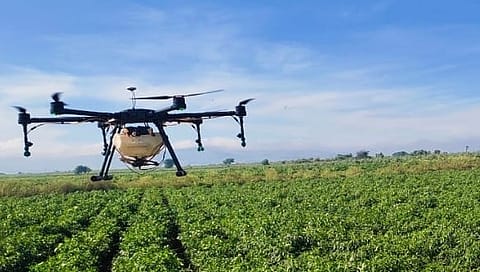
Today, drones are already delivering critical medical supplies in minutes and supporting disaster response and public safety in real time.
Advanced Air Mobility (AAM) is already reshaping how people and goods move in some parts of the world. Today, drones are already delivering critical medical supplies in minutes and supporting disaster response and public safety in real time. As regulations evolve, air taxis will follow tackling urban congestion. Together, this ecosystem of drones, uncrewed aerial vehicles (UAVs) and electric vertical take-off and landing (eVTOL) aircraft marks a fundamental shift in mobility. Unlocking its full potential depends not only on technical innovation and commercial momentum, but also on addressing key challenges in safety, regulation and airspace integration.
India is moving quickly in this direction. Over the past year, policy momentum, pilot deployments and industry investments have accelerated, positioning AAM as a pillar for next-generation mobility. A 2025 information paper submitted to the 42nd Assembly of the International Civil Aviation Organization (ICAO) notes that India is rapidly advancing the integration of drones and AAM to address urban transport and logistics needs, while also exposing structural gaps in airspace management, traffic separation, and communication redundancy.
As AAM moves beyond pilot projects, the challenge is no longer solely technological feasibility. It is ensuring safety at scale as crewed and uncrewed aircraft begin regularly sharing airspace, in one of the world’s already most complex airspaces.
A Rapidly Evolving Ecosystem
India has taken measurable steps toward operationalising AAM. Regulatory developments around eVTOL certification, vertiports and Beyond Visual Line of Sight (BVLOS) operations indicate intent to move beyond experimentation.
A recent analytical study by the Confederation of Indian Industry identifies dedicated AAM corridors such as Delhi–Noida–Jewar for applications, including medical logistics and emergency response. It also underlines the need for integrated infrastructure including airspace management systems, vertiports and reliable command-and-control networks.
Industry participation is accelerating alongside policy evolution. IndiGo, through IndiGo Ventures, has invested in Bengaluru-based Sarla Aviation, which is developing the seven-seater “Shunya” electric aircraft for urban transport. Air India is aligning infrastructure planning at Noida International Airport to support eVTOL integration and multi-modal connectivity. Meanwhile, SpiceJet continues to explore its “SkyHop” model focussed on seaplanes and regional mobility. The ePlane Company, headquartered in Chennai and one of India’s next-generation AAM aviation technology companies, designs and develops eVTOL aircraft for urban cities. Incubated at IIT Madras, the company’s aim is to revolutionize urban mobility with its all-electric, zero-emission air taxi, air ambulance and air cargo, and address congestion and pollution in cities.
This momentum is unfolding within one of the world’s most dense and complex airspace. India’s aviation system must simultaneously accommodate commercial aviation, defence operations, and a growing UAV ecosystem. A recent report by World Economic Forum and Deloitte estimates that India’s aviation sector could attract nearly $499 billion in investment by 2029, while over 1,400 eVTOL procurements are expected over the next decade. The report also positions India as a potential global testbed for AAM deployment because of its congested megacities, remote geographies and rapidly expanding aviation infrastructure.
Why UAS Connectivity is a Safety Issue
A defining feature of AAM is its reliance on Beyond Visual Line-of-Sight (BVLOS) operations. These depend on highly reliable and consistent, uninterrupted command-and-control links, real-time telemetry and reliable navigation support.
Terrestrial networks are not designed for such requirements. Coverage gaps, congestion and network challenges make them unsuitable on their own for safety-critical aviation use cases. Aviation systems require resilient, reliable performance, not ‘best-effort’ connectivity.
This is where satellite communications (SATCOM) become vital. As regulations introduce differentiated requirements based on operational risk, higher levels of assurance and connectivity resilience will be required. Amongst the different SATCOM options, L-band solutions stand apart because of the reliability and resilience of the waveforms in that frequency range (1-2 GHz). L-band systems offer strong propagation characteristics and consistent performance even in adverse weather or dense urban environments and can deliver extremely high reliability levels making them suitable for safety-critical aviation applications such as command-and-control for UAVs.
Resolving Regulatory Gaps: A Safety-Driven and Unified Approach to Authorising UAV Communications
India’s regulatory ecosystem has evolved significantly over the past year. The Directorate General of Civil Aviation has published advanced frameworks for drone operations, pilot certification and AAM integration. On the telecom side, the Telecom Regulatory Authority of India in its 2025 recommendations recognised L-band spectrum as a primary allocation for mobile satellite service (MSS) user links.
{{#most-powerful-women-snapshot-individual.slug}} {{/most-powerful-women-snapshot-individual.slug}} {{^most-powerful-women-snapshot-individual.slug}} {{/most-powerful-women-snapshot-individual.slug}} {{#showRanking}} {{current-rank}} {{/showRanking}} {{#photo.0.url}}
{{name}}
Resolving the first gap: Implementation of a safety-service classification for UAV communication systems
Firstly, there is no explicit framework for UAV safety communication systems. India’s National Aviation Authority would be required to classify L-band SATCOM as a safety service for AAM or UAV operations. This is necessary to ensure AAM/ UAV safety communication systems are provided with the necessary radio interference protection required to guarantee reliable and resilient operations.
This gap, if it continues, could have a propagating effect on overall UAS system certification, service expectations, deployment timelines (including the ability to scale operations), and long-term investment planning. There are also implications for both aviation safety requirements and spectrum allocation policies governed by the Department of Telecommunications and the Wireless Planning and Coordination Wing.
Resolving the second gap: A predictable and coordinated approach for the authorisation of UAV safety communications
India will need coordinated action across aviation, telecom and space regulators to avoid slowing deployment. SATCOM systems depend on radio spectrum use rules around interference-free operations and frequency band allocations managed by DoT, service licensing rules managed by IN-SPACe, and in the case of aviation safety, sector-specific rules managed by India’s Civil Aviation Directorate. The successful implementation of AAM/ UAV safety communication systems in India will depend on having a unified and clear authorisation framework that integrates the responsibilities and requirements of all these agencies in a single process. A fragmented authorisation process is likely to impose barriers to implementing a robust and timely ecosystem for AAM/ UAV safety in India, with consequences for users, safety preservation and overall industrial and public interest drawbacks.
The Vision: A Robust and Predictable UAV Ecosystem for Social and Economic Development
The future of AAM will not depend solely on technology innovation, but on the robustness of the regulatory and commercial architecture which supports the industry. Formally recognising L-band AAM/ UAV satellite communication as a safety service is therefore an important step towards enabling safe, scalable and globally aligned AAM/ UAV operations in India. India has the opportunity to emerge not just as a large AAM/ UAV market, but as a global leader and proving ground for safe and scalable deployment.
Because, in aviation, innovation is imperative; but safety must always be our priority.
(The author is Managing Director, Viasat India. Views are personal.)
Follow Fortune India
Frequently Asked Questions
NEXT STORY