Indian households rush to sell old gold as prices correct; profit booking jumps 43% in April–June quarter
/ 3 min read
The selling trend comes as global gold prices remain under pressure following a prolonged correction triggered by tighter monetary policy expectations, persistent inflation concerns, and shifting investor sentiment.
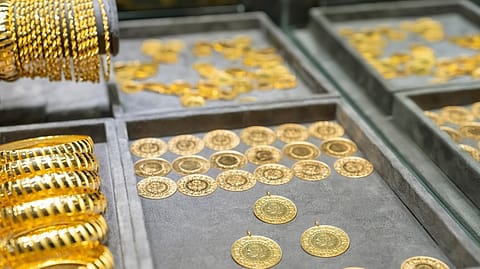
According to data from the India Bullion & Jewellers Association, households sold nearly 50 tonnes of old gold during the April–June quarter. | Credits: Bermek
Indian households are increasingly cashing in on old jewellery after gold prices retreated from record highs earlier this year, amid concerns that further declines could erode the value of their holdings.
According to data from the India Bullion & Jewellers Association (IBJA), households sold nearly 50 tonnes of old gold during the April–June quarter, marking a sharp 43% increase from the year-ago period as consumers moved to lock in gains accumulated during the rally.
The selling trend comes as global gold prices remain under pressure following a prolonged correction triggered by tighter monetary policy expectations, persistent inflation concerns, and shifting investor sentiment.
Gold extends losing streak for 4th consecutive week
A report by Augmont Gold For All said gold extended its losing streak for a fourth consecutive week and has corrected nearly 30% from its January 2026 record high of $5,597 per ounce. The decline was driven by a combination of hawkish commentary from US Federal Reserve Chair Kevin Warsh, elevated inflation readings and expectations of additional interest rate hikes.
Market sentiment remained largely risk-averse through the week, with a sharp global technology-led equity selloff prompting portfolio managers to trim profitable gold holdings to offset losses elsewhere.
Gold ETFs show early signs of stabilisation
Gold-backed exchange traded funds (ETFs), which had seen sustained outflows in recent months, showed early signs of stabilisation. After net outflows of 16 metric tonnes in May and continued weakness into early June, gold ETFs recorded their strongest weekly inflows since mid-April during the latest reporting week, attracting approximately $1.1 billion.
However, analysts caution that downside risks remain.
According to Standard Chartered analyst Suki Cooper, approximately 298 tonnes of ETF-held gold remains at loss-making levels below $4,050 per ounce, potentially creating near-term selling pressure if prices recover.
Meanwhile, speculative positioning has not fully unwound. Data from COMEX showed net speculative long positions in gold edged higher by 91 contracts to 113,010 in the week ended June 23. The correction unfolded despite renewed geopolitical tensions.
Earlier in the week, fresh escalation between the United States and Iran briefly revived safe-haven demand after attacks involving US military installations in the Gulf region raised fears of supply disruptions through the Strait of Hormuz and triggered a rise in oil prices. But the inflation implications of higher energy prices quickly shifted investor attention back to Federal Reserve policy.
Markets were particularly influenced by comments from Fed Chair Kevin Warsh, who reiterated the central bank’s focus on controlling inflation. May’s Personal Consumption Expenditures (PCE) inflation reading rose to 4.1% year-on-year, crossing the 4% mark for the first time in three years.
{{#most-powerful-women-snapshot-individual.slug}} {{/most-powerful-women-snapshot-individual.slug}} {{^most-powerful-women-snapshot-individual.slug}} {{/most-powerful-women-snapshot-individual.slug}} {{#showRanking}} {{current-rank}} {{/showRanking}} {{#photo.0.url}}
{{name}}
The inflation data initially pushed gold below the psychologically important $4,000-per-ounce level before prices recovered modestly toward the end of the week to around $4,040.
According to CME FedWatch expectations, markets are currently pricing in three US rate hikes in 2026, with probabilities rising for additional tightening later this year — a scenario that continues to weigh on non-yielding assets such as gold.
Silver also came under heavy pressure
COMEX silver futures declined nearly 10% during the week to close around $58.87 per ounce, while MCX silver futures fell approximately 4.8% to about ₹2.42 lakh per kilogram. Analysts attributed the sharper correction in silver to its industrial exposure, making it more sensitive to slowing growth expectations during risk-off phases.
Despite the recent volatility, analysts said silver’s longer-term demand outlook remains supported by structural drivers including solar energy deployment and electric vehicle adoption.
Going ahead, investors are expected to closely track upcoming US economic indicators, including non-farm payroll data and the ISM Manufacturing PMI, for signals on the trajectory of interest rates. A softer inflation print or weaker labour market data could support a recovery in gold prices toward the $4,100–$4,150 range while stronger economic data may lead to another test of the $4,000 support zone.
NEXT STORY