Ahmedabad tops home affordability chart at 23% as 6 of 8 cities stay within affordability threshold in H1 2026: Knight Frank India
/ 3 min read
MMR and NCR remain above the 50% affordability benchmark despite a cumulative 125-basis-point rate cut, while lower borrowing costs continue to support housing demand
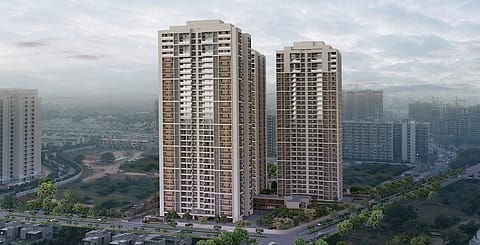
Ahmedabad retained its position as the country's most affordable residential market for the second consecutive year with an affordability ratio of 23%., according to Knight Frank India | Credits: LinkedIn
India's residential property market continued to remain affordable for homebuyers in the first half of 2026, with six of the country's eight largest housing markets staying within the affordability threshold, supported by the cumulative impact of a 125-basis-point reduction in interest rates, according to Knight Frank India's latest Affordability Index.
The report found that Ahmedabad remained India's most affordable housing market, with homebuyers spending just 23% of their household income on equated monthly instalments (EMIs), followed by Kolkata at 25% and Pune at 28%. However, affordability remained stretched in the Mumbai Metropolitan Region (MMR) and the National Capital Region (NCR), where EMI-to-income ratios stood at 69% and 67%, respectively—well above the 50% affordability benchmark beyond which banks rarely underwrite home loans.
Shishir Baijal, International Partner, Chairman and Managing Director, Knight Frank India, said the cumulative benefit of lower borrowing costs continues to underpin residential demand despite rising property prices.
"Housing affordability remains a key driver of residential demand. The cumulative benefit of lower interest rates continues to support homebuyers across most markets, helping sales remain close to post-pandemic highs. Over the year, affordability gains have moderated mostly due to the rise in property prices. However, healthy employment, stable incomes and supportive financing conditions continue to underpin demand. Going forward, sustained income growth and balanced market fundamentals will be critical to maintaining housing affordability and supporting long-term market growth," he said.
Lower interest rates cushion impact of rising property prices
Knight Frank's Affordability Index measures the proportion of household income required to service home loan EMIs. While affordability improved significantly between 2016 and 2021 following a prolonged low-interest-rate cycle, it deteriorated in 2022 after the Reserve Bank of India (RBI) raised the repo rate by 250 basis points to combat inflation.
The trend has stabilised over the past three years. A cumulative 125-basis-point monetary easing by the RBI before its latest pause has continued to support affordability, even as residential property prices have risen across several markets. The RBI has maintained the policy repo rate at 5.25% in both its February and June 2026 monetary policy meetings, citing geopolitical risks in West Asia, higher energy prices and uncertainty surrounding the monsoon. The central bank has also revised FY27 GDP growth to 6.6% while raising its CPI inflation forecast to 5.1%.
Among the eight cities tracked, affordability weakened marginally in Bengaluru, where the EMI-to-income ratio rose to 35% from 34% in 2025, and in NCR, where it increased to 67% from 66%. The remaining six cities remained largely unchanged.
Ahmedabad, Kolkata and Pune remain the most affordable markets
Ahmedabad retained its position as the country's most affordable residential market for the second consecutive year with an affordability ratio of 23%. Kolkata followed at 25%, while Pune remained at 28%. Chennai recorded an affordability ratio of 29%, Bengaluru 35%, Hyderabad 41%, MMR 69% and NCR 67%.
The report highlighted that affordability has improved substantially over the past decade. MMR's affordability ratio, for instance, has fallen from 77% in 2016 to 69% in H1 2026, while Pune has witnessed one of the sharpest improvements—from 57% to 28% over the same period. NCR, despite improving from 65% in 2016, has seen affordability deteriorate in recent years due to rising property prices, with the ratio climbing from 43% in 2021 to 67% in H1 2026.
Knight Frank expects stable employment, urbanisation, supportive financing conditions and the cumulative benefits of monetary easing to continue supporting housing demand across major Indian cities through the second half of 2026, even as global uncertainties and inflationary pressures remain key watchpoints.
Follow Fortune India
NEXT STORY