Dell says AI budgets are intact, proving ROI remains biggest hurdle as hybrid infrastructure gains ground
/ 3 min read
PowerStore Elite launched in India as company bets on private AI, data sovereignty and hybrid cloud for enterprise adoption
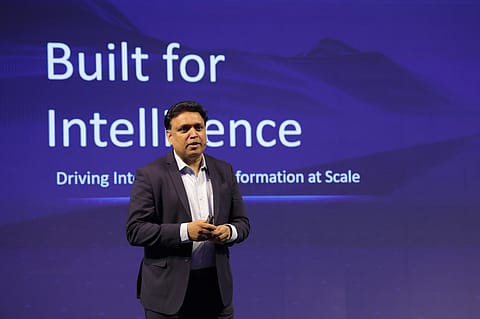
Venkat Sitaram, senior director and country head, infrastructure solutions group, India, Dell Technologies. | Credits: Dell Technologies
Dell Technologies on Tuesday launched its next-generation enterprise storage platform, PowerStore Elite, in India alongside a broader suite of AI infrastructure offerings, as the company said enterprises are increasingly prioritising AI investments but remain focused on demonstrating measurable business value before scaling deployments.
Speaking exclusively to Fortune India, Venkat Sitaram, senior director and country head, infrastructure solutions group, India, Dell Technologies, said the biggest challenge for enterprises is no longer securing budgets for AI, but proving a clear return on investment.
"Budgets are there. It's about how do I prove business value? Because that's the question that's going to be asked by the board," Sitaram said. "Is this going to impact my revenue? By how much? Within what time? Or is it going to improve my margins? You need to have a very clear, measurable impact, and that's where we help customers define the right use cases."
He added that Indian companies are adopting different funding strategies for AI, with some reallocating spending from traditional IT infrastructure while others are infusing fresh capital specifically for AI initiatives.
Hybrid AI infrastructure to dominate
While hyperscale cloud providers continue expanding AI infrastructure globally, Dell believes enterprise AI will increasingly be built on hybrid architectures that combine private infrastructure with public cloud services.
"We believe the new AI world will be a world of hybrid cloud," Sitaram said. "You can't rely only on putting everything outside because when you're putting your data outside your premises, you need to be clear about the guardrails associated with it."
He said organisations will increasingly determine which workloads are suitable for public cloud and which must remain on-premises, particularly in regulated industries such as banking and financial services, where data residency and compliance requirements make private infrastructure essential.
Dell's services teams are already helping enterprises identify the right deployment model through accelerated workshops that evaluate workload placement across public and private cloud environments, he added.
AI infrastructure push
The company unveiled PowerStore Elite in India as part of a broader AI infrastructure portfolio aimed at helping enterprises move from AI experimentation to production deployments. According to Dell, the platform has been designed around three priorities for enterprise customers — deployment speed, data sovereignty and cyber resilience.
PowerStore Elite offers up to three times higher performance and density than previous generations, supports up to 5.8 petabytes of effective capacity in a single 3U appliance and comes with an industry-backed 6:1 data reduction guarantee. Dell said the modular architecture enables upgrades without downtime or data migration, allowing enterprises to modernise infrastructure as AI workloads evolve.
The launch also includes Dell Cyber Detect for AI-powered ransomware detection, Dell Private Cloud, Dell PowerRack, Dell Deskside Agentic AI and additional integrations across VMware, Nutanix and Microsoft Azure Local. The company said the offerings are designed to provide an open AI ecosystem integrating technologies from NVIDIA, OpenAI, Google, Hugging Face, Palantir, ServiceNow and other partners.
{{#most-powerful-women-snapshot-individual.slug}} {{/most-powerful-women-snapshot-individual.slug}} {{^most-powerful-women-snapshot-individual.slug}} {{/most-powerful-women-snapshot-individual.slug}} {{#showRanking}} {{current-rank}} {{/showRanking}} {{#photo.0.url}}
{{name}}
Open ecosystem, customer choice
Addressing concerns around Dell's close partnership with NVIDIA, Sitaram said the company remains committed to providing customers with infrastructure choices rather than locking them into a single technology stack.
"We build infrastructure solutions that are optimised for specific customer workload requirements," he said. "We've announced enhancements with both NVIDIA and AMD, and we'll continue bringing more choices. That's been our legacy."
According to Sitaram, Dell's competitive advantage lies in combining hardware, software, ecosystem partnerships and services into a single validated AI platform, enabling enterprises to source compute, storage, networking and AI software from one provider instead of integrating multiple vendors independently.
Looking ahead, he said AI infrastructure investments are already beginning to reshape enterprise IT spending.
"We've seen that trend already take off," Sitaram said, adding that adoption is expected to accelerate over the next three years as organisations move beyond experimentation and deploy AI at production scale.
NEXT STORY