GFF 2026: Fintech must use AI to reach the last mile, build trust and go global, says RBI Governor Sanjay Malhotra
/ 5 min read
The central bank governor said financial inclusion must remain at the centre of fintech innovation, particularly as traditional financial institutions continue to face difficulties in economically serving customers outside the formal financial system
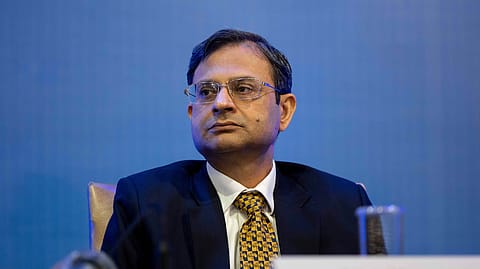
RBI Governor Sanjay Malhotra (file image) | Credits: Narendra Bisht
Reserve Bank of India Governor Sanjay Malhotra on Thursday urged fintech companies to look beyond technology for its own sake and focus on using artificial intelligence and other emerging technologies to expand financial inclusion, improve customer service, reduce costs and strengthen fraud detection.
Speaking at the Global Fintech Festival 2026 in Mumbai, Malhotra referred to his address last month in which he had outlined areas where AI could have a significant role in finance.
“In an address last month, apart from financial inclusion, I had spoken about four other areas where AI can be of use,” he said, identifying customer service, meeting unmet credit and other financial needs, improving operational efficiency and reducing costs for financial intermediaries, and reducing fraud. “These are exactly the areas where fintech can contribute using the latest technologies, such as quantum, such as AI,” he said.
But Malhotra cautioned the industry against treating technologies such as AI and quantum as ends in themselves. “Each of these technologies is powerful, but not a goal for these technologies because, however powerful they are, they are only means to a matter, not an end in themselves,” he said.
The RBI governor said financial inclusion must remain at the centre of fintech innovation, particularly as traditional financial institutions continue to face difficulties in economically serving customers outside the formal financial system. “The scope and potential are indeed great. We need to make all financial services ubiquitous, omnipresent,” he said. “Financial inclusion, or ensuring the financial well-being of everyone, to my mind remains the single most important purpose or potential that fintech can deliver.”
He pointed to the need for more products for the informal sector, including microinsurance, small pensions, small-ticket credit and credit for women entrepreneurs, MSMEs and small and marginal farmers in villages and Tier 3 and Tier 4 towns.
“The harder work of reaching those still outside the system is where the potential to impact is least realised today and where it matters the most,” Malhotra said. “I would only ask that connecting the last man standing in the queue remains the focus of today’s innovation, for all of you present here, and not merely a footnote to it.”
Four pillars: potential, trust, global vision and support
Malhotra framed his address around four broad themes-the potential of fintech, the importance of trust, India’s global opportunity and the institutional support needed to build the ecosystem.
A decade ago, he said, much of what is now routine in Indian finance was still an aspiration. “Today, that potential has become impact, visible in the daily lives of thousands of millions of Indians,” he said, pointing to the expansion of Jan Dhan accounts, insurance and pension coverage, Mudra lending and UPI transactions.
The transformation, he said, was not simply the result of technology or government intervention, but of collaboration between the public and private sectors. “It has happened because of the public-private partnership, which has facilitated entrepreneurship and innovation, while at the same time maintaining public trust and preserving confidence,” Malhotra said.
Trust, he argued, is the second critical pillar. “Trust is not a marketing strategy. It is an operating asset, built transaction by transaction,” he said. “It takes years to build and can be lost in minutes.”
{{#most-powerful-women-snapshot-individual.slug}} {{/most-powerful-women-snapshot-individual.slug}} {{^most-powerful-women-snapshot-individual.slug}} {{/most-powerful-women-snapshot-individual.slug}} {{#showRanking}} {{current-rank}} {{/showRanking}} {{#photo.0.url}}
{{name}}
Malhotra drew a parallel with the historical use of hundis, saying that their acceptance across trading centres depended not on the paper itself but on the reputation of merchants and the confidence of the trading community.
“Today, the financial system looks very different. Money moves in milliseconds, algorithms assist decision-making, and AI is beginning to transform financial services. But the underlying principle remains the same,” he said. “A financial system that moves at the speed of life, but that people do not trust, will not find takers.”
He said fintech companies must treat data as a responsibility rather than simply as a commercial asset. “Every fintech in this room holds something that is much more valuable than the capital that is invested, and that is data,” he said. “This data must be treated the way a trustee treats assets held for a beneficiary-collected with a clear purpose, used strictly with the consent provided, and protected as one’s own.”
Malhotra also warned that responsibility must increase as a financial technology company grows. “I would describe this as the obligation to be not just ‘too big to fail’, but ‘too significant to be careless’,” he said, stressing the importance of operational resilience, business continuity and cybersecurity.
The third pillar is India’s global fintech opportunity. Malhotra said India’s fintech ecosystem ranked third globally by funding, having attracted about $2.4 billion in 2025 and is also home to around 30 fintech unicorns. “India’s first decade of fintech was largely about building for India. The next decade presents an opportunity to build for the world in India,” he said.
He said emerging economies faced challenges similar to India’s, creating an opportunity to take Indian approaches to financial inclusion, affordable payments, digital identity, interoperable infrastructure and digital public infrastructure to other markets.
“Our greatest contribution is therefore not merely in exporting products, but in sharing approaches, digital infrastructure, governance frameworks and institutional experience,” he said. “India has the opportunity to become a trusted partner in shaping the future architecture of global finance.”
The fourth pillar is the institutional ecosystem supporting innovation. Malhotra pointed to the RBI’s regulatory sandbox, innovation hub, hackathon initiatives, account aggregator framework and digital public infrastructure as examples of the regulator working with the industry.
He also highlighted the RBI’s efforts around fraud detection, programmable CBDC and tokenisation.
India’s tokenisation push took a major step this week with the launch of Demat 2.0 alongside SEBI and the country’s first tokenised corporate bond pilot by REC. The ₹500-crore issue uses distributed-ledger technology for the securities leg and RBI’s wholesale CBDC for settlement, allowing the bond and money to move through connected digital rails.
Malhotra said tokenisation efforts were helping regulators understand the potential future architecture of financial markets.
Innovation must work with regulation, not around it
Malhotra said the RBI’s approach was to support innovation while ensuring that risks did not undermine the financial system. “Regulation and innovation are not opposing forces, but reinforcing pillars of a resilient financial ecosystem,” he said.
He cautioned fintech companies against building businesses around gaps between regulatory categories and scaling first before seeking regulatory approval. “The sandbox and pilot mechanisms that we have built exist precisely for that, so that innovators can engage with us early, ask questions, test assumptions and shape rules that are workable for genuine innovation,” he said.
A fintech that engages transparently with regulators, he added, could gain both regulatory goodwill and a more durable path to scale. “A firm that seeks to outrun the rules typically fails sooner or later when the rules catch up, with a much higher price to itself and to the industry and the consumers it serves,” Malhotra said.
He said the RBI would continue to pursue proportionate, activity-based regulation while supporting emerging technologies. “Our endeavour is to ensure that India remains not merely an adopter of emerging technologies, but a leader in shaping trusted, inclusive and responsible digital finance,” he said.
Malhotra said the question facing fintech was ultimately not technological but one of choice. “Potential to impact is not a description of a technological roadmap. It is the description of a choice,” he said.
Follow Fortune India
NEXT STORY