Qualcomm acquires Modular to strengthen edge-to-cloud AI stack, expand data centre push
/ 2 min read
The acquisition gives Qualcomm an AI-native software platform designed to run across CPUs, GPUs, NPUs and custom accelerators, strengthening its data centre and enterprise AI ambitions.
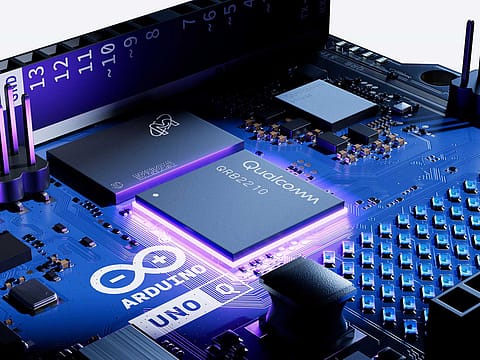
Representational Image | Credits: Qualcomm Inc.
Qualcomm has agreed to acquire AI software infrastructure company Modular Inc., as the US technology giant looks to strengthen its software capabilities for generative and agentic AI and deepen its presence in the fast-growing data centre market.
The transaction, announced on Wednesday, is expected to close in the second half of 2026, subject to regulatory approvals and customary closing conditions. Financial terms were not disclosed.
Building a software layer for AI
The acquisition comes as AI deployment increasingly depends on efficient software orchestration across a mix of computing architectures, including CPUs, GPUs, NPUs and custom accelerators. Industry-wide, performance-per-watt and inference efficiency are emerging as key factors in reducing the cost of running AI workloads at scale.
Modular has developed an AI-native software platform that enables developers to deploy AI models across diverse hardware architectures without rewriting code for individual accelerators. Its software is designed to support heterogeneous computing environments spanning devices, edge infrastructure and data centres.
Qualcomm said the acquisition will strengthen its ability to deliver a more optimised AI compute layer across platforms while improving hardware flexibility and deployment efficiency.
Data centre ambitions
The deal also supports Qualcomm Technologies' broader data centre strategy, helping improve AI inference, orchestration and deployment across distributed computing systems while expanding engagement with developers, enterprises, cloud service providers and AI model creators.
“This acquisition marks a pivotal moment not just for Qualcomm, but for the AI industry,” said Cristiano Amon, president and CEO of Qualcomm Incorporated.
“As agentic AI scales across data centres and edge environments, the industry is moving toward disaggregated, multi-vendor architectures that demand a more open and modern software foundation. We believe the future belongs to developer-friendly, horizontal platforms that can run across diverse compute environments and give customers real choice in how and where they deploy AI,” Amon said.
Chris Lattner, co-founder and CEO of Modular, said the transaction would accelerate the company's vision of creating a more open AI software ecosystem.
“Joining Qualcomm gives us the scale and platform reach to accelerate that mission. Together, we can make AI development more accessible and performant for developers, strengthen portability across hardware, and help grow an open ecosystem that broadens participation and speeds innovation,” Lattner said.
NEXT STORY