Semicon India 2026: India’s chip-design push gathers pace, with 68,000 students trained and 211 chips taped out
/ 3 min read
PM Modi to open three-day ‘Silicon to Systems’ summit as India shifts from policy to production with Semicon 1.0 gains and ₹1.27 lakh crore Semicon 2.0 push
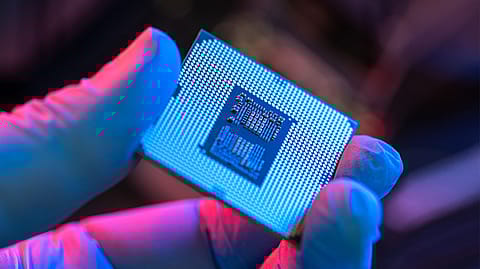
Representational Image | Credits: Getty Images
From training 68,000 students in chip design to taping out 211 chips, India is seeking to build capabilities across the semiconductor value chain as the country prepares to host the fifth edition of Semicon India from September 17 to 19.
Under the government’s Chips to Startup programme, Electronic Design Automation tools have been deployed across 320 academic institutions, with more than 68,000 students trained. By April 2026, 211 chips had been taped out by 75 institutions, with seven fabricated at different nodes, including nodes down to 12 nanometres.
The ChipIN Centre at C-DAC has also extended access to chip-design tools, fabrication services and training to more than one lakh engineers from over 500 organisations, including academic institutions and startups.
These efforts are part of a wider push to develop domestic semiconductor capabilities, with the government now seeking to move beyond chip design and establish capacity across manufacturing, advanced packaging, equipment, materials, research and talent.
What will happen at Semicon India 2026?
Prime Minister Narendra Modi will inaugurate the fifth edition of Semicon India on September 17 at Yashobhoomi in Dwarka. The event is themed “Silicon to Systems: Building the Ecosystem” and will bring together semiconductor companies, policymakers, investors, researchers, startups, academics and students.
According to the PIB release, more than 600 exhibitors and 300 international companies will participate in the event, which will span 15,000 square metres and feature more than 150 speakers. The event will also have six country pavilions, 12 state pavilions, a startup showcase, student hackathon, workforce development pavilion and a women’s forum. The conference is being jointly organised by the India Semiconductor Mission (ISM), Ministry of Electronics and Information Technology (MeitY) and SEMI, the global semiconductor industry association.
The event will feature keynotes, panel discussions, fireside chats and six international country roundtables. Sessions will cover manufacturing and technology, AI and digital transformation, supply chains, chemicals, gases and materials, government policy, sustainability and ESG, product creation and design, startups and innovation, talent and skilling, and India brands and market development.
Among the companies expected to participate are ASML, Applied Materials, Teradyne, Infineon, Ebara, Jabil, IBM Research, NXP, Tata Electronics, Micron, Merck KGaA, Rapidus, Lam Research, CG Power, Uno Minda, Advantest, Inox Air Products, HORIBA STEC, SCREEN, Everspin Technologies, Brewer Science, Polar Semiconductor, Tokyo Electron and Emergence AI.
Why is this Semicon India different?
The event comes as India’s semiconductor programme moves from approvals and policy announcements towards actual manufacturing. Of the 12 semiconductor projects approved under Semicon 1.0 across six states, three have already commenced commercial production, according to the government. The 12 projects involve investment commitments of more than ₹1.64 lakh crore and cover silicon and compound semiconductor fabs, display fabrication and advanced packaging.
“The Government of India has given clear indication towards the importance and significance of the Semiconductor Sector with its progressive policies and extended support. The sense of participation around the Semicon India Conference and Exhibition has grown significantly each year,” MeitY Secretary S. Krishnan said.
“This year it is particularly significant for two reasons. Firstly, we are convening this event against the backdrop of the on-ground success of Semicon India Programme, with 03 of the 12 semiconductor projects approved under Semicon 1.0, having commenced commercial production. Secondly, the announcement of the next phase i.e. Semicon 2.0 with 06 major pillars, which further strengthens India’s commitment to build a robust and resilient semiconductor ecosystem,” he said.
{{#most-powerful-women-snapshot-individual.slug}} {{/most-powerful-women-snapshot-individual.slug}} {{^most-powerful-women-snapshot-individual.slug}} {{/most-powerful-women-snapshot-individual.slug}} {{#showRanking}} {{current-rank}} {{/showRanking}} {{#photo.0.url}}
{{name}}
The government approved Semicon 2.0 in July with an outlay of ₹1,27,500 crore, expanding the focus beyond fabs to the wider semiconductor value chain. Its six pillars are chip design; semiconductor equipment and materials; fabrication facilities; advanced packaging; research and development; and talent development. The latest phase builds on the ₹76,000-crore Semicon 1.0 programme, which was designed to support capabilities across chip design, fabrication, packaging, testing, equipment, materials and talent.
India’s electronics manufacturing growth is also being presented as the base for the semiconductor push. Electronics production increased from about ₹1.9 lakh crore in 2014-15 to ₹13.11 lakh crore in 2025-26, while electronics exports rose from around ₹38,000 crore to ₹4.24 lakh crore, according to the government. Mobile phone production rose from ₹18,000 crore to ₹6.27 lakh crore over the same period, while mobile phone exports increased from about ₹1,500 crore to ₹2.59 lakh crore. India now makes 99.2% of the mobile phones it uses, with the manufacturing ecosystem supporting around 2.5 million jobs.
Follow Fortune India
NEXT STORY