Skyroot sets July 18 launch for Vikram-1, India's first private orbital mission
/ 2 min read
Mission Aagaman to test Vikram-1's ability to place payloads in low-Earth orbit as India's private space sector moves beyond sub-orbital missions
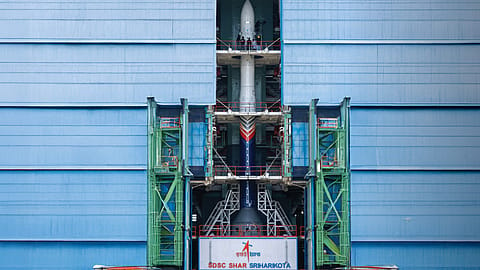
The test flight comes nearly four years after Skyroot's Vikram-S became the first privately built Indian rocket to reach space in November 2022.
Skyroot Aerospace will attempt the maiden test flight of its Vikram-1 launch vehicle on July 18, marking India's first attempt by a private company to launch an orbital-class rocket from Indian soil. The mission, named 'Aagaman', is scheduled to lift off at 11:30 am from the first launch pad at the Satish Dhawan Space Centre (SDSC-SHAR), Sriharikota, Andhra Pradesh.
The test flight comes nearly four years after Skyroot's Vikram-S became the first privately built Indian rocket to reach space in November 2022. A successful Vikram-1 mission would mark a significant milestone for India's private space industry, which is looking to build indigenous launch capabilities for the fast-growing global small satellite market. Ahead of the launch, aviation and maritime authorities have issued the required notifications and designated restricted zones along the rocket's flight path and impact corridor.
Orbital mission to validate launch vehicle
Vikram-1 is a multi-stage orbital launch vehicle designed to deploy satellites weighing up to 350 kg into Low Earth Orbit (LEO). Standing nearly seven storeys tall, the rocket features an all-carbon composite structure and is powered by propulsion systems developed in-house, including 3D-printed engines and high-thrust solid rocket boosters. The maiden mission is targeting a 450-km orbit at a 60-degree inclination.
The rocket will carry technology demonstration payloads from Grahaa Space, Cosmoserve, DCubed and Skyroot's own SCOPE platform. The payload stack also includes Cosmos Diamonds' "Cosmic Bloom" artwork and a micro-art payload.
Flight data key for commercial launch plans
Pawan Kumar Chandana, co-founder and chief executive officer of Skyroot Aerospace, said the company has completed all ground qualification tests and that the maiden mission is expected to generate critical flight data to validate the vehicle under actual operating conditions.
He added that the global small satellite launch market continues to face supply constraints even as demand for satellite-enabled services grows, making reliable launch capacity a key commercial opportunity. Chandana said the flight clearance received after extensive testing represents an important milestone for the company and that the data generated during the mission would support its plans to establish regular launch operations.
Built over nearly 3,000 days
According to co-founder and chief operating officer Naga Bharath Daka, the programme reflects nearly 3,000 days of development involving around 1,000 personnel and contributions from more than 400 suppliers. He said data collected during the test flight would be used to further refine the launch vehicle and support the company's objective of building an on-demand launch service from India for global customers.
Founded by former ISRO scientists Pawan Kumar Chandana and Naga Bharath Daka, Hyderabad-based Skyroot is valued at over $1.1 billion and is backed by investors including GIC, Temasek, Sherpalo Ventures and funds managed by BlackRock.
NEXT STORY