
12 years of Make in India: PLI drives ₹2.58 lakh crore investment, ₹15.53 lakh crore exports; CII calls for deeper manufacturing
ADVERTISEMENT
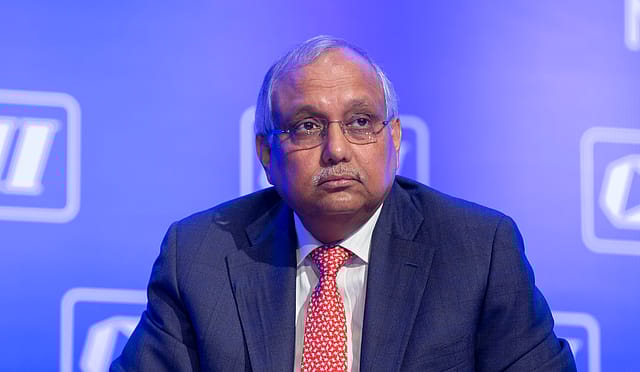
Twelve years after the launch of Make in India, India’s manufacturing story is entering a new phase, with the focus shifting from simply expanding production capacity to building deeper domestic value chains, developing technology and strengthening the country’s position in global production networks, according to Confederation of Indian Industry (CII).
The government’s Production Linked Incentive (PLI) schemes, one of the key pillars of the manufacturing push, have catalysed ₹2.58 lakh crore in actual investment, ₹23.79 lakh crore in production and sales and ₹15.53 lakh crore in exports as of June 2026. The schemes have also supported more than 14.57 lakh direct and indirect jobs.
CII said these numbers point to a broader change in India’s manufacturing ecosystem, with increasing localisation, technology adoption and participation in global value chains. The next challenge, however, will be to ensure that a larger share of the value created in India comes from domestic capabilities, particularly in technology-intensive sectors.
“India’s manufacturing opportunity is no longer only about substituting imports; it is about building deeper capabilities that can compete globally,” said Chandrajit Banerjee, director general, CII.
From a large market to a production base
The evolution marks a shift in how India is positioning itself in the global economy. While the size of the domestic market remains a major attraction for companies, CII said manufacturing competitiveness will increasingly depend on India’s ability to combine market scale with technology, talent, infrastructure and capital.
“A large market attracts businesses. A competitive production base creates businesses. A country that can combine both, while developing technology, talent, infrastructure and capital, can shape global value chains,” said R Mukundan, president, CII and managing director & CEO, Tata Chemicals.
According to Mukundan, Make in India has contributed to a fundamental change in India’s economic proposition, with the country increasingly being viewed not just as a consumption market but as a base for production, innovation, supply-chain development and global value creation.
The change is also visible in the composition of manufacturing activity, CII said. International companies are increasingly participating alongside Indian manufacturers, while domestic value chains are becoming deeper and India is becoming more integrated with global production networks.
““The evolution of Make in India is increasingly visible in the deepening of domestic value chains, growing participation of international companies alongside Indian manufacturers, and stronger integration with global production networks,” Banerjee said.
Infrastructure and trade become the next building blocks
The manufacturing push is also being supported by investments in physical and digital infrastructure. CII pointed to PM GatiShakti, which has enabled more integrated infrastructure planning across central ministries, states and Union Territories, as well as the National Industrial Corridor Development Programme, which is advancing industrial smart cities and manufacturing nodes along key corridors.
Initiatives such as BHAVYA are aimed at strengthening industrial infrastructure further. At the same time, the Open Network for Digital Commerce (ONDC) is expanding digital market access, potentially allowing businesses across the country to reach a wider customer base.
India’s growing trade integration is another part of this transition. The country has signed nine major trade agreements covering 38 countries, with several more under negotiation. CII said these agreements could provide Indian manufacturers with greater access to international markets and create opportunities for companies to expand exports.
The industry body, however, said the next stage will require more than expanding capacity. Greater domestic value addition in technology-intensive segments, stronger and more integrated supply chains, technology creation and closer coordination between the Centre and states will be critical.
Simplifying compliance processes and enabling more Indian enterprises to participate in global production networks will also be important to improving manufacturing competitiveness, CII said.