
5G yet to deliver new revenue streams; Mittal looks to 6G, says India needs no more telcos
ADVERTISEMENT
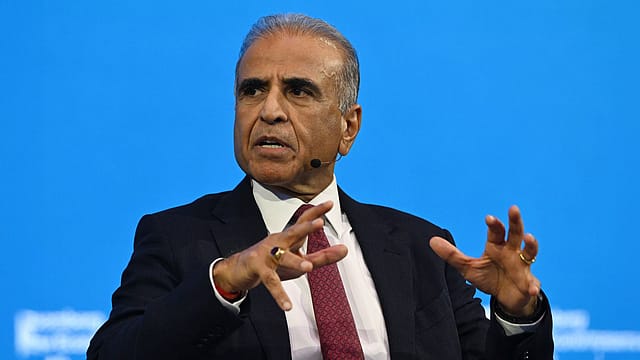
The global telecom industry is yet to see the new revenue opportunities promised by 5G, while India does not need any more telecom operators, Bharti Airtel founder and chairman Sunil Bharti Mittal said. Looking ahead, Mittal expressed hope that 6G would create fresh revenue streams through new applications and connected devices, even as he called for stronger balance sheets among telecom companies to sustain investments in the country's digital infrastructure.
Mittal was speaking in an interview with news agency PTI marking the 50th anniversary of Bharti Enterprises.
On the number of players in the Indian telecom market, Mittal said the country had the right balance with three private operators and state-run Bharat Sanchar Nigam Ltd (BSNL). He cautioned against returning to an environment with too many operators, saying fragmentation of spectrum and networks had previously weakened industry balance sheets and limited investments in infrastructure.
"India went too far, into over a dozen operators that fragmented the spectrum, that fragmented networks. The balance sheets became sub-optimal and the outcome of that was poor investments back into the infrastructure," he said.
He added that telecom companies needed financially strong balance sheets to continuously invest in India's digital infrastructure, given the dependence of payments, healthcare, e-commerce and other services on reliable connectivity.
5G revenue opportunity yet to materialise
On the returns from 5G investments, Mittal said the technology had delivered higher speeds and network capacity but had fallen short of expectations on monetisation.
"5G promised to open up a lot of new revenue opportunities. That has not resulted. It has got more capacity, it's got more speeds, but yes, it's not created some magical new revenue opportunity. That's been a disappointment globally," he said.
Telecom operators have committed substantial amounts towards spectrum acquisition and network expansion. Mittal said investments in 5G spectrum had run into lakhs of crores of rupees across operators, with another ₹1.5 lakh crore or so going into network infrastructure.
While these investments have created capacity for growing data consumption, the next challenge is to generate additional income from the technology. Mittal said the next phase of development would be 6G, expressing hope that it would deliver more tangible revenue opportunities.
He expects networks to evolve into what he described as sensing networks, with connected devices such as smart glasses, rings, earbuds and watches performing functions currently handled by smartphones. The growing use of artificial intelligence (AI) agents is also likely to add to demand on telecom networks.
Satellite networks and India's security
Mittal also stressed the importance of India retaining control over its satellite communications infrastructure, particularly as space-based networks become increasingly relevant to defence and national security.
He said India should have safeguards to monitor satellite equipment and communications, while ensuring that critical infrastructure does not remain dependent on a single foreign country or company.
"The kill switch, as we call it, should not be sitting somewhere else. India must have control over its own space destiny," he said.
Mittal added that communications and equipment should be monitored and data traffic routed through India. Citing the growing use of satellites in drones, cyber operations and guided weapons, he said control over space-based communication systems would become increasingly important.
At the same time, he said satellite connectivity would remain complementary to terrestrial networks, serving remote areas, mountains, forests, oceans and aircraft where conventional mobile networks may not reach.