
Adani Green Energy doubles BESS capacity to 6.63 GWh, crosses 50% share of India’s operational storage
ADVERTISEMENT
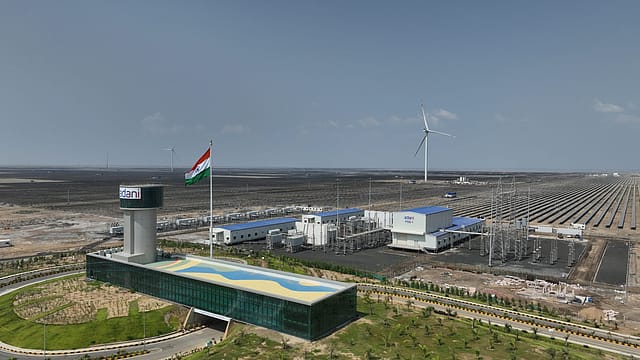
Adani Green Energy Ltd (AGEL) has more than doubled its operational battery energy storage system (BESS) capacity at Khavda in Gujarat to 6.63 GWh from 3.55 GWh in June 2026, giving the renewable energy company more than half of India’s operational BESS capacity. India had about 12.6 GWh of operational BESS capacity as of August 31, 2026, based on Central Electricity Authority (CEA) data and industry disclosures.
The latest addition also makes the Khavda facility the world’s largest operational battery energy storage installation at a single location. AGEL said it achieved the 6.63 GWh milestone within 14 months of starting on-site BESS construction, while the latest capacity addition was commissioned within 10 months of construction beginning.
Khavda storage linked to 30 GW renewable project
The BESS is integrated with AGEL’s renewable energy development at Khavda, where the company is developing a 30 GW renewable energy plant across 538 sq. km of barren land. The 6.63 GWh storage system can hold enough clean energy to power around two million homes for a day, while its storage capacity is equivalent to more than 150,000 mid-sized electric vehicles, based on a 40 kWh battery pack.
AGEL said the storage capacity can also meet almost twice the estimated daily electricity requirement of the Delhi Metro and support peak demand in cities such as Nagpur, Patna or Visakhapatnam for several hours. The company said the system will allow renewable electricity to be stored and dispatched when required, helping manage peak demand and reduce renewable energy curtailment.
AGEL targets 50 GWh storage capacity
“Reaching 6.63 GWh of operational battery storage in just 14 months is a significant milestone for AGEL and India’s clean energy transition,” Sagar Adani, Executive Director, Adani Green Energy, said. He added that storage at this scale can make renewable power “firmer, more reliable and dispatchable” when required by the grid.
AGEL is now targeting more than 10 GWh of additional BESS capacity in FY27 and plans to reach 50 GWh over the next five years. The company is also pursuing pumped storage projects as part of its strategy to build firm and dispatchable renewable power capacity.
AGEL currently has an operating renewable portfolio of 20.76 GW and 6.63 GWh of battery storage across 12 states. It has set a target of reaching 50 GW of renewable capacity by 2030.