
Adani Group invested over ₹1.5 lakh crore in FY26, accounting for 30% of India’s private capex: Gautam Adani
ADVERTISEMENT
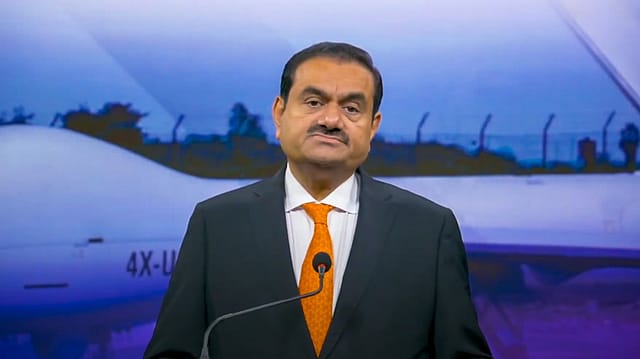
Adani Group invested more than ₹1.5 lakh crore in infrastructure during FY25-26, accounting for over 30% of India’s total new private-sector capital expenditure, Chairman Gautam Adani said on Wednesday, outlining an aggressive growth strategy centred on infrastructure expansion and technology integration.
Addressing shareholders at the Adani Enterprises ' annual general meeting (AGM), Adani said FY26 emerged as a defining year for the conglomerate despite heightened scrutiny and global economic uncertainty.
“In FY25-26, we made a record capital investment of more than ₹1.5 lakh crore in hard infrastructure. This was more than a financial number, it was a statement of belief in India’s future,” he said.
Adani group’s long-term strategy
Adani said the group’s long-term strategy is built around what he described as two interconnected growth engines, infrastructure, and intelligence. According to him, infrastructure includes roads, ports, airports, power plants, transmission lines, renewable energy assets, logistics networks, and industrial ecosystems while intelligence encompasses data centres, artificial intelligence, automation, and digital platforms.
“Infrastructure gives a nation muscle, intelligence gives a nation mastery — and today the two are inseparable,” Adani said.
The billionaire industrialist said the Group continued expanding despite operating under “extraordinary scrutiny” and highlighted the ₹25,000 crore rights issue completed earlier this year, calling it a validation of investor confidence and credibility.
Across businesses, Adani detailed major capacity additions and expansion plans.
Adani Energy Solutions’ transmission order book rose to ₹72,000 crore, supported by wins including the Khavda South-Olpad HVDC transmission project.
Adani Power is executing a private-sector power expansion programme exceeding ₹2 lakh crore and aims to reach 45 GW generation capacity over the next five years. The Group also announced plans to jointly develop 5,000 MW of hydropower capacity in Bhutan in partnership with Druk Green Power Corporation.
He also said the comglomerate has entered the nuclear energy segment through Adani Atomic Energy, targeting 10 GW of capacity by 2035.
In city gas distribution, Adani Total Gas crossed 1.1 million piped natural gas (PNG) household connections and plans to expand further amid rising energy demand.
On the logistics front, Adani Ports handled more than 500 million tonnes of cargo during FY26 and is targeting 1 billion tonnes by 2030. He also highlighted the performance of Vizhinjam port, which crossed 1 million TEUs in its first year of operations.
In aviation infrastructure, Adani cited the commencement of operations at Navi Mumbai International Airport and the opening of the integrated terminal at Guwahati Airport as major milestones.
The group’s data centre business is targeting a 3 GW platform by 2030 and has signed a binding MoU with Google for a large-scale data centre project in Visakhapatnam.
Financially, Adani Group reported consolidated revenue of ₹2.92 lakh crore in FY26, up 7.4% year-on-year. EBITDA stood at ₹94,834 crore while profit after tax increased 13.9% to ₹46,376 crore. Net debt-to-EBITDA ratio remained at 3.3x and cash flow reached ₹67,995 crore.
Looking ahead, Adani announced organisational changes focused on simplifying structures, strengthening contractor partnerships, and improving worker welfare across its workforce ecosystem of nearly four lakh people.
He also outlined the group’s social investments through the Adani Foundation, which currently reaches around 10 million people across 7,000 villages in 22 states, with focus areas including healthcare, education, and skill development.