
AI Impact Summit 2026: 86 nations back declaration, $250 billion infra pledges mark India’s AI moment
ADVERTISEMENT
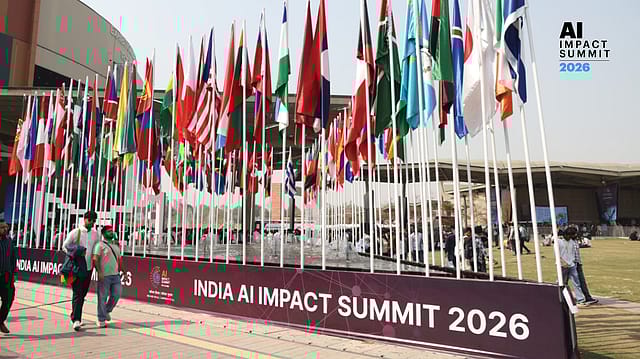
The India AI Impact Summit concluded with sweeping global endorsement and massive investment commitments, underscoring India’s emergence as a central player in shaping the future of artificial intelligence governance and infrastructure. Here are the key takeaways from the summit:
86 countries sign AI declaration
As many as 86 countries and two international organisations signed the AI Impact Summit declaration, IT Minister Ashwini Vaishnaw said on Saturday. Signatories included major economies such as the US, UK, Canada, China, Denmark, and Germany. The declaration formalises principles centred on “welfare of all and happiness of all,” reflecting Prime Minister Narendra Modi’s human-centric AI vision.
Human-centric and trust-based framework
Vaishnaw said democratising AI resources, ensuring technology and services reach all sections of society, has been widely accepted. He said safety, trust and social harmony have been prioritised alongside economic growth. The framework also stresses innovation and human capital development, with participating countries agreeing to collaborate across these focus areas.
$250 billion in infrastructure commitments
The summit secured investment pledges exceeding $250 billion in infrastructure-related capital, alongside nearly $20 billion in venture capital and deep-tech investments. Vaishnaw termed the event a “grand success,” noting that participation crossed five lakh visitors. The scale of financial commitments signals strong global confidence in India’s AI ecosystem and its long-term infrastructure ambitions.
India signs Pax Silica Declaration
India joined the “Pax Silica Declaration,” entering a US-led framework aimed at securing supply chains for critical minerals, semiconductors, and AI infrastructure. The move is intended to strengthen technological resilience and deepen global partnerships in next-generation industries.
Governance framework takes centre stage
The unveiling of the MANAV Vision reinforced India’s push for sovereign, inclusive and accountable AI governance. The framework positions India as a proactive voice in global AI regulation debates, where consensus remains fragmented.
Physical AI signals industrial shift
Qualcomm showcased a humanoid robot powered by its Dragonwing IQ-10 processor, highlighting AI’s transition from software experimentation to robotics, manufacturing and logistics automation.
Mega compute & data centre announcements
Tata Group and OpenAI announced a 100 MW AI infrastructure project, scalable to 1 GW. Sundar Pichai said Google will build a full-stack AI hub in Visakhapatnam. Mukesh Ambani announced that Reliance Jio is developing gigawatt-scale sovereign compute capacity, with 120 MW set to go live in 2026 and ₹10 lakh crore pledged.
From pilots to production
From healthcare and education to enterprise operations, the summit’s core message was clear: AI in India is entering large-scale deployment, backed by sovereign infrastructure and global alignment.