
ASSOCHAM urges govt, RBI to strengthen rupee through GIFT City push and trade settlement reforms
ADVERTISEMENT
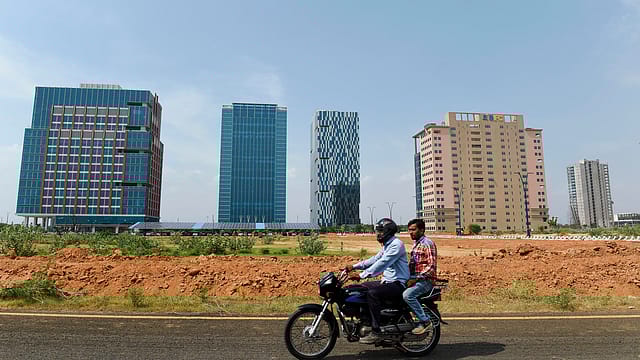
Industry body ASSOCHAM has submitted a detailed representation to the government and the Reserve Bank of India (RBI), proposing measures to strengthen the rupee and expand its role as a preferred currency for international trade settlement.
The recommendations centre on transforming Gujarat International Finance Tec-City (GIFT City) into a globally competitive financial hub and addressing regulatory gaps in the rupee trade settlement framework.
As part of its proposal, ASSOCHAM has called for the creation of a dedicated policy and regulatory framework to attract global family offices to GIFT City. According to the industry body, family offices collectively manage trillions of dollars in investible assets and could bring long-term, stable capital into India through investment, treasury and wealth management operations.
ASSOCHAM said attracting even a meaningful share of such global capital would deepen India’s financial markets, strengthen foreign exchange reserves and support the rupee structurally over the long term.
The second recommendation focuses on establishing a globally competitive Corporate Treasury Centre framework within GIFT City. The proposal seeks to attract treasury management, cash pooling, foreign exchange operations and trade finance activities of multinational corporations that are currently concentrated in global financial centres such as Singapore, Dubai, London, and Hong Kong.
ASSOCHAM has recommended benchmarking GIFT City against these competing jurisdictions to design a more attractive regulatory, fiscal and operational framework. Its President Nirmal K. Minda said a stronger rupee would reflect India’s growing economic confidence and position as a global financial power.
“A strong Indian rupee is not merely an economic objective but a statement of India’s confidence in itself as a global economic power. GIFT City is India’s most important instrument to attract long-term global capital that can structurally strengthen the rupee,” he said.
Separately, the industry body flagged what it described as a key operational hurdle in the RBI’s July 2022 framework for rupee-based international trade settlement.
According to ASSOCHAM, the absence of explicit rules permitting cross-country fungibility of balances held in Special Rupee Vostro Accounts is discouraging banks from processing rupee-denominated cross-border transactions and pushing settlement back toward the US dollar.
To address this, ASSOCHAM has proposed that the RBI issue a clarificatory circular allowing balances in Special Rupee Vostro Accounts to be used across countries for settlement of Indian import and export transactions, subject to existing KYC, anti-money laundering, and documentation norms.
The industry body argued that the move would not require legislative changes or a relaxation of prudential standards but would complete the operational framework already created by the RBI.
Minda said geopolitical developments have created favourable conditions for expanding the use of the rupee in global trade, particularly across BRICS nations, West Asia, ASEAN and Africa, where countries are increasingly exploring alternatives to dollar settlements.
According to ASSOCHAM estimates, shifting even 15 per cent of India’s commodity imports to rupee settlement could reduce structural demand for US dollars by around $70–80 billion annually.
The chamber has also recommended bringing Merchanting Trade Transactions explicitly under the rupee settlement framework, extending export incentives to rupee-settled trade and prioritising bilateral rupee settlement arrangements across key regions.
Additionally, ASSOCHAM proposed that NITI Aayog establish a dedicated inter-ministerial working group on rupee internationalisation and place the matter before the Prime Minister’s Economic Advisory Council to ensure coordinated policy execution. The trade body said the twin strategy of building GIFT City and expanding rupee-based trade settlement should be pursued together to deepen financial markets and support India’s emergence as a leading global economic and financial power.