
Awaiting RBI’s verdict, can Tata Sons duck an IPO?
ADVERTISEMENT
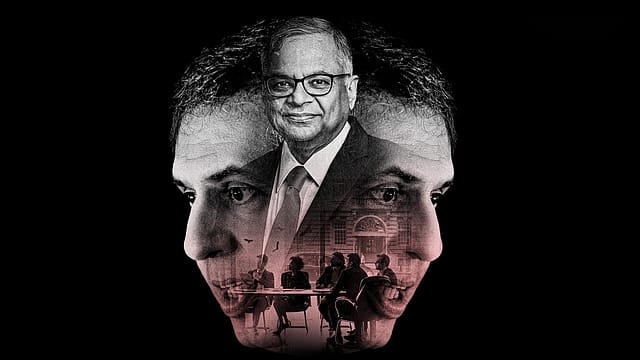
The future corporate structure of India's most diversified conglomerate, the Tata Group, now hinges on an upcoming regulatory decision by the Reserve Bank of India (RBI). The central bank is expected to decide in the next few months on the upper-layer non-banking financial company (NBFC-UL) status of Tata Sons, a move that will determine whether the holding company of the Tata Group must list on the stock market.
Tata Sons had sought deregistration as a core investment company (CIC), a move that would permanently free it from the NBFC-UL category and the mandate requiring an initial public offering (IPO). Listing the holding company would make it more independent of its promoter entities, the Tata Trusts, and could change its role in supporting the trusts' philanthropic activities. It would also dilute the influence of the Tata family over the group's holding company and business, broadly.
According to sources, the RBI is expected to publish the revised upper-layer roster in a few months, when the picture regarding Tata Sons will become clear. Tata officials are hopeful the company will not feature on the list, arguing that it has taken all the necessary steps to shed its CIC tag.
A group insider said the conglomerate has spent the last few years systematically addressing the central bank's technical requirements and underlying concerns, with the clear objective of preserving the holding company's private status.
The core of the dispute rests on how Tata Sons is legally classified. Company officials and major stakeholders argue that the entity is fundamentally a vehicle for holding strategic equity in group operating businesses rather than a financial intermediary. They emphasise that the company does not engage in typical financial activities such as commercial lending or borrowing.
Former RBI Deputy Governor R Gandhi said only the broad issues are known publicly. "Actual application, details, financial situation, we don't know," he said. "What we know is that, based on recent RBI guidelines, a CIC could get exempted from the listing mandate if it proves it has not accessed public funds, directly or indirectly," he added.
To formalise its position and distance itself from the financial framework, Tata leadership executed a series of aggressive restructuring measures. Tata Sons wiped nearly ₹20,000 crore of liabilities off its balance sheet in 2024. By eliminating its corporate debt, the company claims it no longer meets the primary legal definition of a CIC, which requires the active use of public funds.
Consequently, the group formally applied to the regulator to revoke its registration as a CIC. Tata Trusts chairman Noel Tata wrote a letter to the RBI, citing the importance of keeping Tata Sons private. The leadership has also explored ways to buy out minority shareholders such as the Shapoorji Pallonji Group to ensure the entity remains closely held by its philanthropic promoter trusts.
The RBI has recently overhauled its identification process for upper-layer financial institutions, replacing an intricate assessment with a straightforward asset-size threshold. Under the revised framework, any NBFC with an asset book of ₹1 lakh crore or more faces potential inclusion in the heavily regulated upper layer.
While Tata Sons' balance sheet of ₹1.75 lakh crore places it above this threshold, the group's legal experts argue that asset size should become irrelevant if the underlying business no longer operates as a financial entity and has stopped using public funds.
For Tata Sons, the coming months will test whether its balance-sheet restructuring is enough to convince the regulator. The upcoming upper-layer list will ultimately determine whether the conglomerate can preserve its private, trust-led governance model or be pushed towards an unprecedented public market debut.