
Budget 2026 puts spotlight on productivity, climate resilience in agriculture: Crisil
ADVERTISEMENT
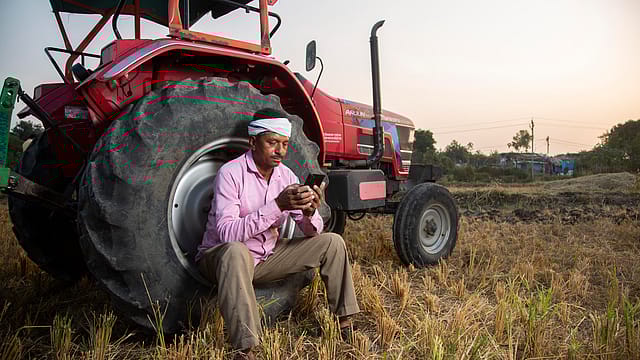
India’s agricultural sector, which employs nearly 55% of the population and anchors the rural economy, continues to play a critical role in growth and diversification, Crisil said in its analysis of the Union Budget 2026–27. The country remains among the world’s leading producers of staples such as rice and wheat, as well as high-value products including milk, pulses and spices.
According to Crisil, the agriculture sector grew at a compound annual rate of about 4.5% between fiscals 2016 and 2025, driven largely by allied activities. Livestock grew at 7.1% and fishing and aquaculture at 8.8% while crop growth remained relatively modest at around 3.5%. The gross value added of livestock jumped nearly 195% between fiscals 2015 and 2024 while fish production rose about 80% to 184 lakh tonnes over the same period.
Horticulture now contributes roughly one-third of agricultural gross value added, with output reaching about 369 million metric tonnes in 2024–25, surpassing food-grain production. Crisil said these trends underline agriculture’s growing role in diversifying farm incomes, encouraging rural industrialisation and strengthening India’s position in the global food system.
The Union Budget 2026–27 focuses on four key pillars to strengthen the sector: enhancing productivity, improving quality, building climate resilience and supporting sustained farmer incomes.
Push on productivity
With cultivated area largely stagnant and per capita income rising sharply, productivity has become the sector’s central focus. The Budget has raised allocations for technology-led interventions, including a seven-fold increase in the Namo Drone Didi Fund to ₹677 crore to scale up drone-based farm services. Bharat VISTAAR has been allocated ₹150 crore to integrate AI-driven advisories with Agristack and ICAR data, aimed at providing farm-level decision support, particularly to small and marginal farmers.
Spending on animal husbandry has been increased by 16%, supporting efforts to improve disease management and breeding to lift milk yields closer to global benchmarks. The allocation for Krishionnati Yojana has also been raised about 65% to ₹11,200 crore to improve seed quality and boost crop yields.
PMFME scheme
Despite strong horticulture output, post-harvest losses, estimated at 5–15% for fruits and vegetables, continue to erode farmer incomes. To address this, the Budget increased funding for the Pradhan Mantri Formalisation of Micro Food Processing Enterprises (PMFME) scheme by 13% and the Pradhan Mantri Kisan Sampada Yojana by 41%, with a focus on pack houses, cold chains and processing infrastructure.
Building climate resilience
The rollout of the Bharat VISTAAR platform aims to deliver hyper-local, climate-smart advisories to help farmers respond to weather variability and climate shocks. Additional resources have also been earmarked for fisheries, including the development of 500 reservoirs and Amrit Sarovar, to provide alternative income streams and improve resilience during extreme climate events.
Funding for post-production mechanisation and sustainable agricultural technologies has been raised by about 8% to support climate-resilient crops and integrated farming models.
Sustained incomes
To reduce farmers’ exposure to price volatility and water stress, the Budget has reoriented focus towards high-value and plantation crops such as coconut and cashew. While allocations for coconut rejuvenation have been increased, Crisil noted that funding levels may still be modest relative to the scale of the challenge.
The government has also raised the duty-free import ceiling for seafood processing inputs to improve export competitiveness and increased allocations for the Pradhan Mantri Kisan Maan Dhan Yojana by about 140% to provide pension support to small and marginal farmers.
Overall, the Ministry of Agriculture and Farmers’ Welfare’s budget for next fiscal is about 5% higher than the revised estimates for FY26, with sharp increases for income-support and sustainability-focused schemes. In contrast, funding for developing 10,000 farmer producer organisations (FPOs) has been cut by around 14%.
Crisil said the Budget reflects a broad-based effort to strengthen agriculture through productivity gains, diversification and climate resilience, though the effectiveness of several initiatives will depend on adequate funding and execution.