
Budget cues from Economic Survey: Mfg push, value-added industrial output, PPP-led infra, and fiscal prudence emerge as key themes
ADVERTISEMENT
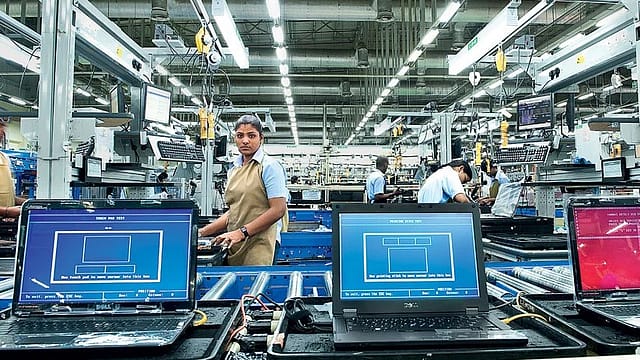
If the Economic Survey 2025-26 tabled on Thursday serves as a cue for the upcoming Union Budget, a number of measures like thrust on manufacturing, strategic indispensability in global value chains, and value-added industrial output, with an overarching theme of Swadeshi and Aatma Nirbhar Bharat may be some of the key aspects in Finance Minister Nirmala Sitharaman’s Bahi Khata on February 1.
Fiscal prudence and reliance on public private partnership (PPP) for infrastructure could be some of the key themes that may find resonance in the Budget.
Low revenue buoyancy won’t hurt fiscal glide path
The Survey also indicates that the government will be able to meet the fiscal deficit target of 4.4% in the current financial year. This essentially rules out the negative impact of the lack of revenue buoyancy witnessed this year on account of the lower than anticipated nominal GDP growth.
According to the Economic Survey, the government has fulfilled its commitment to lower the fiscal deficit since the Covid pandemic. “The government has targeted a fiscal deficit of 4.4% for FY26 and is on course to achieve it, thus fulfilling the commitment made in FY21,” it said.
“It is noteworthy that the government was determined to and succeeded in bringing down the fiscal deficit ratio as promised, despite it not being a legislative target, even while improving the quality of fiscal expenditure with a concurrent emphasis on capital expenditure,” the Survey noted.
For sure, there won’t be any negative surprise on this front in the budget. In fact, fiscal consolidation roadmap is the Holy Grail for the ministry.
Strategic indispensability
Secondly, under the overarching theme of Swadeshi and Aatma Nirbharta, the Economic Survey has called for value-added manufacturing with “strategic indispensability” in the global value chains.
“The path to Viksit Bharat @2047 requires strategic resilience and continuous ascent within the global value chains. Sustained reforms across five pillars- Ease of Doing Business, R&D and innovation, Skilling, Infrastructure & Logistics, and Scaling up of MSMEs- will remain critical in positioning industry as a key engine of future growth,” the Survey said.
“Global manufacturing continues to shift towards higher-value, innovation intensive activities. The UNCTAD World Investment Report 20254 notes, ‘investment in the digital economy and technology continues to act as a growth engine.’ Alongside this technological shift, countries are also recalibrating their industrial strategies to reduce vulnerability to external disruption and enhance their leverage within global production networks by securing reliable positions in key areas of the global value chain,” it said.
“Collectively, these trends suggest that the next phase of global manufacturing will be shaped less by simple cost arbitrage and more by strategic indispensability. Future success will depend on a country’s preparedness and capacity to embed itself into GVCs as a high-tech, highly productive manufacturing hub supported by a stable policy environment,” it added.
This is a wide-ranging policy prescription and would require budgetary and policy roadmaps in the direction.
Focus on PPP for infrastructure
The Economic Survey dedicated a section on the PPPs. It may be noted that public capital expenditure has been the thrust area for the government in the last couple of years. The Survey says the reforms in infrastructure financing—spanning project finance regulation, Public-Private Partnership (PPP) frameworks, asset monetisation and capital market instruments—are crowding-in private investment.
“At the same time, India’s infrastructure base is broadening to include digital public infrastructure (DPI), clean energy, resilient water systems and emerging sectors. Sustaining investment momentum while aligning infrastructure with efficiency, sustainability and competitiveness will continue to remain key towards supporting India’s medium-term growth and its long-term vision of Viksit Bharat @2047,” it added.
It may be noted that the government has already come out with a three-year PPP pipeline of ₹17 lakh crore earlier this month.