
Domestic capital takes centre stage as AIF commitments surge sixteenfold: IVCA–360 ONE–CRISIL Report
ADVERTISEMENT
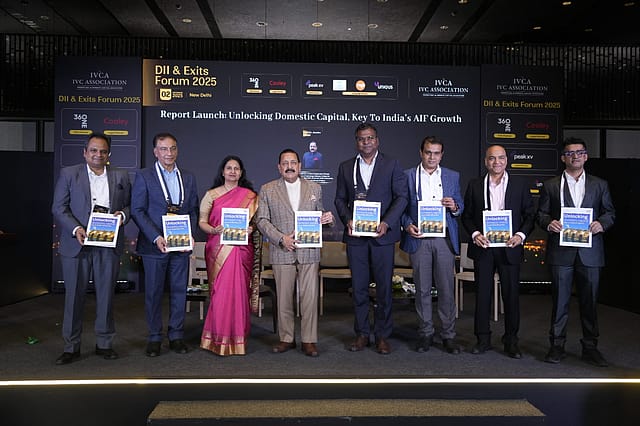
India’s alternative capital industry is experiencing a structural transformation. A new joint study by the Indian Venture and Alternate Capital Association (IVCA), 360 ONE Asset, and CRISIL highlights the growing role of domestic institutions in shaping the country’s growth over the next decade. The IVCA–360 ONE–CRISIL Report: Unlocking Domestic Capital: Key to India’s AIF Growth, 2025, unveiled at the IVCA DII & Exits Forum, provides one of the most detailed assessments to date of India’s evolving AIF landscape and the increasing momentum behind homegrown capital.
The study shows that commitments to AIFs have increased significantly from ₹0.84 lakh crore in 2017 to ₹13.49 lakh crore in 2025, reflecting both the sector’s growth and the maturation of India’s regulatory framework. The report highlights the increasing sophistication of the ecosystem, supported by clear valuation norms, detailed disclosures, and a governance environment that has rapidly evolved in recent years.
“AIF commitments have grown 16x since 2017, and domestic LPs (Domestic institutional investors and Family Offices) now contribute 52.7% of capital in Category I & II funds. This shift reflects rising confidence in India’s private markets. As the ecosystem matures, deeper domestic participation will be central to financing India’s next decade of deep-tech, innovation, infrastructure and long-term economic growth,” said Rajat Tandon, President, IVCA.
The report highlights steady gains in domestic LP participation in Category I & II AIFs over the past year. Government-backed entities have committed ₹24,293 crore through major fund-of-funds programmes, showcasing rising national confidence in alternatives. However, India remains significantly under-penetrated compared to global markets. Pension funds, provident funds, and insurers together manage over ₹100 lakh crore but remain modest participants in private markets, representing one of the biggest opportunities for India’s next growth cycle.
Sameer Nath, CIO & Head of Venture Capital & Private Equity at 360 ONE Asset, said, “India’s next phase of growth will rest on the strength of its own capital. DIIs today are showing strong conviction to back differentiated alternative assets strategies and high-performing fund managers. 360 ONE is delighted to partner with IVCA and CRISIL on this pathbreaking report. We have witnessed the evolution of alternative assets in India from the closest vantage point possible. For example, we have seen our UHNI and Family Office clients increase their allocation to alternatives exponentially over the last decade and believe there is ample headroom for further growth.”
Venture capital AIFs continue to deliver strong pooled IRRs of 22.9%, consistently outperforming public benchmarks. Debt and real estate AIFs show faster-than-expected capital returns, with nearly one-third of funds reaching a DPI of 1 within 4 to 6 years. The report highlights that this is an especially favourable time for domestic investors to get involved earlier, particularly in startups, SMEs, technology, and emerging sectors that will anchor India’s future listed markets.
“Today, the AIF industry offers a variety of investment strategies across numerous funds, with mandatory performance benchmarking serving as a vital analytical tool that enables investors to make informed decisions and navigate their options more effectively,” said Jiju Vidyadharan, Senior Director, Crisil Intelligence.
India recorded 552 IPOs between FY23 and FY25, along with a surge in SME segment listings. Improved exit visibility, combined with rising domestic equity inflows, is strengthening the capital-formation cycle and enabling investors to reinvest capital into newer vintages. This shift reflects the long-term trend of increasing domestic ownership in public markets and indicates a similar transition happening in private markets.
India recorded 552 IPOs between FY23 and FY25, along with a surge in SME segment listings. Enhanced exit opportunities, combined with rising domestic equity inflows, are strengthening the capital-formation cycle and allowing investors to reinvest capital into new vintages. This trend reflects the long-term increase in domestic ownership in public markets and indicates a similar shift occurring in private markets.
The report describes the next decade as a pivotal period where India’s institutions, such as pension funds, insurers, banks, family offices, and resident investors, could take on a much larger role in financing the country’s innovation, infrastructure, and economic leadership. With greater performance transparency, better exit options, and improved governance standards, India is ready to develop a truly local capital ecosystem.