
Iran war impact: Industries using natural gas stare at an energy crisis; LPG users may face limited supply disruptions
ADVERTISEMENT
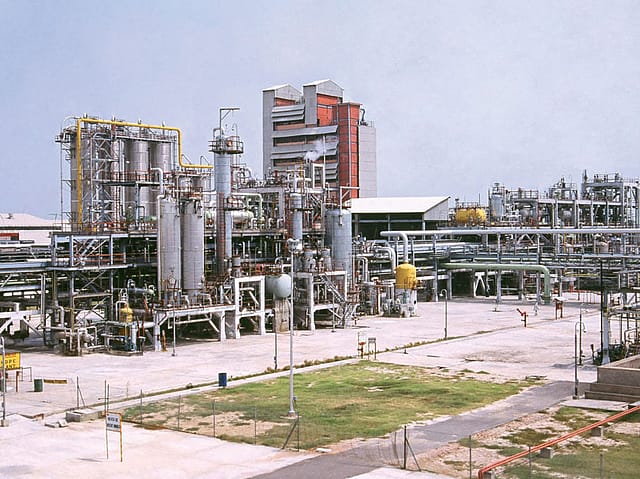
While escalating geopolitical tensions in the Middle East are causing Liquefied Natural Gas (LNG) imports to India to be in disarray, and the Indian Government is trying on a war foot to insulate people's concerns with prioritised gas supplies for domestic consumers, experts warn of a looming short supply of natural gas availability for industries like fertiliser units, refineries, petrochemical units and other industries dependent on natural gas.
Why has the government asked refineries to increase LPG production?
The Ministry of Petroleum and Natural Gas has issued an order to oil refineries for higher LPG production and to use extra production for domestic use. The Ministry has prioritised domestic LPG supply to households and introduced 25 day inter-booking period to avoid hoarding and black marketing, besides invoking the Essential Commodities Act. Non-domestic supplies from imported LPG are being prioritised to essential non-domestic sectors such as hospitals and educational institutions.
The Ministry has also constituted a committee of three Executive Directors of Oil Marketing Companies to review the representations for LPG supply to restaurants, hotels and other industries. On March 7, the Government hiked domestic cooking gas prices by ₹60 per cylinder, despite states like Kerala, West Bengal, Tamil Nadu, Assam, and UT Puducherry going to have State elections by May.
Industry sources say fertiliser, industrial units running on natural gas, refineries and petrochemical industries are likely to suffer from the current import crisis. An option before them is to convert energy production to other fuels like furnace oil and naphtha, which will cause a lot of economic impact for them.
Of the total natural gas consumption, industries like fertiliser production uses 28%, City Gas Distribution 24%, industrial units 13%, refineries (8%), and petrochemicals use 6%. As a policy, the Government has prioritised domestically produced gas to meet 100% of the demand for CNG (transport) and PNG (domestic).
Why do CNG and PNG prices remain relatively stable in India?
Historically, due to high domestic allocation, prices for CNG and PNG remain more stable compared to imported, market-linked gas. India imports half of its total natural gas requirements, heavily relying on LNG from countries like Qatar, followed by the UAE and the USA. India's gas consumption for January–October 2025 period was 56,760 MMSCM or Million Standard Cubic Meters, a unit of measurement used primarily in the oil and gas industry to quantify large volumes of natural gas.
Already, spot gas prices have doubled in the global markets, leaping to roughly $24–$25 per million British thermal units (MMBtu), up from approximately $10 per MMBtu before the start of the conflict.
India’s LNG supplies, which cannot be stored for long-term use unlike crude oil, plunged into a major crisis, following Qatar, India's single-largest supplier, stopping production at its Ras Laffan facility - the single largest LNG exporting facility in the world - following Iranian drone strikes and declared a 'Force Majeure' clause on its supplies. Qatar supplies 10–11 MTPA (million tonnes per annum) of LNG to India, about 45% of its LNG imports.
Parallelly, India’s largest LNG terminal operator, Petronet LNG, has also invoked force majeure for its affected tankers after insurers pulled out of key Middle East routes. It has also served force majeure notices to the downstream off-takers GAIL (India) Limited, Indian Oil Corporation Limited (IOCL) and Bharat Petroleum Corporation Limited (BPCL).
City Gas Distribution (CGD) players are going to have a tough time meeting the demand, say sources. For example, Mahanagar Gas Limited (MGL) is the sole authorised distributor of PNG and Compressed Natural Gas (CNG) in Mumbai, Thane, Navi Mumbai, and the Raigad district to over 4,500 industrial and commercial customers. CGDs like Adani Total Gas (ATGL) have asked its commercial and industrial users to restrict natural gas usage to 40% of the contracted volume. They will have to pay more at spot rates if used beyond the capped volume. Similarly, Gujarat Gas and Sabarmati Gas are also bringing in restrictions on gas supplies to industries in West India, which houses tile-making industrial belts like Morbi, dependent mostly on natural gas for production.