
Eight years, eight achievements: How N Chandrasekaran recast the Tata empire
ADVERTISEMENT
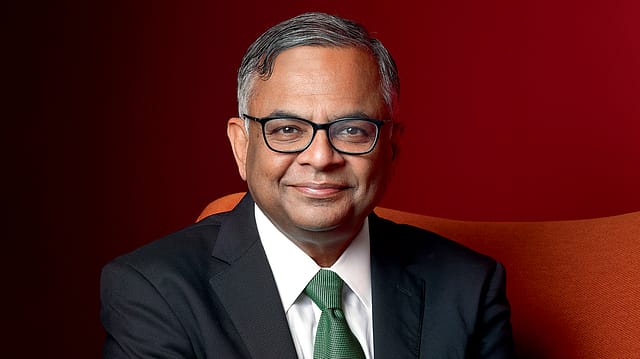
When N Chandrasekaran took over as chairman of Tata Sons on February 21, 2017, India’s most diversified conglomerate was grappling with a knot of legacy issues—underperforming assets, strategic drift and the pressure to modernise at scale. Eight years on, his tenure stands out as one of the most consequential phases in the group’s modern history. It unfolded against an unforgiving backdrop that included a pandemic, geopolitical conflicts and unprecedented challenges such as a fatal Air India plane crash.
“Heightened geopolitical tensions created more operational challenges, while technology advanced faster than regulators could keep up with. In a year full of difficult moments, the devastation wrought by the crash of Air India 171 affected us all,” Chandrasekaran wrote in his New Year note to colleagues. Yet, he remained resolute. For him, prolonged uncertainty was not merely a risk, but a landscape rich with strategic opportunity.
Here are eight key transformative shifts Chandrasekaran has driven across the Tata Group over the past eight years.
Mindset change
A former TCS lifer turned group chairman, Chandrasekaran has consistently pushed the Tata Group to think bigger, move faster and place bold bets on the future. One of Chandrasekaran’s most significant achievements has been restoring strategic coherence across the group. The “One Tata” philosophy went beyond collaboration and synergy extraction. It was about sharpening clarity of purpose, aligning resource allocation and reinforcing Tata values without dilution across businesses. He emphasised the need for nation building while finding businesses opportunities.
Consolidation and demergers
Among his notable consolidation moves was the creation of Tata Consumer Products Ltd, formed by combining Tata Tea’s beverages business with Tata Chemicals’ pulses and salt portfolio. Today, the FMCG company commands a market valuation of about ₹1.14 lakh crore. Chandrasekaran also set in motion the merger of AirAsia India, Air India and Vistara into a single airline entity. More recently, the auto finance business of Tata Motors was hived off and merged with Tata Capital, which subsequently got listed. For sharper strategic focus, Tata Motors also separated its passenger vehicle business, including EVs, from its commercial vehicles arm.
Capital discipline
Capital discipline became a defining theme under Chandrasekaran. In the automotive business, the stated goal was zero net debt in India. Despite net debt peaking at around ₹64,400 crore in 2021, Tata Motors navigated semiconductor shortages, heavy working capital needs and its EV transition to achieve the net debt zero target in India. Tata Steel reduced its debt to about ₹81,800 crore from nearly ₹1 lakh crore in 2020, even while adding around six million tonnes of steelmaking capacity in India. Tata Power followed a similar path, lowering leverage while pivoting decisively towards renewables. Indian Hotels adopted an asset-light model, improving margins through better asset utilisation and lower liabilities.
Next-generation forays
Chandrasekaran was determined that the Tata Group would not miss emerging opportunities. The group entered semiconductors and electronics manufacturing, battery production, aviation manufacturing, and digital platforms. Tata Electronics is setting up a ₹91,000 crore semiconductor fabrication plant in Dholera, Gujarat, with Taiwan’s Powerchip Semiconductor Manufacturing Corporation, alongside a ₹27,000 crore OSAT facility in Jagiroad, Assam. It has also partnered with Japan’s ROHM for power semiconductors and is collaborating with Intel to build a broader silicon and compute ecosystem.
Battery arm Agratas is establishing a 20 GWh cell manufacturing facility in Sanand, Gujarat, with an initial investment of ₹13,000 crore, while also developing a gigafactory in Somerset, UK. In aviation manufacturing, the group inaugurated a final assembly line for Airbus C295 military transport aircraft in Vadodara, a major milestone for indigenous aerospace capabilities. Tata Power is exploring small modular nuclear reactors of 20–50 MW capacity. Meanwhile, Tata Digital launched the Tata Neu superapp, integrating retail, groceries, electronics, travel and financial services into a single consumer platform.
Strategic takeovers
At the same time, selective acquisitions strengthened core positions. Despite high leverage, Tata Steel acquired Bhushan Steel in 2018 and Neelachal Ispat Nigam in 2022 to consolidate leadership. Tata Consumer Products expanded its portfolio in 2024 by acquiring Capital Foods for ₹5,100 crore and Organic India for ₹1,900 crore. Tata Motors is in the process of acquiring Iveco Group’s commercial vehicle operations for about $4.36 billion. The acquisition of Air India in 2021—bringing JRD Tata’s airline back into the fold—carried deep emotional and strategic significance. Tata Electronics’ acquisition of a 60% stake in Pegatron’s India unit in 2025 gave it control of an iPhone manufacturing facility near Chennai. The group also acquired businesses such as BigBasket and 1mg to deepen its e-commerce play.
Exiting non-core assets
Chandrasekaran actively simplified the group structure by exiting non-core, sub-scale and loss-making businesses. Tata Teleservices merged its consumer mobility business with Bharti Airtel, while Tata Sons exited Tata Petrodyne (oil exploration business) by selling its entire stake in 2019. Group companies also exited ATM and food services ventures.
Digital everywhere
“Digital everywhere” has been one of Chandrasekaran’s core strategic ideas. The premise is simple: every Tata company—manufacturing or services, B2B or B2C—must be driven by AI, data analytics, cloud computing and machine learning. Group technology companies such as TCS, Tata Technologies, Tata Communications and Tata Elxsi have led the digitisation of operating businesses. Tata Motors’ passenger vehicle and EV platforms, as well as Tata Power’s renewable energy and EV charging networks, have benefited directly from this internal technology ecosystem.
The talent hunt
Leadership renewal has been another priority. Chandrasekaran brought in high-profile leaders such as Puneet Chhatwal at Indian Hotels, Amur Lakshminarayanan at Tata Communications, and Shailesh Chandra at Tata Motors Passenger Vehicles. While many appointments came from within the group, he also tapped external talent, including Ganesh Lakshminarayanan from Airtel and Chhatwal from Steigenberger Hotels AG. He is currently engaged in the search for a successor to Air India CEO Campbell Wilson, underscoring the continuing focus on leadership depth.