
Fresh trouble brewing for IndiGo as CCI launches probe over flight disruptions
ADVERTISEMENT
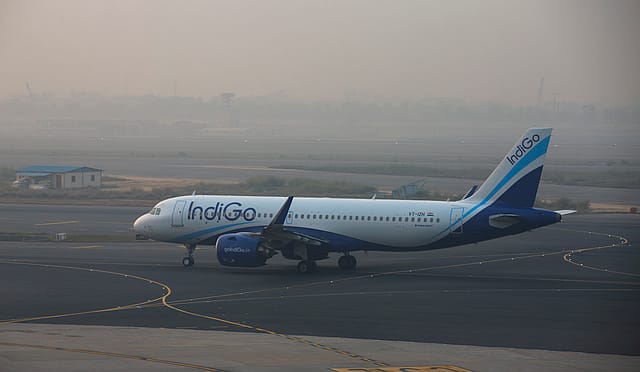
The Competition Commission of India (CCI) has taken cognizance of complaints filed against InterGlobe Aviation (IndiGo) with regard to the thousands of flight disruptions that happened earlier this month leaving over a million passengers stranded across different airports.
The competition watchdog said, “Based on the initial assessment, the commission has decided to proceed further in the matter in accordance with the provisions of the Competition Act, 2002.”
As IndiGo has a dominant market share of nearly 65% in the Indian aviation industry, the CCI will be focusing on whether the airline leveraged this strength leading to the December 2025 crisis.
Chapter II, Section 4 of the Competition Act, 2002, deals with abuse of dominant position. While being a dominant player is not illegal, abusing the dominance is. The CCI will likely look at:
Section 4(2)(a)(i): Imposing unfair or discriminatory conditions in the provision of services. The mass cancellations (of over 3000 flights) due to internal mismanagement (of FDTL pilot norms) could be seen as an unfair condition imposed on ticket holders.
Section 4(2)(a)(ii): Imposing unfair or discriminatory prices (including predatory pricing). The CCI would probe if IndiGo created an "artificial scarcity” forcing passengers to buy remaining tickets at exorbitant prices.
Section 4(2)(b)(i): Limiting or restricting the provision of services to the prejudice of consumers. The failure to properly staff flights, despite having ample time and dominant market position directly falls under “restricting services” that the public relies upon.
“Since an information has been filed, the CCI will first need to take a prima facie view on whether IndiGo’s role warrants a detailed investigation by the Director General. In doing so, the Commission will look at factors such as IndiGo’s access to airport slots, scale, and market presence, while also keeping in mind the practical realities of the aviation sector, including route-level competition, high operating costs, and intense price pressure. All of these aspects will need to be weighed before any direction to the Director General for a detailed investigation is issued,” said Aniket Ghosh, Partner, King Stubb & Kasiva, Advocates and Attorneys.
PIL against IndiGo
Separately, IndiGo is also facing a public interest litigation (PIL) in the Delhi High Court. The PIL, filed by the Centre for Accountability and Systemic Change (CASC), an independent think tank, has sought probe into mass cancellations and the alleged failure of the Directorate General of Civil Aviation (DGCA) in preventing the crew shortage crisis.
The PIL has reportedly sought “four times” the ticket value as compensation to all passengers affected in November and December. The petitioner also demanded a direction to the government to initiate a class action suit against IndiGo under the Consumer Protection Act. Apart from that, the PIL has called for an inquiry by a retired judge or the Lokpal to identify lapses by the DGCA. The petitioner also alleged that IndiGo was operating with “skeletal staffing mode” (14 pilots per aircraft) which was insufficient for the new flight duty time limitation (FDTL) norms.