
From survival to revival: Why Kumar Mangalam Birla believes Vodafone Idea has finally turned a corner
ADVERTISEMENT
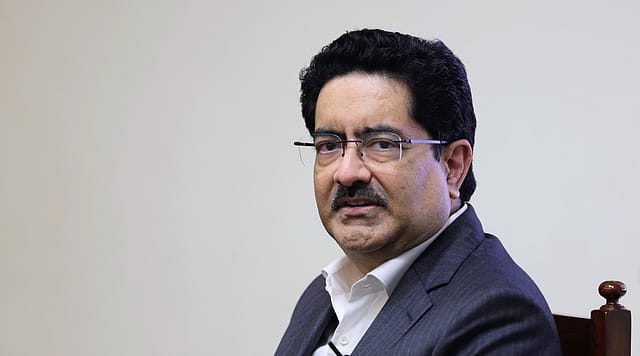
Vodafone Idea's turnaround narrative is gaining traction after years of regulatory strain, funding stress and market-share losses.
At an extraordinary general meeting on Thursday, non-executive chairman Kumar Mangalam Birla told shareholders the company has emerged from one of the toughest phases in its history and is now focused on execution. Birla said, “...in my annual reflections, I had said tough times don't last, tough companies do. Those words resonate more strongly with our company today,” and added, “I think we have good times ahead…there will continue to be a few challenges but I still believe that we are at a point of inflexion.”
Promoter money back on the table
The EGM was called to seek shareholder approval for a ₹4,730-crore promoter infusion through Suryaja Investments Pte Ltd via equity-convertible warrants at ₹11 apiece. The structure allows staggered funding over 18 months, with 25%, or ₹1,182 crore, payable upfront. Birla said ₹1,730 crore of the proceeds would be used for capex and ₹3,000 crore for debt reduction.
The promoter move matters because Vodafone Idea has been trying to secure bank financing for its turnaround. Last month, the company said it was deeply engaged with an SBI-led consortium for a ₹35,000-crore debt package, including a funded facility of ₹25,000 crore and a non-funded facility of ₹10,000 crore.
AGR relief changes the balance sheet
Government support has also materially improved Vi's position. In March 2025, the Centre converted ₹36,950 crore of deferred spectrum dues into equity, taking its holding to 48.99%. In April, the Department of Telecommunications cut Vodafone Idea's AGR dues to ₹64,046 crore from ₹87,695 crore and deferred most repayments into FY36-FY41.
That relief has given the company more breathing room, but the burden remains heavy. Vodafone Idea still faces deferred spectrum liabilities of about ₹1.27 lakh crore, with payments of roughly ₹49,000 crore due over the next three years, according to the company’s disclosure.
Bombay HC removes another overhang
The Bombay High Court added further relief this week by striking down the government's retrospective one-time spectrum charge demands on Bharti Airtel and Vodafone Idea. The court overturned ₹23,600 crore in retrospective spectrum usage charges and invalidated the follow-on actions based on those demands.
That ruling matters because it removes another legal overhang from Vi’s balance sheet at a time when the company is trying to convince lenders and investors that the worst is behind it.
Operations are improving, but the job is not done
The company reported a subscriber base of 192.8 million in Q4 FY26 and said it had arrested subscriber losses versus the previous quarter. In the same quarter, revenue rose 2.9% year-on-year to ₹11,332 crore and EBITDA increased 4.9% to ₹4,890 crore. The company also said monthly subscriber additions turned positive from February 2026, helped by faster 4G expansion and wider 5G rollout.
For FY26, revenue rose 3% to ₹44,873 crore and annual capex stood at ₹8,742 crore.
Birla said, “The benefits of sustained investments in network infrastructure and rollout are now becoming increasingly visible, reflecting a stronger operational performance and improved customer service.” He also said, “The work of rebuilding has begun, your company now looks ahead with confidence.”
Even with the improvement in tone, Vi still trails Bharti Airtel and Reliance Jio in scale and remains dependent on fresh capital, bank funding and continued regulatory support.