
High prices fail to take the sheen off gold as consumers cut weight not purity
ADVERTISEMENT
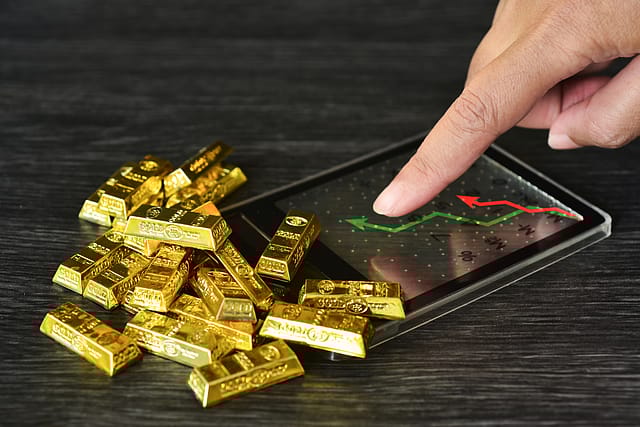
India’s jewellery market is seeing a clear shift in how consumers buy, even as gold continues to anchor both cultural sentiment and investment behaviour.
Rising gold prices are forcing buyers to adapt, but not in the way many retailers might expect. Instead of moving away from gold, consumers are choosing lighter pieces while holding on to purity, according to a new report by Deloitte.
The study finds that 33% of buyers respond to higher gold prices by reducing the weight of jewellery while keeping the same purity. Another 19% increase their budget, while an equal share opts to exchange old gold for new jewellery. Only 17% shift to lower karat options such as 18K or 14K, suggesting that purity and long-term value remain non-negotiable for a large section of buyers.
What is changing is the purpose and frequency of purchases.
“One big shift we are clearly seeing is that gold and jewellery have become a major asset class for wealth creation,” said Praveen Govindu, partner, Customer Strategy, Deloitte South Asia. “Last year, about 50% of respondents said they invested in gold as an asset class. This year, that number has jumped to 86%.”
This is nearly on par with market-linked instruments such as mutual funds and stocks. More than half of consumers view jewellery as both an investment and a fashion accessory, underlining its dual role in Indian households.
Govindu added that the change is significant because it cuts across age cohorts. “More than three in four consumers are now saying they want to invest in gold as an asset class. That mindset wasn’t this strong earlier,” he said.
Jewellery is steadily moving away from being a once-in-a-lifetime heirloom, largely tied to weddings, towards repeat purchases linked to everyday wear, self-buying and personal milestones such as promotions or anniversaries. Lightweight and versatile designs are gaining ground, especially among millennials and Gen Z consumers, the report said.
“People are okay to spend a little less given that the price per gram has gone up, but they’re not compromising on caratage,” Govindu said. “If consumers are seeing gold as a wealth creation asset, high purity becomes non-negotiable.”
Diversification in metals
The shift towards lighter, everyday jewellery does not mean gold is losing relevance. Instead, Deloitte sees a gradual broadening of the jewellery basket. Preference for alternate metals such as silver and platinum is rising, particularly among younger buyers, though gold continues to dominate investment intent.
“Over a five-to-seven-year horizon, consumption will be more balanced across metals,” Govindu said. “Gold will continue to be the asset people invest in for long-term wealth creation, while jewellery consumption will be spread across gold, silver and other metals.”
Silver, in particular, is emerging as an entry point for younger consumers. Silver prices have grown faster than gold over the past five years, and nearly half of Gen Z and millennial respondents show a preference for silver jewellery, attracted by lower price points and design flexibility. Govindu stressed that this shift is additive, not cannibalistic. “This doesn’t mean future demand for gold will go down. Younger cohorts are also allocating money to gold as an investment, even if their jewellery choices diversify.”
Despite growing digital discovery, physical stores still close most jewellery sales. National retail chains, family jewellers and local stores remain far ahead of online platforms, reinforcing jewellery’s status as a high-trust, tactile category. Online purchases are largely confined to lower-ticket items, with over 80% of digital transactions priced below ₹50,000, according to the report.