
HUL says inflation has not weakened consumer demand, keeps FY27 outlook unchanged
ADVERTISEMENT
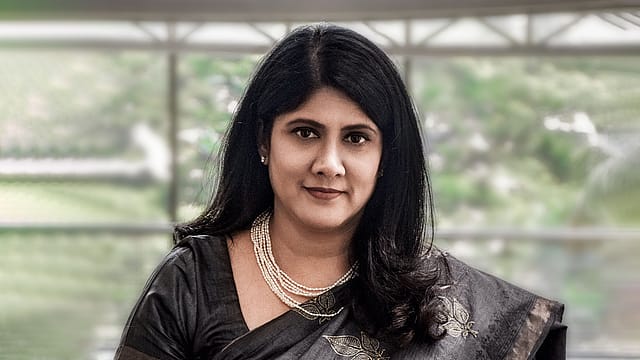
Hindustan Unilever Ltd (HUL) expects consumption in India to remain resilient despite continued geopolitical uncertainty in West Asia, elevated commodity prices and an evolving monsoon, with the country's largest FMCG company saying demand has so far remained largely unaffected by inflationary pressures.
Addressing concerns around the Iran and broader West Asia conflict and its impact on crude oil and commodities, CEO and managing director Priya Nair said during the earnings call that the company remains prepared for external volatility.
"There is no change in what we said from last time. We continue to believe we are well positioned because of our portfolio, procurement, supply chain and savings. We are only cautioning for the economic scenario and how it might pan out. We remain extremely confident in how we will be able to navigate," Nair said.
Chief financial officer Niranjan Gupta said HUL continues to take "measured" price increases even as commodity costs remain elevated, relying on productivity gains and disciplined cost management to protect profitability.
"We have been very measured in passing price increases to consumers. Even if pricing remains far lower than inflation, we believe we will be able to deliver EBITDA around the guided range," Gupta said.
The maker of Dove, Surf Excel and Horlicks reported a 10% year on year increase in revenue for the June quarter, driven by 5% underlying volume growth, while maintaining that FY27 will be stronger than FY26 despite an uncertain global backdrop. Revenue from operations stood at ₹17,717 crore, while EBITDA rose 8% to ₹3,947 crore, with margins at 23%. Profit after tax before exceptional items increased 9% to ₹2,731 crore, while reported profit after tax stood at ₹2,680 crore. Adjusted for a one time tax credit in the base quarter, profit after tax grew 11%.
Stable demand despite inflation and weather watch
While the company continues to closely monitor the progress of the monsoon, HUL does not expect weather conditions to significantly alter India's consumption story.
Nair noted that agriculture now accounts for about 15% of India's GDP and that the difference between a good and a difficult agricultural year would translate into only a 50 to 60 basis point impact on overall GDP growth. "Given the spread of our portfolio across categories and price points, we feel very confident that we can navigate," she said.
Gupta added that minimum support price increases of around 5% to 6% provide some cushion to rural incomes. He also pointed out that the rainfall deficit has narrowed substantially and, as long as it remains in the 15% to 20% range, the company does not foresee any meaningful impact on the Indian economy.
Most importantly, the company said inflation has not weakened consumer demand.
"There was apprehension earlier that there could be inflation led impact on FMCG demand and we are not seeing that at all. Consumption continues to be strong," Gupta said, adding that this gives the company confidence to maintain its guidance of a stable demand environment.
Both rural and urban markets remained robust during the quarter, with rural growth improving over the past few quarters. Premium categories continue to grow faster than the mass market, although HUL said it remains committed to driving competitive growth across all price segments.